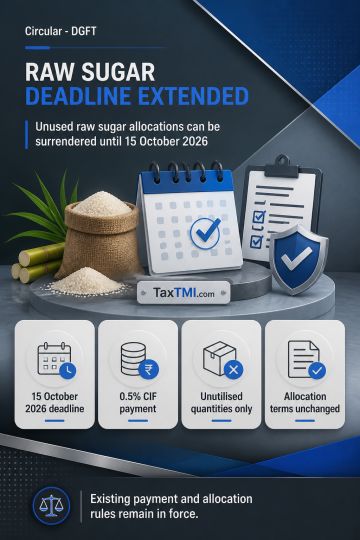
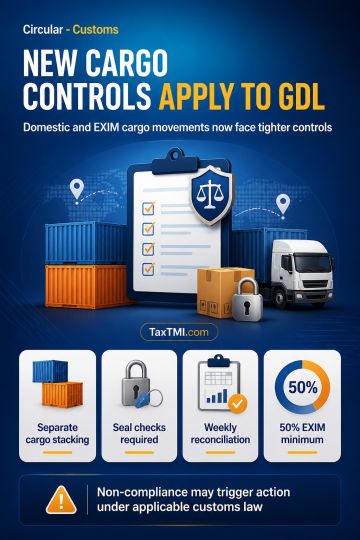
Customs-controlled cargo movement now includes GDL, subject to EXIM prioritisation, segregation, verification, reconciliation and enforcement safeguar...
The circular clarifies the time of supply for GST payment on spectrum allocation services when telecom operators opt for deferred payments. The bidder is liable to pay GST on spectrum usage services received on reverse charge basis. If payments are made in installments, it constitutes continuous supply of services, with tax liability arising when payments are due or made. Frequency Assignment Letter is not considered an invoice for GST purposes. Invoice must be issued before the due date of payment. Full upfront payment triggers GST liability at payment or due date, while deferred payments trigger GST liability at each installment's due or payment date. Similar treatment applies to other cases of government allocating natural resources for continuous service over time. Trade notices should publicize the circular, and any implementation difficulties should be reported to the Board.
The circular clarifies the time of supply for GST payment on spectrum allocation services when telecom operators opt for deferred payments. The bidder is liable to pay GST on spectrum usage services received on reverse charge basis. If payments are made in installments, it constitutes continuous supply of services, with tax liability arising when payments are due or made. Frequency Assignment Letter is not considered an invoice for GST purposes. Invoice must be issued before the due date of payment. Full upfront payment triggers GST liability at payment or due date, while deferred payments trigger GST liability at each installment's due or payment date. Similar treatment applies to other cases of government allocating natural resources for continuous service over time. Trade notices should publicize the circular, and any implementation difficulties should be reported to the Board.
Note: It is a system-generated summary and is for quick reference only.
 TaxTMI
  TaxTMI
 of 4881