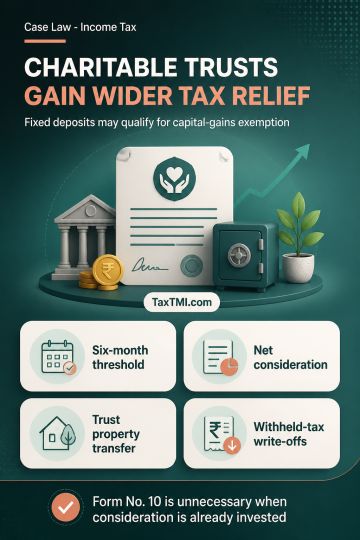
Capital-gains exemption for charitable trusts extends to qualifying fixed deposits, while unrecoverable TDS write-offs may constitute income applicati...
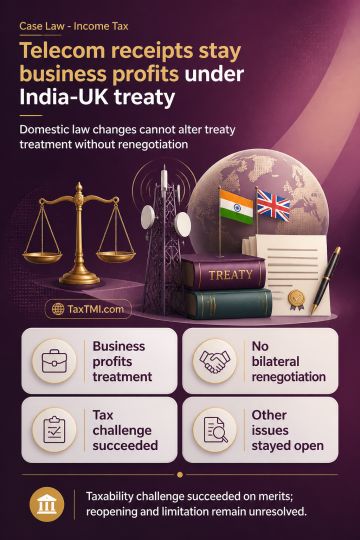
India-UK treaty characterisation of telecom-service receipts as business profits withstands unilateral domestic-law amendments for Indian tax purposes...
Page of 4897
Press 'Enter' after typing page number.
581 to 600 of 97923 Results
❮
❯
❯❯
0 / 200
Expand Note
Add to Folder
No Folders have been created
+
Are you sure you want to delete "My most important" ?
The High Court addressed the issue of invoking the extended period of limitation for non-payment of service tax. The Court held that the Tribunal's finding of no documentary evidence indicating the service rendered was erroneous. It emphasized that two units of a company cannot be treated as separate entities for service tax purposes. The Court cited legal precedent to support that a company is a single entity under the law, and divisions/branches cannot be considered distinct legal entities. The Court also noted that the Tribunal's decision contradicted established legal principles regarding service tax credit and the relationship between units of the same company. Ultimately, the Department's appeal was rejected, and the Tribunal's order was deemed unsustainable and contrary to the law. The appeal of the Revenue was dismissed.
The High Court addressed the issue of invoking the extended period of limitation for non-payment of service tax. The Court held that the Tribunal's finding of no documentary evidence indicating the service rendered was erroneous. It emphasized that two units of a company cannot be treated as separate entities for service tax purposes. The Court cited legal precedent to support that a company is a single entity under the law, and divisions/branches cannot be considered distinct legal entities. The Court also noted that the Tribunal's decision contradicted established legal principles regarding service tax credit and the relationship between units of the same company. Ultimately, the Department's appeal was rejected, and the Tribunal's order was deemed unsustainable and contrary to the law. The appeal of the Revenue was dismissed.
Note: It is a system-generated summary and is for quick reference only.
 TaxTMI
  TaxTMI
 of 4897