Mandatory textile export qualifiers distinguish flame-retardant fabrics from other listed fabrics for automated identification under the textiles ince...
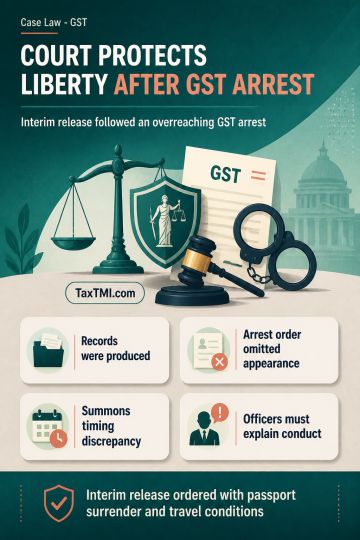
Personal liberty safeguards restrict arrest after court-directed GST appearance, requiring interim release where authorities overreach pending proceed...
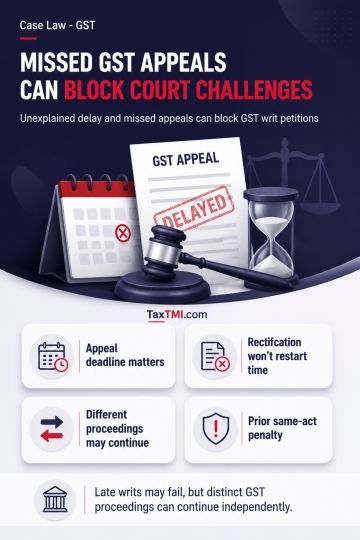
Alternative statutory remedy and delay bar GST writ challenges despite pending rectification, while distinct subject matter permits parallel proceedin...
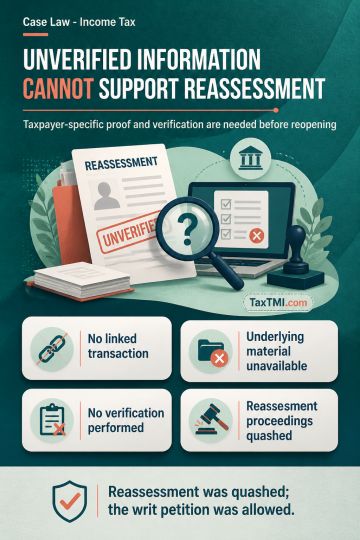
Unverified Insight Portal Information Cannot Justify Reassessment Without a Verified Taxpayer-Specific Income-Escape Nexus or Demonstrated Application...
Page of 4888
Press 'Enter' after typing page number.
361 to 380 of 97750 Results
❮
❯
❯❯
0 / 200
Expand Note
Add to Folder
No Folders have been created
+
Are you sure you want to delete "My most important" ?
The High Court addressed the issue of invoking the extended period of limitation for non-payment of service tax. The Court held that the Tribunal's finding of no documentary evidence indicating the service rendered was erroneous. It emphasized that two units of a company cannot be treated as separate entities for service tax purposes. The Court cited legal precedent to support that a company is a single entity under the law, and divisions/branches cannot be considered distinct legal entities. The Court also noted that the Tribunal's decision contradicted established legal principles regarding service tax credit and the relationship between units of the same company. Ultimately, the Department's appeal was rejected, and the Tribunal's order was deemed unsustainable and contrary to the law. The appeal of the Revenue was dismissed.
The High Court addressed the issue of invoking the extended period of limitation for non-payment of service tax. The Court held that the Tribunal's finding of no documentary evidence indicating the service rendered was erroneous. It emphasized that two units of a company cannot be treated as separate entities for service tax purposes. The Court cited legal precedent to support that a company is a single entity under the law, and divisions/branches cannot be considered distinct legal entities. The Court also noted that the Tribunal's decision contradicted established legal principles regarding service tax credit and the relationship between units of the same company. Ultimately, the Department's appeal was rejected, and the Tribunal's order was deemed unsustainable and contrary to the law. The appeal of the Revenue was dismissed.
Note: It is a system-generated summary and is for quick reference only.
 TaxTMI
  TaxTMI
 of 4888