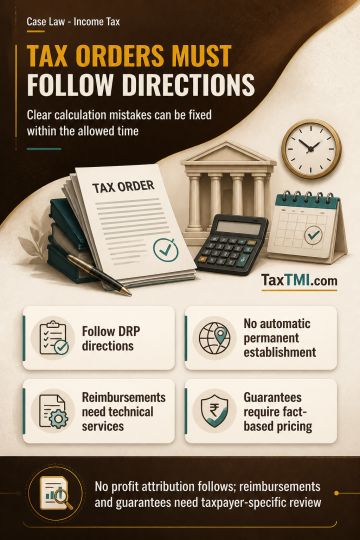
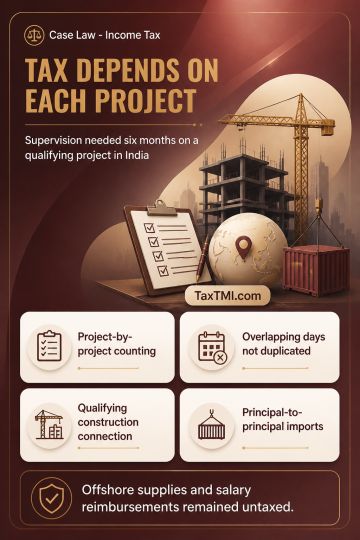
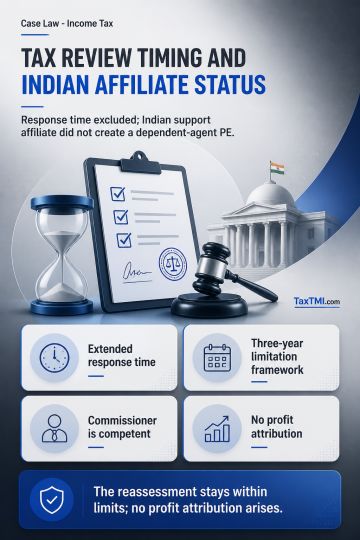
Supervisory permanent establishment requires project-wise duration and qualifying construction nexus; offshore supplies and salary reimbursements rema...
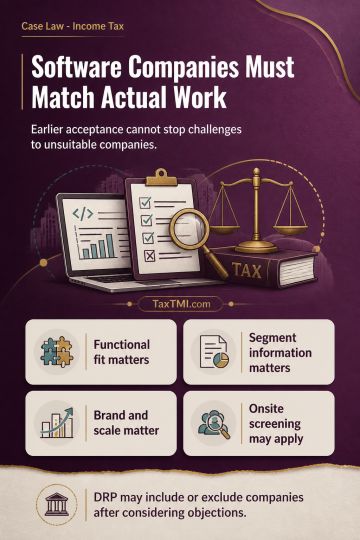
Transfer-pricing comparability permits fresh objections and filters where software service comparables are functionally unsuitable for arm's-length pr...
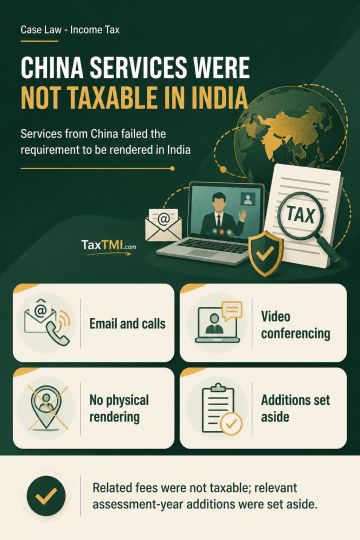
Territorial rendering requirement excludes China-based management and consultancy services from fees for technical services under the India-China DTAA...
Page of 4888
Press 'Enter' after typing page number.
281 to 300 of 97755 Results
❮
❯
❯❯
0 / 200
Expand Note
Add to Folder
No Folders have been created
+
Are you sure you want to delete "My most important" ?
The Supreme Court analyzed the applicability of the Tamil Nadu Industrial Establishments (Conferment of Permanent Status to Workmen) Act, 1981 to a Corporation and its employees' Union. The Court determined that the Corporation qualifies as an industrial establishment if its activities aim at monetary gain, excluding construction-related work. Employees who have served for 480 days or more in 24 months are eligible for permanent status. The Court criticized the High Court for suggesting an industrial dispute despite the Inspector of Labour's order favoring the Union members. The appeal by the Corporation was dismissed, affirming the Act's application to the parties involved.
The Supreme Court analyzed the applicability of the Tamil Nadu Industrial Establishments (Conferment of Permanent Status to Workmen) Act, 1981 to a Corporation and its employees' Union. The Court determined that the Corporation qualifies as an industrial establishment if its activities aim at monetary gain, excluding construction-related work. Employees who have served for 480 days or more in 24 months are eligible for permanent status. The Court criticized the High Court for suggesting an industrial dispute despite the Inspector of Labour's order favoring the Union members. The appeal by the Corporation was dismissed, affirming the Act's application to the parties involved.
Note: It is a system-generated summary and is for quick reference only.
 TaxTMI
  TaxTMI
 of 4888