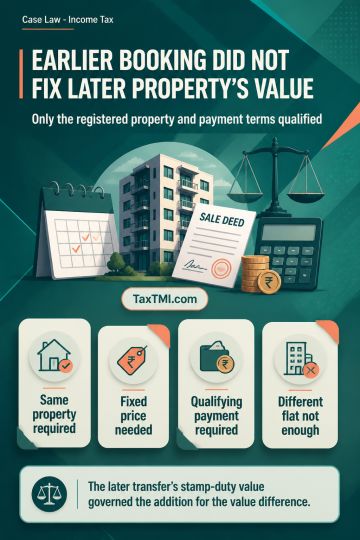
Agreement-date stamp valuation requires the same registered property, fixed consideration, and qualifying payment; an unrelated prior booking cannot a...
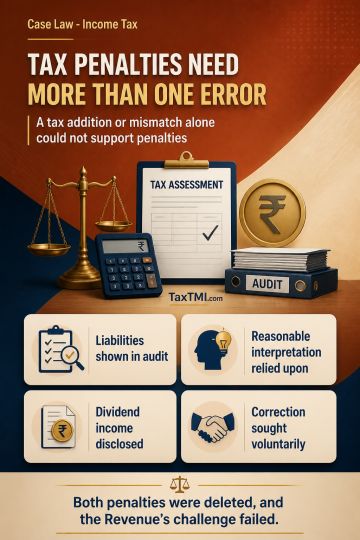
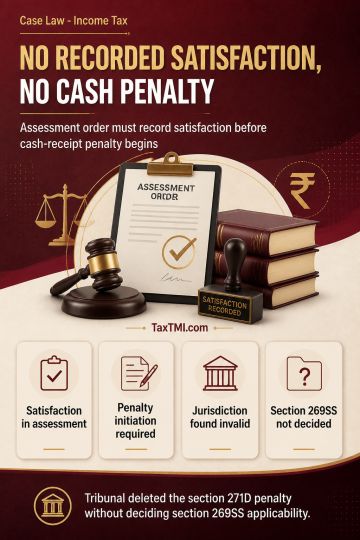
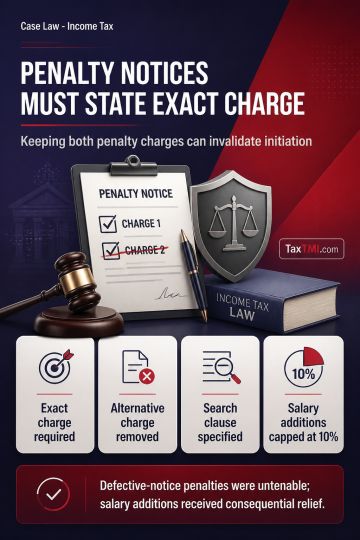
The Appellate Tribunal considered the issue of penalty u/s 271(1)(c) of the Act. It was questioned whether a precise charge was brought against the assessee and if the assessing officer had recorded proper satisfaction. The assessee offered additional income during a search related to inflated marketing expenses. The Tribunal found that the assessing officer did not specify the charge in the penalty proceedings notice, rendering the initiation of penalty proceedings invalid. The vague notice issued was deemed void, leading to the penalty order being quashed in favor of the assessee.
The Appellate Tribunal considered the issue of penalty u/s 271(1)(c) of the Act. It was questioned whether a precise charge was brought against the assessee and if the assessing officer had recorded proper satisfaction. The assessee offered additional income during a search related to inflated marketing expenses. The Tribunal found that the assessing officer did not specify the charge in the penalty proceedings notice, rendering the initiation of penalty proceedings invalid. The vague notice issued was deemed void, leading to the penalty order being quashed in favor of the assessee.
Note: It is a system-generated summary and is for quick reference only.
 TaxTMI
  TaxTMI
 of 4884