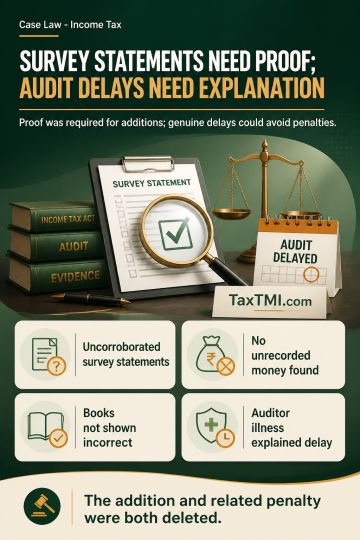
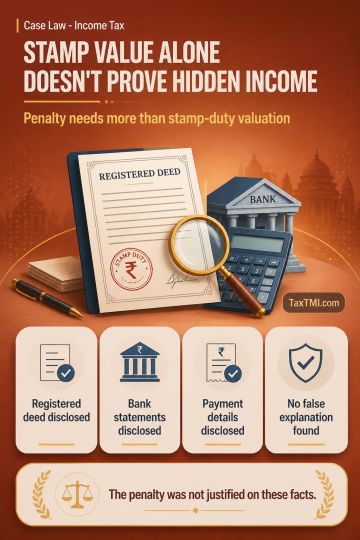
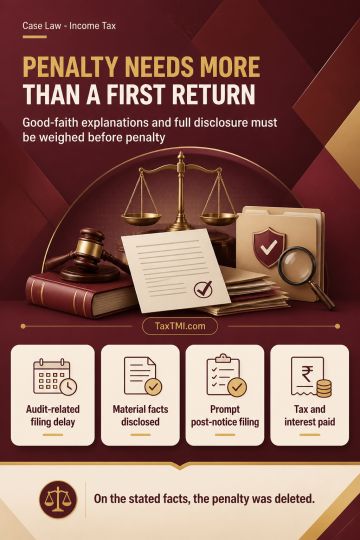
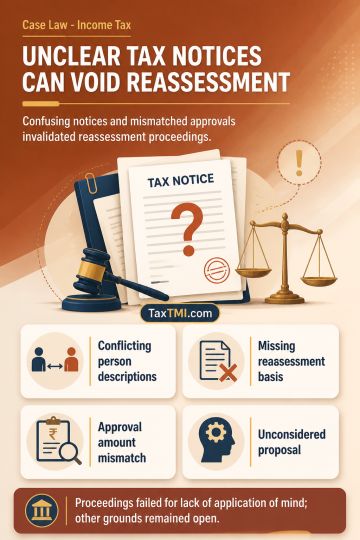
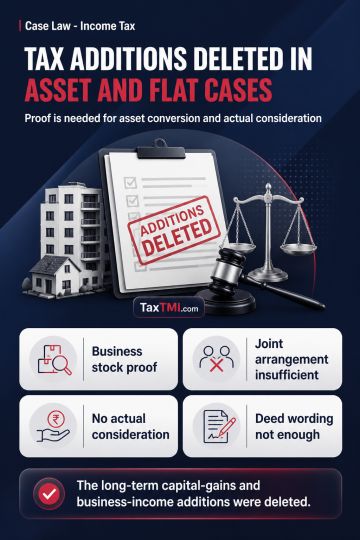
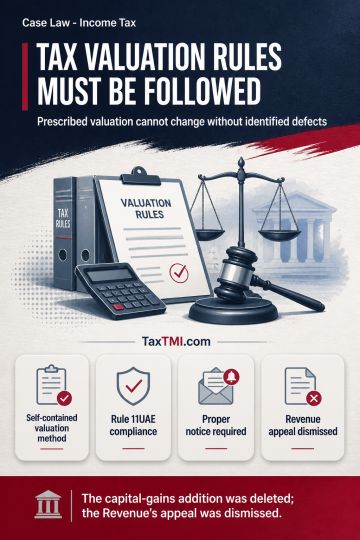
Capital Asset Conversion Requires Proven Business Stock Treatment; Paper Consideration in Spousal Flat Transfers Does Not Create Taxable Business Inco...
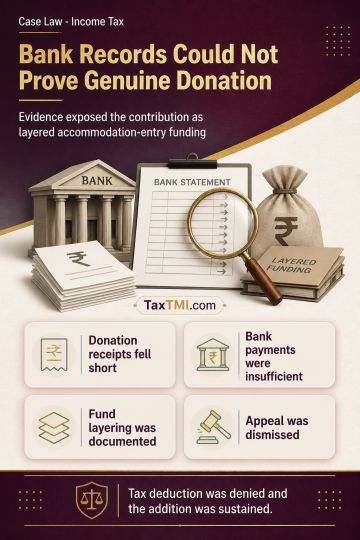
Human-probability test defeats political donation deduction where banking records mask accommodation-entry fund layering and evidence shows non-genuin...
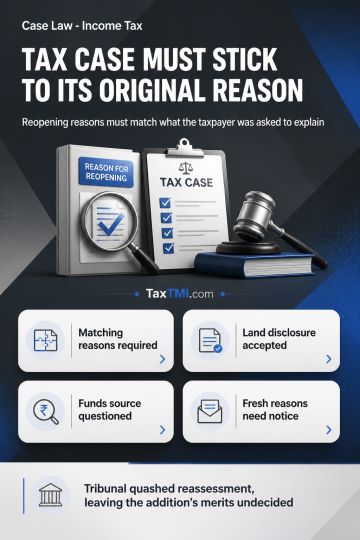
Commercial property status protects capital-gains exemption when residential-house ownership limits are tested, while agricultural-land character gove...
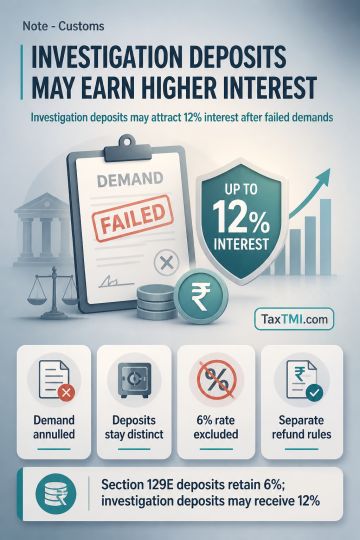
Investigation deposits refunded after failed customs demands fall outside the statutory appellate pre-deposit interest regime and may attract compensa...
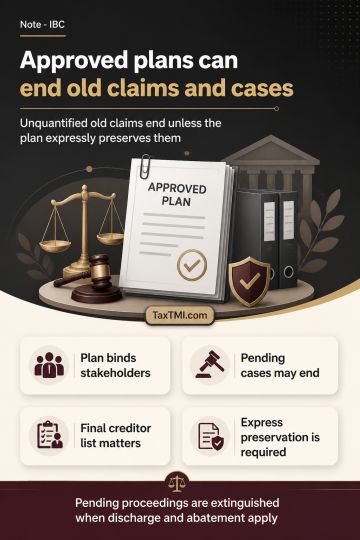
Resolution plan finality extinguishes unquantified operational-creditor claims and pending proceedings unless the approved plan expressly preserves th...
Page of 4897
Press 'Enter' after typing page number.
661 to 680 of 97923 Results
❮
❯
❯❯
0 / 200
Expand Note
Add to Folder
No Folders have been created
+
Are you sure you want to delete "My most important" ?
CESTAT, an Appellate Tribunal, addressed the valuation of services in a case involving transport/insurance charges received by the Appellant for the erection and installation of transmission towers. The Tribunal held that the separate consideration for installation and transportation/insurance charges indicated distinct and independent activities under the service contract. Referring to a precedent, it emphasized that services should not be classified as a single composite service if they are distinct and independent. The Tribunal also rejected the extended period of limitation, noting that the allegation of suppression of facts was incorrect. Consequently, the demand for service tax was deemed legally unsustainable, and the impugned order was set aside, allowing the appeal.
CESTAT, an Appellate Tribunal, addressed the valuation of services in a case involving transport/insurance charges received by the Appellant for the erection and installation of transmission towers. The Tribunal held that the separate consideration for installation and transportation/insurance charges indicated distinct and independent activities under the service contract. Referring to a precedent, it emphasized that services should not be classified as a single composite service if they are distinct and independent. The Tribunal also rejected the extended period of limitation, noting that the allegation of suppression of facts was incorrect. Consequently, the demand for service tax was deemed legally unsustainable, and the impugned order was set aside, allowing the appeal.
Note: It is a system-generated summary and is for quick reference only.
 TaxTMI
  TaxTMI
 of 4897