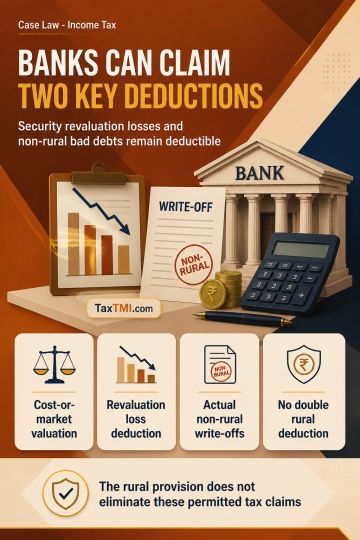
The case involves rectification u/s 154 for disallowance of bad debts provisions u/s 36(1)(viia) in a co-operative bank's computation sheet. ITAT held that the mistake was apparent as the provision was not in the books. CIT(A) noted rectification requires a glaring mistake of law. ITAT found the claim ineligible and rectified u/s 154. CIT(A) noted a similar deduction in a subsequent year but the provision was duly accounted for. AR argued for deduction based on Companies Act provisions, but ITAT found no support for allowing the claim if not in books. Following precedent, ITAT remitted the matter to AO to allow deduction based on actual provision made in books. Revenue's appeal partly allowed for statistical purposes.
The case involves rectification u/s 154 for disallowance of bad debts provisions u/s 36(1)(viia) in a co-operative bank's computation sheet. ITAT held that the mistake was apparent as the provision was not in the books. CIT(A) noted rectification requires a glaring mistake of law. ITAT found the claim ineligible and rectified u/s 154. CIT(A) noted a similar deduction in a subsequent year but the provision was duly accounted for. AR argued for deduction based on Companies Act provisions, but ITAT found no support for allowing the claim if not in books. Following precedent, ITAT remitted the matter to AO to allow deduction based on actual provision made in books. Revenue's appeal partly allowed for statistical purposes.
Note: It is a system-generated summary and is for quick reference only.
 TaxTMI
  TaxTMI
 of 4878