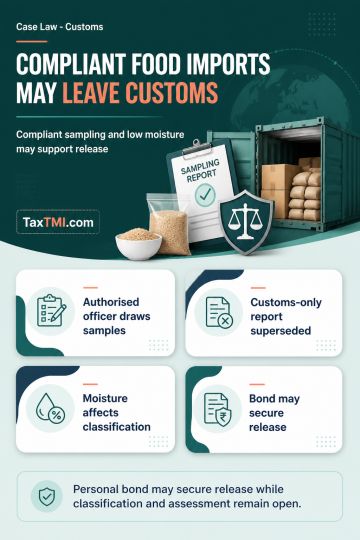
Food import sampling requirements support provisional release where unseized consignments conform to standards and raw areca classification is unestab...
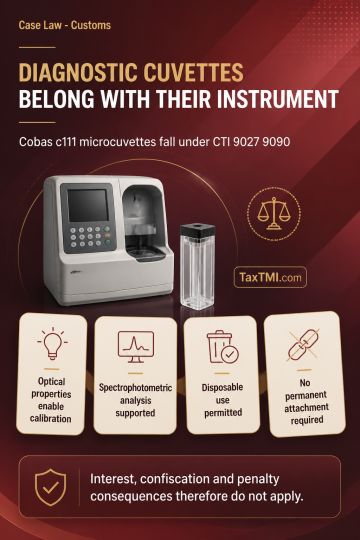
Diagnostic microcuvette classification follows sole-use analytical function, placing specialised disposable cuvettes with their analyser rather than g...
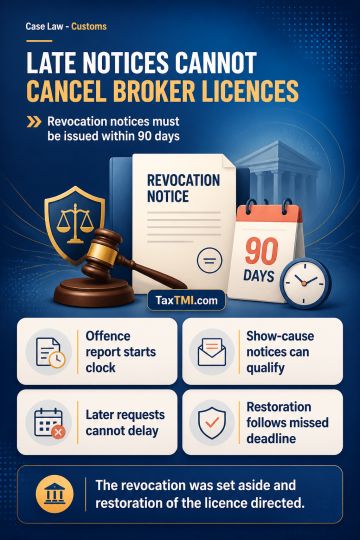
Customs Broker licensing proceedings fail when their offence-report foundation collapses and authorisation, advisory, and KYC duties remain unbreached...
The High Court considered the validity of an assessment order cancelling the petitioner's GST registration. The petitioner lacked access to the GST portal and was unfamiliar with computer resources. The Court noted the cancellation of registration and that the petitioner was not heard despite being offered a personal hearing. The petitioner agreed to pay 10% of the disputed tax demand for a remand. The Court quashed the assessment order, allowing the petitioner to contest the tax demand. The petitioner was directed to remit 10% of the disputed tax demand within two weeks. The petition was disposed of accordingly.
The High Court considered the validity of an assessment order cancelling the petitioner's GST registration. The petitioner lacked access to the GST portal and was unfamiliar with computer resources. The Court noted the cancellation of registration and that the petitioner was not heard despite being offered a personal hearing. The petitioner agreed to pay 10% of the disputed tax demand for a remand. The Court quashed the assessment order, allowing the petitioner to contest the tax demand. The petitioner was directed to remit 10% of the disputed tax demand within two weeks. The petition was disposed of accordingly.
Note: It is a system-generated summary and is for quick reference only.
 TaxTMI
  TaxTMI
 of 4881