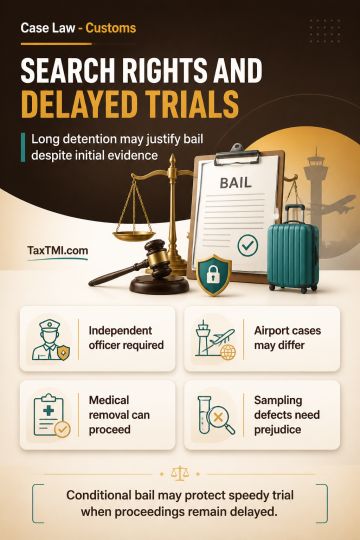
Food import sampling requirements support provisional release where unseized consignments conform to standards and raw areca classification is unestab...
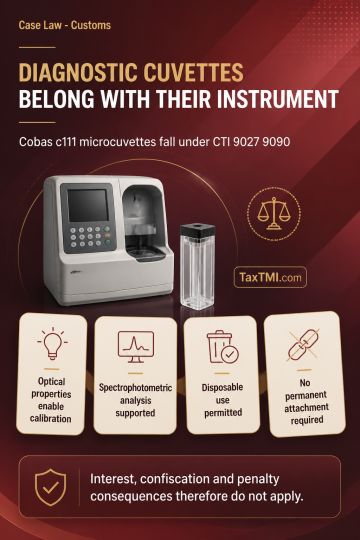
Diagnostic microcuvette classification follows sole-use analytical function, placing specialised disposable cuvettes with their analyser rather than g...
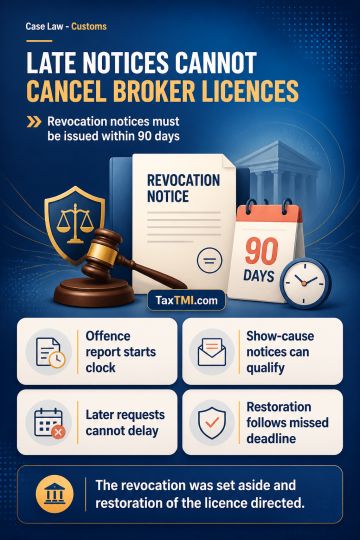
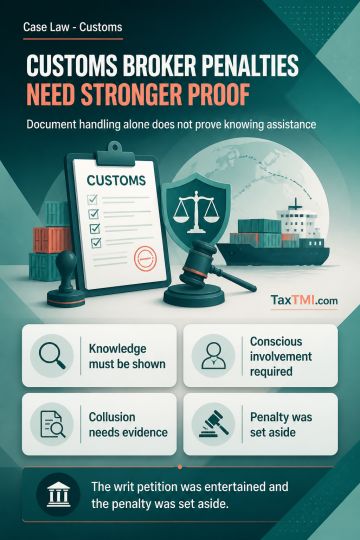
Customs Broker licensing proceedings fail when their offence-report foundation collapses and authorisation, advisory, and KYC duties remain unbreached...
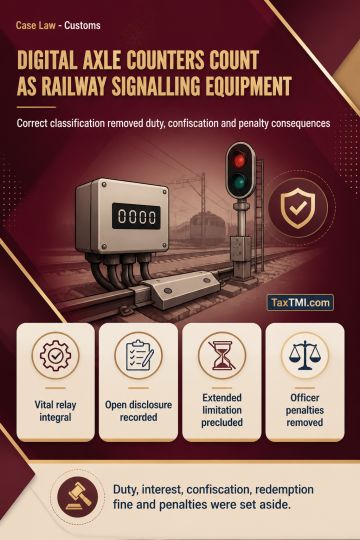
Tariff classification of Digital Axle Counters affirmed as electro-mechanical railway signalling equipment, eliminating duty, confiscation and penalty...
The Appellate Tribunal found that the penalty was initiated u/s. 271DA instead of u/s. 271D, which led to confusion and violated the assessee's right to a fair hearing. The initiation of penalty under the wrong section was deemed arbitrary and against Article 14 of the Indian Constitution. The defective notice denied the assessee the opportunity to defend effectively. The Tribunal held that strict compliance with Sec. 274 of the Act is necessary for imposing penalties. Regarding the cash transactions exceeding Rs. 20,000, the Tribunal noted that the penalty was not justified as the assessee's explanations were not adequately addressed. The Tribunal also considered that the penalty notice was invalid, rendering the levied penalty unsustainable in law. The appeal by the assessee was allowed, and the penalty levied was ordered to be deleted.
The Appellate Tribunal found that the penalty was initiated u/s. 271DA instead of u/s. 271D, which led to confusion and violated the assessee's right to a fair hearing. The initiation of penalty under the wrong section was deemed arbitrary and against Article 14 of the Indian Constitution. The defective notice denied the assessee the opportunity to defend effectively. The Tribunal held that strict compliance with Sec. 274 of the Act is necessary for imposing penalties. Regarding the cash transactions exceeding Rs. 20,000, the Tribunal noted that the penalty was not justified as the assessee's explanations were not adequately addressed. The Tribunal also considered that the penalty notice was invalid, rendering the levied penalty unsustainable in law. The appeal by the assessee was allowed, and the penalty levied was ordered to be deleted.
Note: It is a system-generated summary and is for quick reference only.
 TaxTMI
  TaxTMI
 of 4888