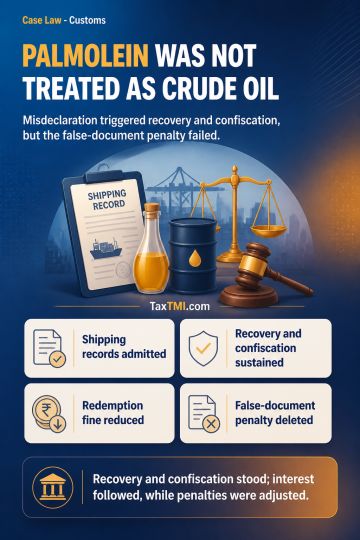
Palmolein classification defeated the crude-oil concession; material misdeclaration sustained recovery and confiscation, while separate false-document...
The case involved the entitlement to exemption u/s 11/12 based on the filing of an audit report. Non-filing of the audit report with the return of income was considered a procedural irregularity, not a basis for denying the exemption. The CBDT Circular allowed for condoning delays, but as no condonation petition was filed, this point was rejected. The assessee was advised to appeal against the intimation u/s 143(1) rather than a rectification order u/s 154. The decision emphasized that the correct amount of tax should be imposed on the assessee, even if the appeal channel was not chosen correctly. Ultimately, the assessee was granted the benefit of exemption u/s 11/12 despite the delay in filing the audit report.
The case involved the entitlement to exemption u/s 11/12 based on the filing of an audit report. Non-filing of the audit report with the return of income was considered a procedural irregularity, not a basis for denying the exemption. The CBDT Circular allowed for condoning delays, but as no condonation petition was filed, this point was rejected. The assessee was advised to appeal against the intimation u/s 143(1) rather than a rectification order u/s 154. The decision emphasized that the correct amount of tax should be imposed on the assessee, even if the appeal channel was not chosen correctly. Ultimately, the assessee was granted the benefit of exemption u/s 11/12 despite the delay in filing the audit report.
Note: It is a system-generated summary and is for quick reference only.
 TaxTMI
  TaxTMI
 of 4894