Transfer-pricing aggregation of distinct support-service and subcontract transactions was rejected, while debt-free receivables attracted no notional ...
Customs exemptions cover photovoltaic assembly machinery and PVF backsheets, while fully declared cleared imports may avoid confiscation and penalties...
Specific tariff classification for LCD devices overrides treatment as electricity-meter parts, defeating differential duty, extended limitation, and p...
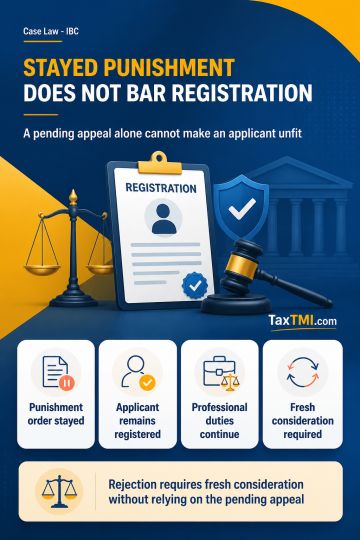
Stayed disciplinary punishment does not establish unfitness for insolvency professional registration; reconsideration must disregard mere pendency of ...
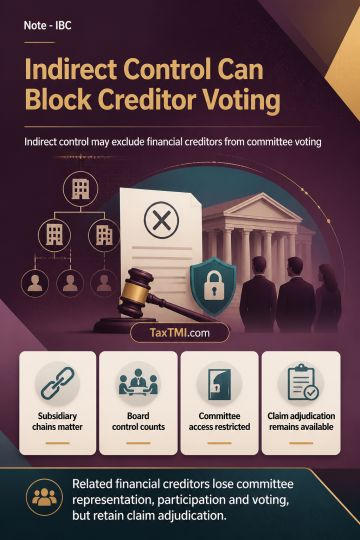
Indirect corporate control can create related-party status, excluding financial creditors from Committee of Creditors representation, participation an...
Page of 4881
Press 'Enter' after typing page number.
101 to 120 of 97618 Results
❮
❯
❯❯
0 / 200
Expand Note
Add to Folder
No Folders have been created
+
Are you sure you want to delete "My most important" ?
The ITAT, an Appellate Tribunal, addressed the issue of denial of exemption u/s 11 due to a violation u/s 13(1)(c)(ii) involving an interest-free advance to a 'specified person' u/s 13(3). The assessee had made an advance to Divine Real Build Pvt. Ltd. for a land purchase agreement, intending to increase FAR with DDA. The AO found the land to be agricultural with no construction permission. The AR argued that crucial documents supporting the assessee's intentions were not available earlier. The ITAT allowed admission of these documents for fair adjudication, remitting the issue back to the AO for fresh consideration in both assessment years. The assessee's appeal was partly allowed for statistical purposes.
The ITAT, an Appellate Tribunal, addressed the issue of denial of exemption u/s 11 due to a violation u/s 13(1)(c)(ii) involving an interest-free advance to a 'specified person' u/s 13(3). The assessee had made an advance to Divine Real Build Pvt. Ltd. for a land purchase agreement, intending to increase FAR with DDA. The AO found the land to be agricultural with no construction permission. The AR argued that crucial documents supporting the assessee's intentions were not available earlier. The ITAT allowed admission of these documents for fair adjudication, remitting the issue back to the AO for fresh consideration in both assessment years. The assessee's appeal was partly allowed for statistical purposes.
Note: It is a system-generated summary and is for quick reference only.
 TaxTMI
  TaxTMI
 of 4881