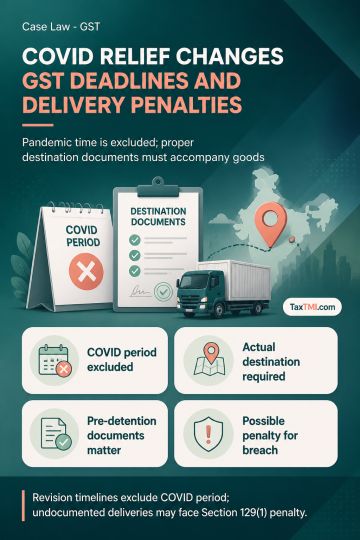
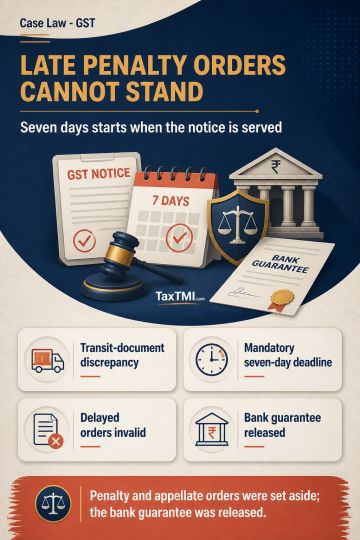
COVID-19 limitation exclusion and destination-specific e-way bills govern revisional timelines and penalties for undocumented third-party plywood deli...
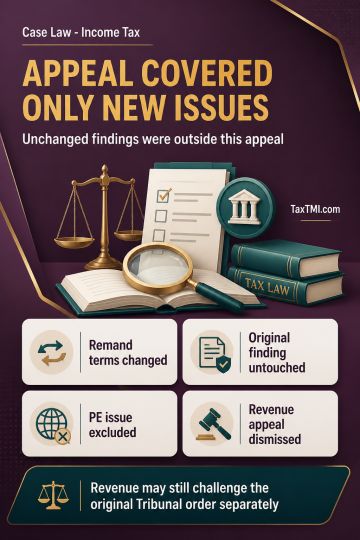
Questions arising from miscellaneous application orders cannot challenge unaltered Tribunal findings, leaving the original order separately challengea...
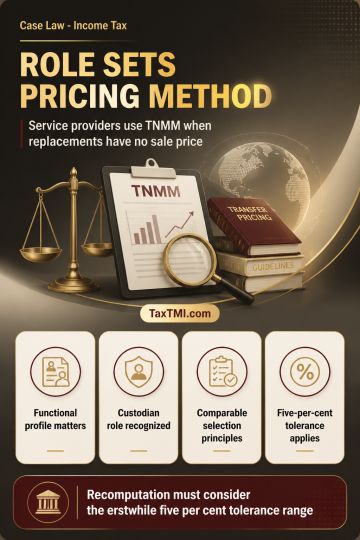
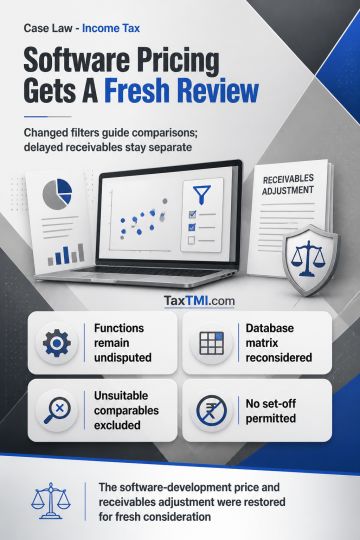
Transfer-pricing comparability filters require fresh arm's-length analysis, while delayed receivables need separate reconsideration with working-capit...
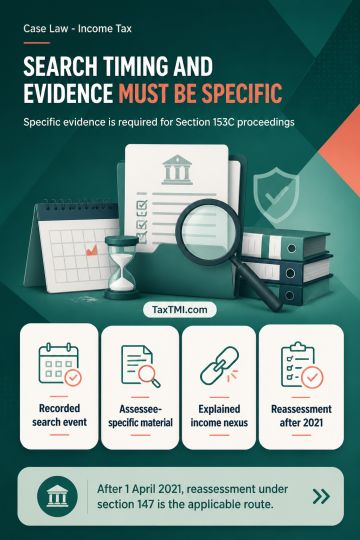
Section 153C jurisdiction requires timely deemed search and assessee-specific satisfaction material; otherwise reassessment must use the proper statut...
Page of 4891
Press 'Enter' after typing page number.
681 to 700 of 97820 Results
❮
❯
❯❯
0 / 200
Expand Note
Add to Folder
No Folders have been created
+
Are you sure you want to delete "My most important" ?
The Appellate Tribunal addressed the issue of the retrospective or prospective application of amended provisions of Section 50C regarding Capital Gain computation. Citing a case precedent, it was held that the proviso to Section 50C(1) should be considered retrospective from its inception. Consequently, the amendment to Section 50C applies retrospectively, requiring the recomputation of capital gains based on stamp duty value at the agreement date. The decision favored the taxpayer, rejecting the revenue's stance.
The Appellate Tribunal addressed the issue of the retrospective or prospective application of amended provisions of Section 50C regarding Capital Gain computation. Citing a case precedent, it was held that the proviso to Section 50C(1) should be considered retrospective from its inception. Consequently, the amendment to Section 50C applies retrospectively, requiring the recomputation of capital gains based on stamp duty value at the agreement date. The decision favored the taxpayer, rejecting the revenue's stance.
Note: It is a system-generated summary and is for quick reference only.
 TaxTMI
  TaxTMI
 of 4891