Mandatory textile export qualifiers distinguish flame-retardant fabrics from other listed fabrics for automated identification under the textiles ince...
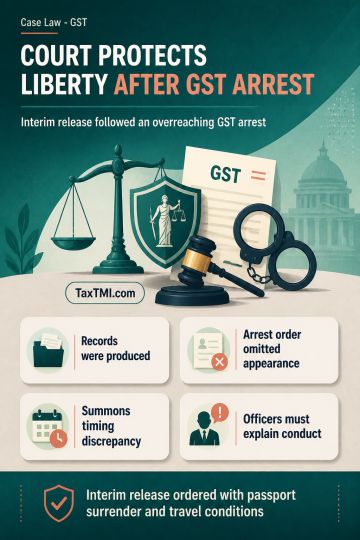
Personal liberty safeguards restrict arrest after court-directed GST appearance, requiring interim release where authorities overreach pending proceed...
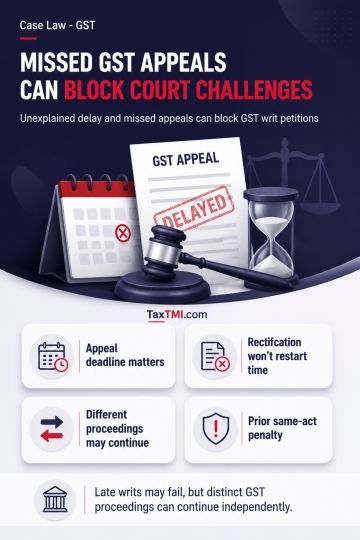
Alternative statutory remedy and delay bar GST writ challenges despite pending rectification, while distinct subject matter permits parallel proceedin...
Page of 4891
Press 'Enter' after typing page number.
421 to 440 of 97820 Results
❮
❯
❯❯
0 / 200
Expand Note
Add to Folder
No Folders have been created
+
Are you sure you want to delete "My most important" ?
The Appellate Tribunal addressed the issue of rejection of approval u/s 80G due to late filing of Form 10AB. The Tribunal held that the CIT(E) should have considered the application on merits rather than declaring it non-maintainable solely based on the commencement date of activities. The assessee obtained provisional approval and filed Form 10AB within the specified time frame, meeting the requirements of Section 80G(5)(iii). The Tribunal emphasized that the commencement date of activities before incorporation was irrelevant in this case. The phrase "whichever is earlier" was deemed inapplicable given the unique circumstances of the case. The decision lacked a thorough examination of the merits of the application, highlighting a legal flaw in the approach taken.
The Appellate Tribunal addressed the issue of rejection of approval u/s 80G due to late filing of Form 10AB. The Tribunal held that the CIT(E) should have considered the application on merits rather than declaring it non-maintainable solely based on the commencement date of activities. The assessee obtained provisional approval and filed Form 10AB within the specified time frame, meeting the requirements of Section 80G(5)(iii). The Tribunal emphasized that the commencement date of activities before incorporation was irrelevant in this case. The phrase "whichever is earlier" was deemed inapplicable given the unique circumstances of the case. The decision lacked a thorough examination of the merits of the application, highlighting a legal flaw in the approach taken.
Note: It is a system-generated summary and is for quick reference only.
 TaxTMI
  TaxTMI
 of 4891