Indirect corporate control can create related-party status, excluding financial creditors from Committee of Creditors representation, participation an...
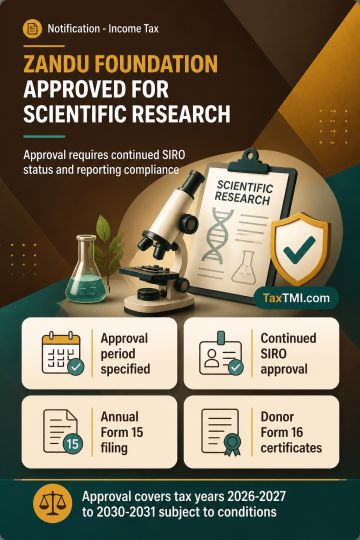
Scientific research association approval requires continuing SIRO status, annual donation reporting, and donor certificates for the approved foundatio...
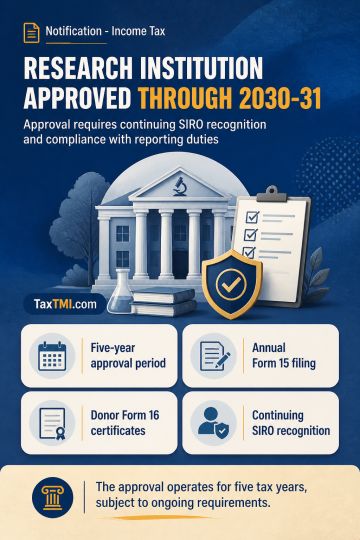
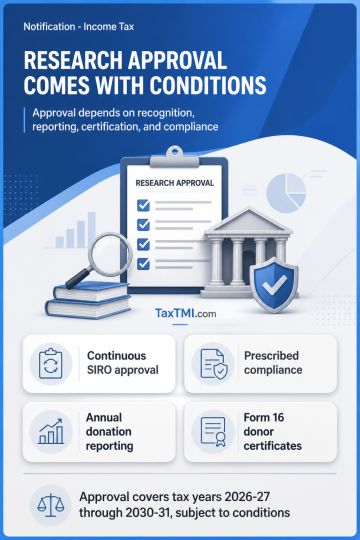
Scientific research institution approval is conditional on SIRO recognition, annual donation reporting, donor certification, and prescribed compliance...
The Appellate Tribunal addressed the issue of rejection of approval u/s 80G due to late filing of Form 10AB. The Tribunal held that the CIT(E) should have considered the application on merits rather than declaring it non-maintainable solely based on the commencement date of activities. The assessee obtained provisional approval and filed Form 10AB within the specified time frame, meeting the requirements of Section 80G(5)(iii). The Tribunal emphasized that the commencement date of activities before incorporation was irrelevant in this case. The phrase "whichever is earlier" was deemed inapplicable given the unique circumstances of the case. The decision lacked a thorough examination of the merits of the application, highlighting a legal flaw in the approach taken.
The Appellate Tribunal addressed the issue of rejection of approval u/s 80G due to late filing of Form 10AB. The Tribunal held that the CIT(E) should have considered the application on merits rather than declaring it non-maintainable solely based on the commencement date of activities. The assessee obtained provisional approval and filed Form 10AB within the specified time frame, meeting the requirements of Section 80G(5)(iii). The Tribunal emphasized that the commencement date of activities before incorporation was irrelevant in this case. The phrase "whichever is earlier" was deemed inapplicable given the unique circumstances of the case. The decision lacked a thorough examination of the merits of the application, highlighting a legal flaw in the approach taken.
Note: It is a system-generated summary and is for quick reference only.
 TaxTMI
  TaxTMI
 of 4891