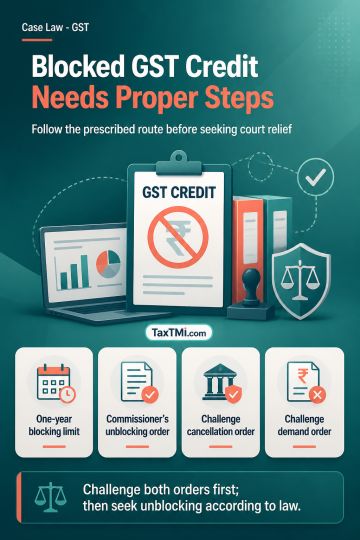
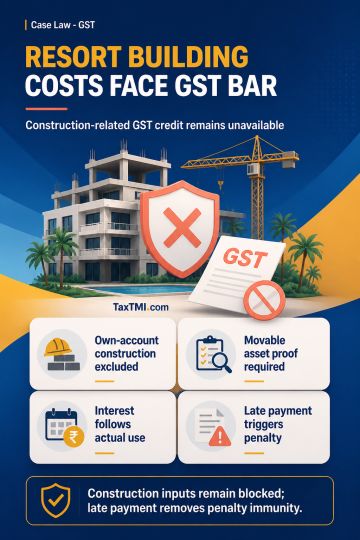
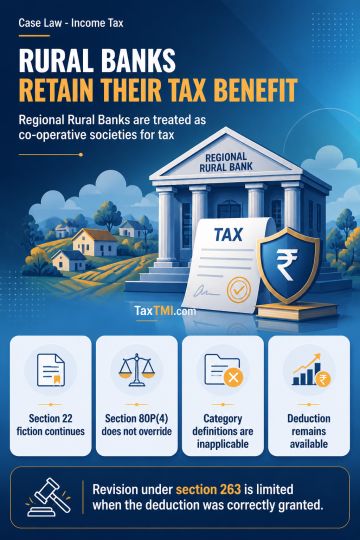
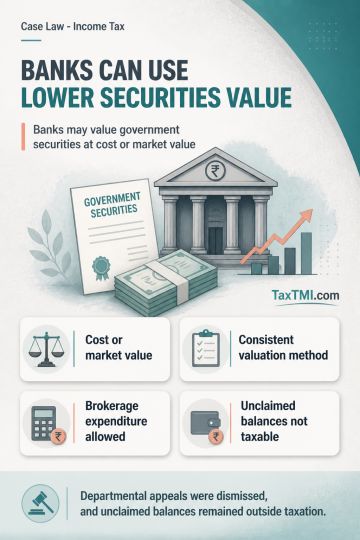
Blocked input tax credit for resort construction remains unavailable; interest follows actual utilisation, while delayed payment attracts statutory pe...
Duplicate PAN allocation requires record verification and deactivation reasons before assessment-related transactions can be attributed to an assessee...
Faceless assessment safeguards require requested personal hearings and adequate final show-cause response time, failing which reassessment is required...
The ITAT Surat held that the penalty u/s 271(1)(c) was not sustainable due to a defective notice and estimation of income on bogus purchases. The notice u/s 274 was issued mechanically without specifying whether the penalty was for 'Concealment of income' or 'furnishing inaccurate particulars of income'. The additions were based on estimation without a definite finding on the quantum of concealment, rendering the penalty unsustainable. Legal precedent from the jurisdictional High Court supported this decision, citing cases such as CIT vs. Subhas Trading Co., Navjivan Oil Mills, and Valimkbhai H. Patel. Therefore, the penalty u/s 271(1)(c) was deemed not sustainable in this case.
The ITAT Surat held that the penalty u/s 271(1)(c) was not sustainable due to a defective notice and estimation of income on bogus purchases. The notice u/s 274 was issued mechanically without specifying whether the penalty was for 'Concealment of income' or 'furnishing inaccurate particulars of income'. The additions were based on estimation without a definite finding on the quantum of concealment, rendering the penalty unsustainable. Legal precedent from the jurisdictional High Court supported this decision, citing cases such as CIT vs. Subhas Trading Co., Navjivan Oil Mills, and Valimkbhai H. Patel. Therefore, the penalty u/s 271(1)(c) was deemed not sustainable in this case.
Note: It is a system-generated summary and is for quick reference only.
 TaxTMI
  TaxTMI
 of 4883