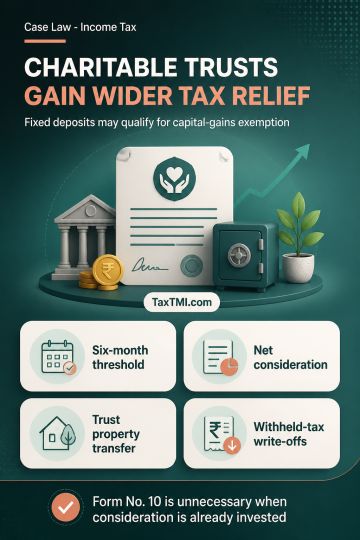
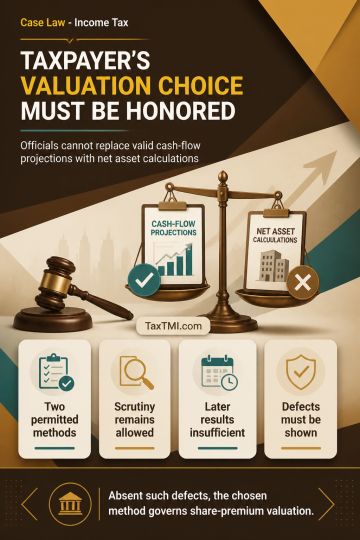
Capital-gains exemption for charitable trusts extends to qualifying fixed deposits, while unrecoverable TDS write-offs may constitute income applicati...
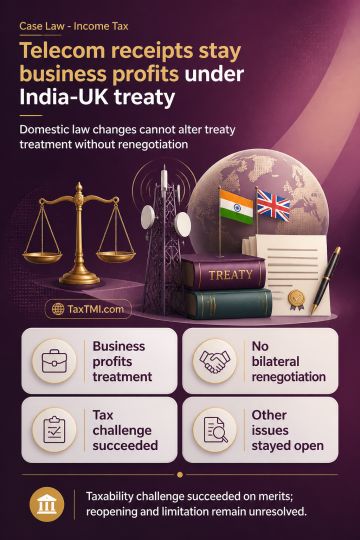
India-UK treaty characterisation of telecom-service receipts as business profits withstands unilateral domestic-law amendments for Indian tax purposes...
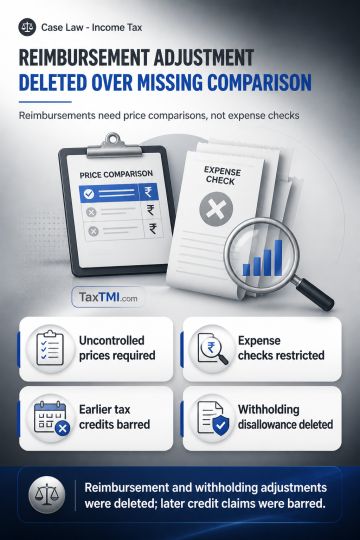
Transfer-pricing reimbursement adjustments require uncontrolled comparables and cannot become expense-genuineness reviews, resulting in deletion of th...
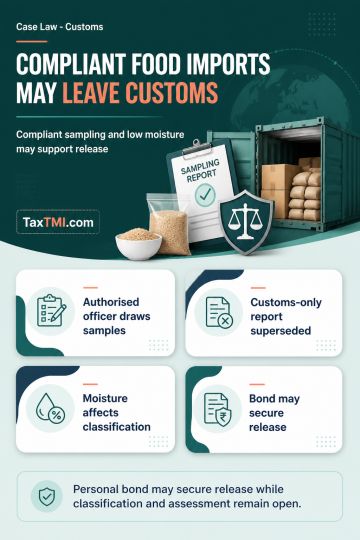
Food import sampling requirements support provisional release where unseized consignments conform to standards and raw areca classification is unestab...
Page of 4883
Press 'Enter' after typing page number.
321 to 340 of 97649 Results
❮
❯
❯❯
0 / 200
Expand Note
Add to Folder
No Folders have been created
+
Are you sure you want to delete "My most important" ?
The Authority for Advance Ruling determined that the applicant qualifies as an Electronic Commerce Operator (ECO) as per the definitions provided. The applicant owns and manages the digital platform "Vyavshay" for service supply, connecting service providers with users. Section 9(5) of the CGST Act, 2017 applies to services offered through the platform, shifting tax liability to the ECO. The ECO is deemed the supplier of services received by consumers through the platform. The ECO is required to pay tax on transactions facilitated through the platform, regardless of payment flow. The ECO is liable for GST on app usage charges and transaction values for notified services. The ECO is responsible for tax on transactions with partners, excluding those not covered by Section 9(5) of the CGST Act, 2017.
The Authority for Advance Ruling determined that the applicant qualifies as an Electronic Commerce Operator (ECO) as per the definitions provided. The applicant owns and manages the digital platform "Vyavshay" for service supply, connecting service providers with users. Section 9(5) of the CGST Act, 2017 applies to services offered through the platform, shifting tax liability to the ECO. The ECO is deemed the supplier of services received by consumers through the platform. The ECO is required to pay tax on transactions facilitated through the platform, regardless of payment flow. The ECO is liable for GST on app usage charges and transaction values for notified services. The ECO is responsible for tax on transactions with partners, excluding those not covered by Section 9(5) of the CGST Act, 2017.
Note: It is a system-generated summary and is for quick reference only.
 TaxTMI
  TaxTMI
 of 4883