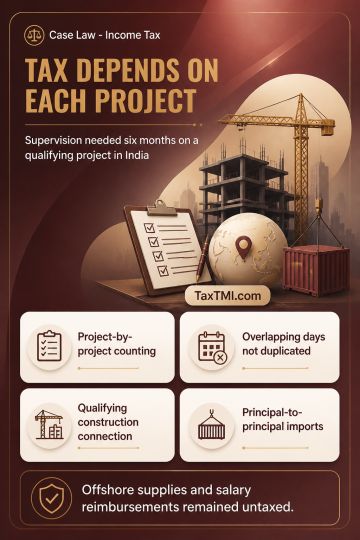
Supervisory permanent establishment requires project-wise duration and qualifying construction nexus; offshore supplies and salary reimbursements rema...
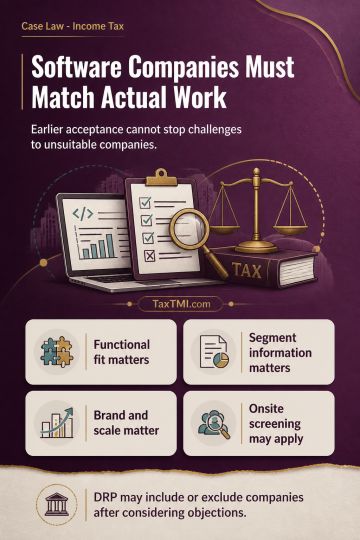
Transfer-pricing comparability permits fresh objections and filters where software service comparables are functionally unsuitable for arm's-length pr...
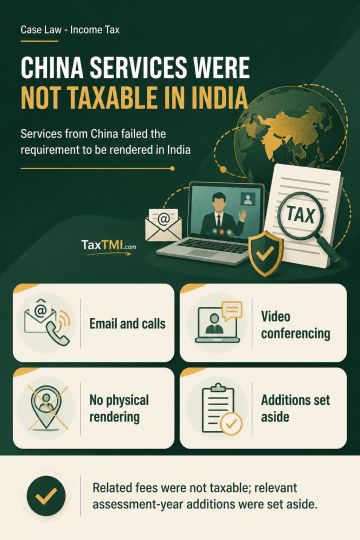
Territorial rendering requirement excludes China-based management and consultancy services from fees for technical services under the India-China DTAA...
The Chhattisgarh High Court considered the maintainability of a petition challenging an order issued u/s 73(1) of the GST Act. The court noted that the order was appealable u/s 107 of the GST Act. Referring to the principle of exhaustion of alternative remedy, the court cited the Supreme Court's stance that when statutory remedies are available, writ petitions should not be entertained. The court emphasized that the petitioner had the option to challenge the order through an appeal, and dismissed the writ petition, stating that the petitioner's ability to access their email could be addressed in the appellate process. The court concluded that there were no grounds to entertain the writ petition, hence it was dismissed.
The Chhattisgarh High Court considered the maintainability of a petition challenging an order issued u/s 73(1) of the GST Act. The court noted that the order was appealable u/s 107 of the GST Act. Referring to the principle of exhaustion of alternative remedy, the court cited the Supreme Court's stance that when statutory remedies are available, writ petitions should not be entertained. The court emphasized that the petitioner had the option to challenge the order through an appeal, and dismissed the writ petition, stating that the petitioner's ability to access their email could be addressed in the appellate process. The court concluded that there were no grounds to entertain the writ petition, hence it was dismissed.
Note: It is a system-generated summary and is for quick reference only.
 TaxTMI
  TaxTMI
 of 4888