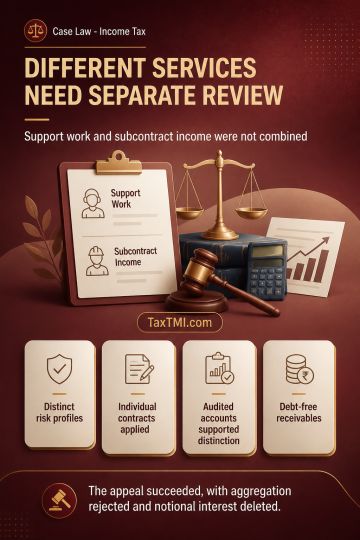
Transfer-pricing aggregation of distinct support-service and subcontract transactions was rejected, while debt-free receivables attracted no notional ...
Customs exemptions cover photovoltaic assembly machinery and PVF backsheets, while fully declared cleared imports may avoid confiscation and penalties...
Specific tariff classification for LCD devices overrides treatment as electricity-meter parts, defeating differential duty, extended limitation, and p...
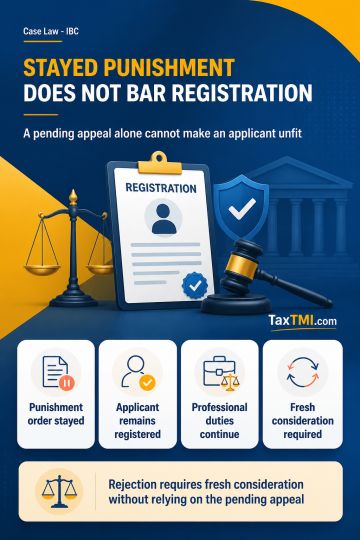
Stayed disciplinary punishment does not establish unfitness for insolvency professional registration; reconsideration must disregard mere pendency of ...
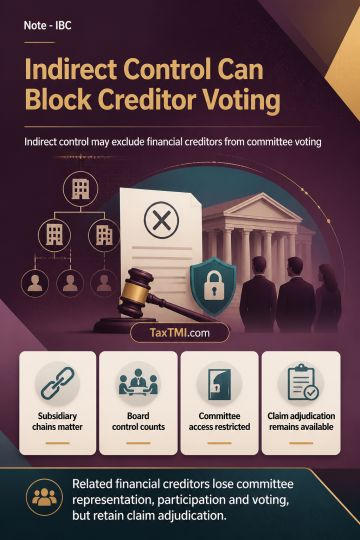
Indirect corporate control can create related-party status, excluding financial creditors from Committee of Creditors representation, participation an...
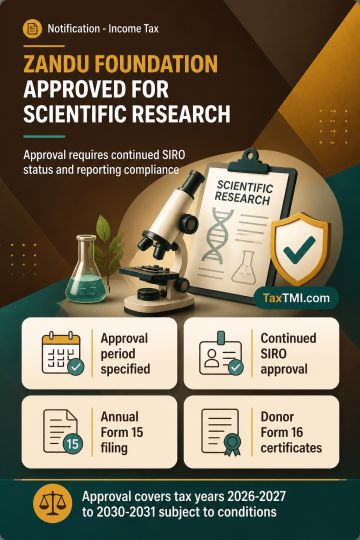
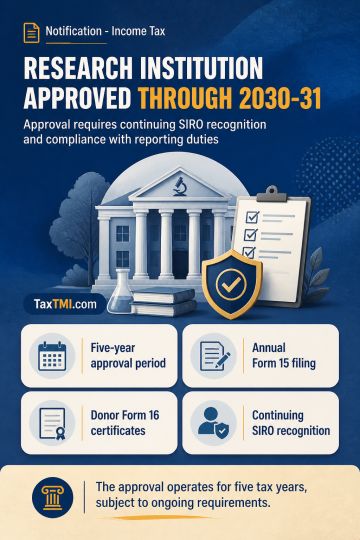
Scientific research association approval requires continuing SIRO status, annual donation reporting, and donor certificates for the approved foundatio...
Scientific research institution approval is conditional on SIRO recognition, annual donation reporting, donor certification, and prescribed compliance...
The Delhi High Court examined taxability in India of interest received by an Indian Permanent Establishment (PE) from its Head Office/Overseas Branch under the India-US Double Taxation Avoidance Agreement (DTAA). The court referred to the Credit Agricole case, emphasizing that branch offices are not separate legal entities. The court noted that the Explanation to Section 9(1)(v) of the Income Tax Act deals with banking entities, deeming remittances to the Head Office as accruing in India. The court found that the PE of a banking enterprise is not a separate legal entity, rejecting the application of the Explanation introduced in 2016. Referring to the Kikabhai Premchand KT case, the court highlighted the absurdity of a person profiting from itself. The court upheld the view that the branch office cannot profit from itself, and the DTAA provisions for banking enterprises would apply.
The Delhi High Court examined taxability in India of interest received by an Indian Permanent Establishment (PE) from its Head Office/Overseas Branch under the India-US Double Taxation Avoidance Agreement (DTAA). The court referred to the Credit Agricole case, emphasizing that branch offices are not separate legal entities. The court noted that the Explanation to Section 9(1)(v) of the Income Tax Act deals with banking entities, deeming remittances to the Head Office as accruing in India. The court found that the PE of a banking enterprise is not a separate legal entity, rejecting the application of the Explanation introduced in 2016. Referring to the Kikabhai Premchand KT case, the court highlighted the absurdity of a person profiting from itself. The court upheld the view that the branch office cannot profit from itself, and the DTAA provisions for banking enterprises would apply.
Note: It is a system-generated summary and is for quick reference only.
 TaxTMI
  TaxTMI
 of 4888