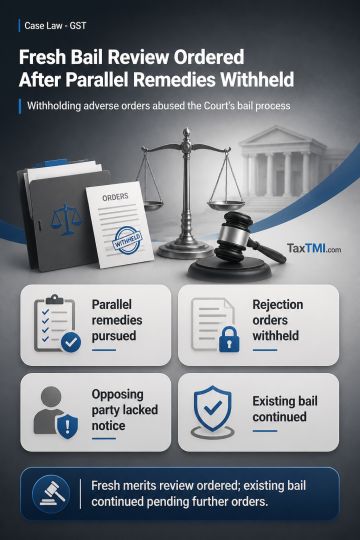
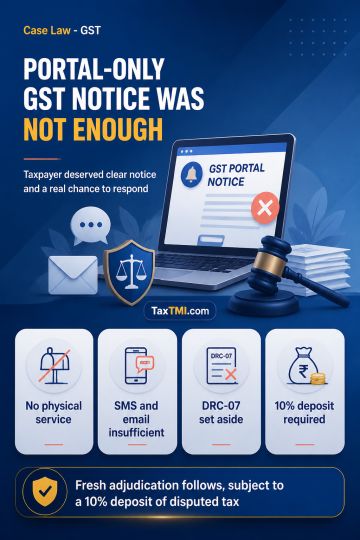
Money-laundering judgment timing requires awaiting the scheduled-offence decision despite continuation of the underlying trial where outcomes directly...
Accredited investor eligibility expands through securities-market exposure, while alternative investment fund disputes require prescribed resolution a...
Customs Assessment Portal centralises classification and valuation guidance to support consistent, transparent and informed compliance across stakehol...
The Supreme Court examined the validity of an Agreement to Sell for land, where the plaintiff entered into the agreement with a Power of Attorney holder for the defendants. The Court found that the agreement lacked signatures of all co-owners, and the power of attorney was not proven during trial. The plaintiff failed to appear as a witness, relying on the Power of Attorney holder instead. The Court noted the delay in filing the suit, which was done on the last day of the extended limitation period. As the plaintiff only engaged with one co-owner and delayed legal action despite knowledge of subsequent transactions, specific performance relief was denied due to the delay and failure to meet legal requirements.
The Supreme Court examined the validity of an Agreement to Sell for land, where the plaintiff entered into the agreement with a Power of Attorney holder for the defendants. The Court found that the agreement lacked signatures of all co-owners, and the power of attorney was not proven during trial. The plaintiff failed to appear as a witness, relying on the Power of Attorney holder instead. The Court noted the delay in filing the suit, which was done on the last day of the extended limitation period. As the plaintiff only engaged with one co-owner and delayed legal action despite knowledge of subsequent transactions, specific performance relief was denied due to the delay and failure to meet legal requirements.
Note: It is a system-generated summary and is for quick reference only.
 TaxTMI
 TaxTMI

 of 4920