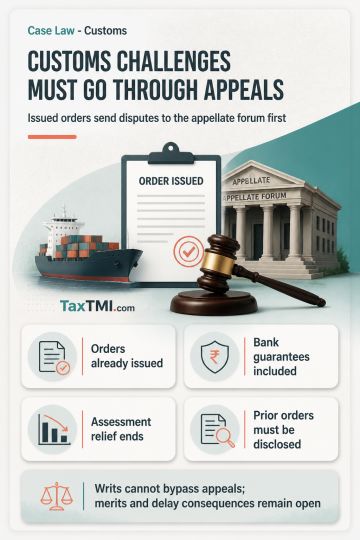
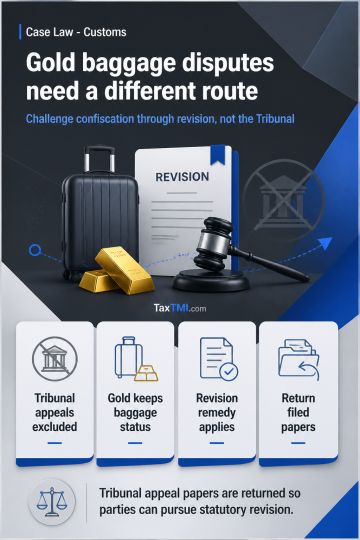
Appellate jurisdiction over baggage imports is excluded, requiring confiscation challenges involving passenger-carried gold to proceed by statutory re...
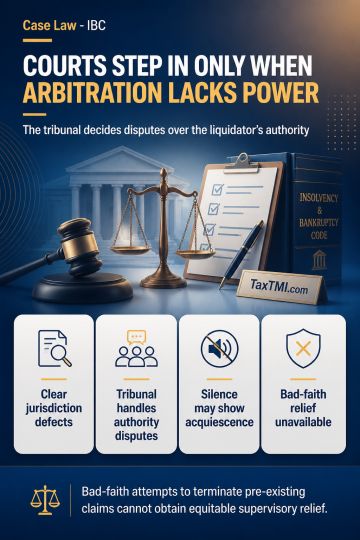
Article 227 review permits intervention in arbitration only for manifest, patent inherent jurisdictional defects, not representational authority dispu...
The Madhya Pradesh High Court considered the maintainability of a petition regarding the recovery of short paid Central Excise Duty. The court noted that the availability of an alternative remedy does not automatically bar the filing of a writ petition, as it depends on the specific circumstances of each case. Citing a Supreme Court judgment, the court emphasized that the doctrine of alternative remedy is a matter of policy and discretion rather than a strict legal rule. The petitioner was found to have been denied the necessary documents and a fair hearing, leading to a violation of principles of natural justice. As a result, the court set aside the final order of recovery and remanded the matter back to the authority for fresh adjudication, allowing the petition by way of remand.
The Madhya Pradesh High Court considered the maintainability of a petition regarding the recovery of short paid Central Excise Duty. The court noted that the availability of an alternative remedy does not automatically bar the filing of a writ petition, as it depends on the specific circumstances of each case. Citing a Supreme Court judgment, the court emphasized that the doctrine of alternative remedy is a matter of policy and discretion rather than a strict legal rule. The petitioner was found to have been denied the necessary documents and a fair hearing, leading to a violation of principles of natural justice. As a result, the court set aside the final order of recovery and remanded the matter back to the authority for fresh adjudication, allowing the petition by way of remand.
Note: It is a system-generated summary and is for quick reference only.
 TaxTMI
  TaxTMI
 of 4893