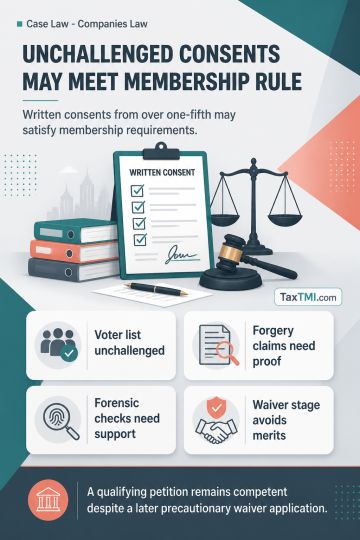
Membership-consent thresholds for oppression petitions are satisfied by unchallenged voter-list consents, while unsupported forgery claims require pro...
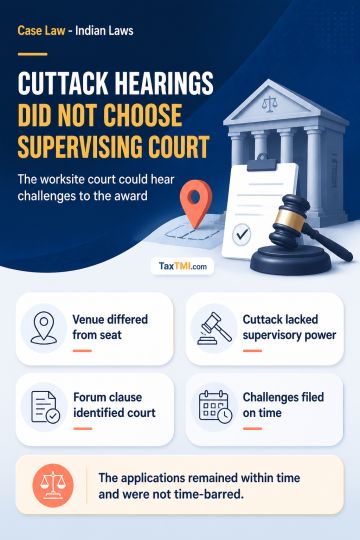
Juridical seat versus arbitral venue determines supervisory court jurisdiction, while timely award challenges remain within the prescribed limitation ...
The Orissa High Court held that the writ petition challenging an order passed under Section 74 of the OGST Act, 2017 was not maintainable due to being filed after the limitation period and without exhausting the alternative remedy of filing an appeal. The court emphasized the importance of adhering to statutory appeal procedures and cited the Supreme Court's decision in Assistant Commissioner (CT) LTU, Kakinada. The court also noted that even though the petitioner was not physically served the order, its availability on the common portal constituted valid service. Ultimately, the court dismissed the petition as not maintainable.
The Orissa High Court held that the writ petition challenging an order passed under Section 74 of the OGST Act, 2017 was not maintainable due to being filed after the limitation period and without exhausting the alternative remedy of filing an appeal. The court emphasized the importance of adhering to statutory appeal procedures and cited the Supreme Court's decision in Assistant Commissioner (CT) LTU, Kakinada. The court also noted that even though the petitioner was not physically served the order, its availability on the common portal constituted valid service. Ultimately, the court dismissed the petition as not maintainable.
Note: It is a system-generated summary and is for quick reference only.
 TaxTMI
  TaxTMI
 of 4891