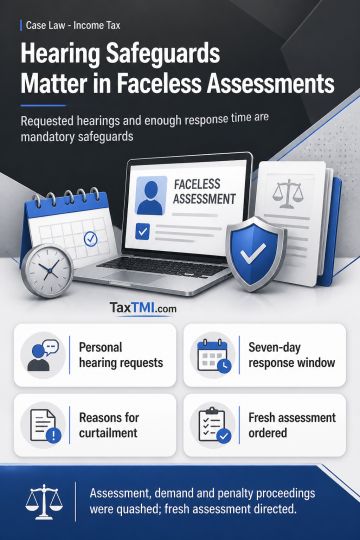
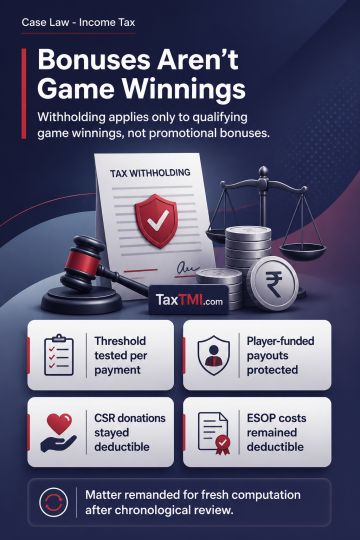
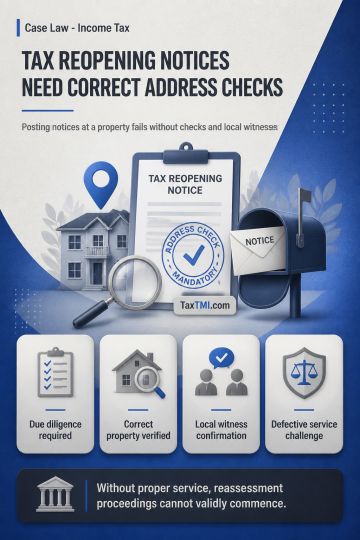
Faceless assessment safeguards require requested personal hearings and adequate final show-cause response time, failing which reassessment is required...
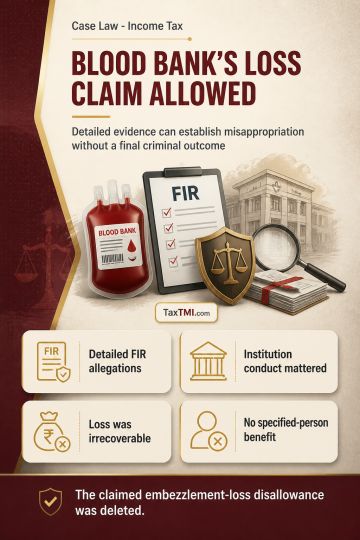
Embezzlement losses in charitable institutions remain allowable when misappropriation is established, irrecoverable, and not a specified-person benefi...
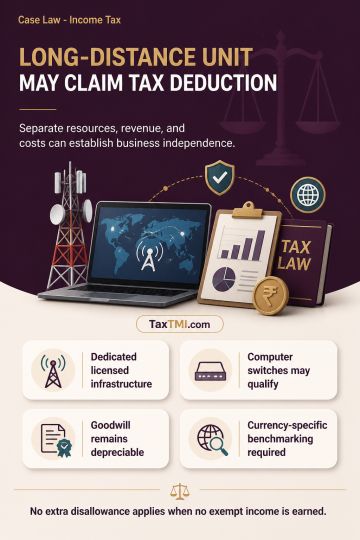
National long-distance undertaking status supports deduction where separately licensed infrastructure, resources, revenue, and expenditure establish c...
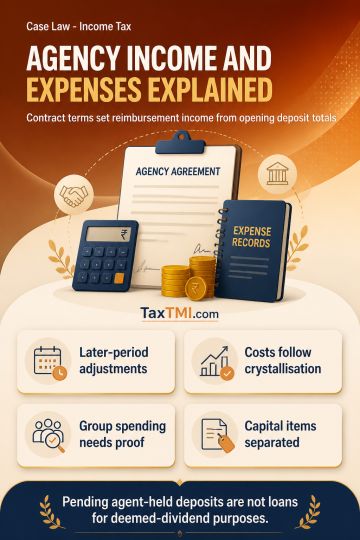
Agency reimbursement income follows contractual deposit-liability computation, while pending deposit collections do not constitute deemed-dividend loa...
The case before CESTAT Bangalore involved the interpretation of an exemption notification u/s 12/2012-CE for Additional Duty. The issue was whether a "Grid-Tied Solar Inverter" could be considered a "Solar Power Generating System" for claiming the exemption. The Tribunal held that while the inverter is used in a solar system, it does not constitute the entire system. The respondent failed to satisfy the conditions of the notification, thus not eligible for the exemption. The Commissioner's view of liberal interpretation was rejected, citing the burden of proof on the Revenue. The decision was in line with the Supreme Court's ruling in Dilip Kumar and Company case. The impugned order was set aside, and the appeal was allowed.
The case before CESTAT Bangalore involved the interpretation of an exemption notification u/s 12/2012-CE for Additional Duty. The issue was whether a "Grid-Tied Solar Inverter" could be considered a "Solar Power Generating System" for claiming the exemption. The Tribunal held that while the inverter is used in a solar system, it does not constitute the entire system. The respondent failed to satisfy the conditions of the notification, thus not eligible for the exemption. The Commissioner's view of liberal interpretation was rejected, citing the burden of proof on the Revenue. The decision was in line with the Supreme Court's ruling in Dilip Kumar and Company case. The impugned order was set aside, and the appeal was allowed.
Note: It is a system-generated summary and is for quick reference only.
 TaxTMI
  TaxTMI
 of 4884