Loading...

⚠ ✕
❮ Top
☎ Help
☰
×

By creating an account you can:

Logo TaxTMI
Call Us / Help / Feedback✕

Contact Us At :

✉ E-mail: [email protected]

✆ Call / WhatsApp at: +91 99117 96707

For more information, Check Contact Us

FAQs :

To know Frequently Asked Questions, Check FAQs

Most Asked Video Tutorials :

For more tutorials, Check Video Tutorials

Submit Feedback/Suggestion :

Email :
Please provide your email address so we can follow up on your feedback.
Category :
Description :
Min 15 characters 0/2000
Make Most of Text Search ✕
  1. Checkout this video tutorial: How to search effectively on TaxTMI.
  2. Put words in double quotes for exact word search, eg: "income tax"
  3. Avoid noise words such as : 'and, of, the, a'
  4. Sort by Relevance to get the most relevant document.
  5. Press Enter to add multiple terms/multiple phrases, and then click on Search to Search.
  6. Text Search
  7. The system will try to fetch results that contains ALL your words.
  8. Once you add keywords, you'll see a new 'Search In' filter that makes your results even more precise.
  9. Text Search
╳
Add to...
You have not created any category. Kindly create one to bookmark this item!
✕
Create New Category
Hide
Title :
Description :
❮❮ Hide
❮ Default View
Expand ❯❯
Close ✕
🔎 Filters / Advanced Search ❯
TEXT

Press 'Enter' to add multiple search terms. Rules for Better Search

Search In
Main Text + AI Text ❯
  • Main Text
  • Main Text + AI Text
  • AI Text
Law:
---- All Laws---- ❯
  • ---- All Laws----
  • Income Tax
  • Direct Taxes
  • Benami Property
  • Central GST Laws
  • SGST - State GST Laws
  • Customs
  • FTP - Foreign Trade Policy
  • SEZ - Special Economic Zone
  • FEMA - Foreign Exchange Management
  • Companies Law
  • SEBI - Securities & Exchange Board of India
  • IBC - Insolvency and Bankruptcy
  • Law of Competition
  • PMLA - Money-Laundering
  • Indian Laws
  • Bill / Finance Bills
  • Wealth Tax
  • Service Tax
  • Central Excise
  • VAT / Sales Tax
Month:
---- All Months ---- ❯
  • ---- All Months ----
  • January
  • February
  • March
  • April
  • May
  • June
  • July
  • August
  • September
  • October
  • November
  • December
Year:
---- All Years ---- ❯
  • ---- All Years ----
  • 2026
  • 2025
  • 2024
  • 2023
  • 2022
  • 2021
  • 2020
  • 2019
  • 2018
  • 2017
  • 2016
  • 2015
  • 2014
  • 2013
  • 2012
  • 2011
Sort By: ?
In Sort By 'Default', exact matches for text search are shown at the top, followed by the remaining results in their regular order.
Relevance Default Date
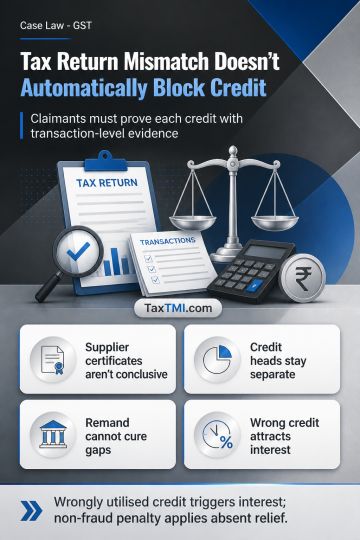
    GSTR-2A mismatch requires transaction-level proof of input tax credit; cross-head set-off and unsupported remand requests fail.
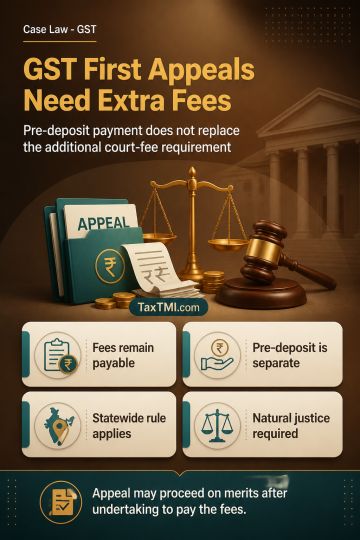
    Additional court fees on GST first appeals remain payable, but non-payment dismissal was set aside for merits review.
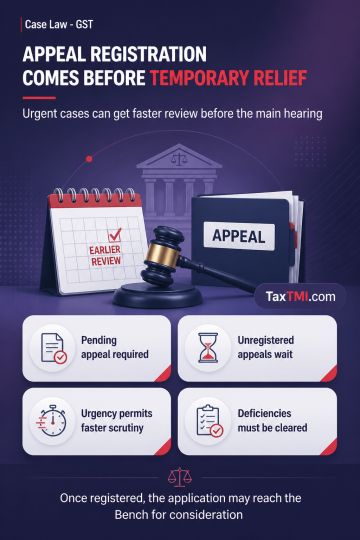
    Interlocutory relief requires a registered appeal, while urgent cases may receive expedited scrutiny before substantive hearing.
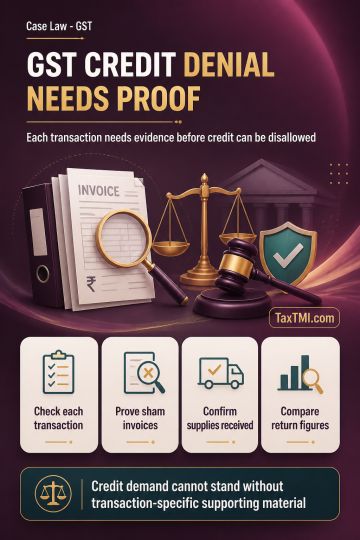
    Input tax credit cannot be denied without transaction-specific proof of sham supplies despite retrospective supplier registration cancellation.
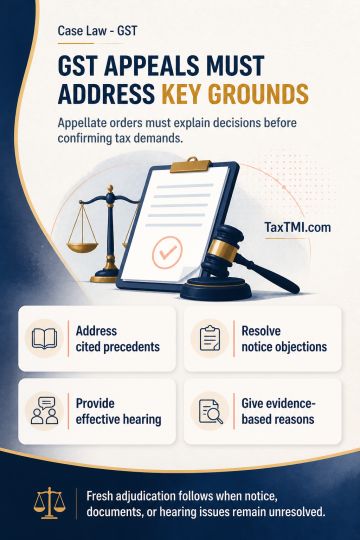
    Reasoned appellate GST orders require consideration of material grounds, precedents, and procedural fairness before confirming tax demands.
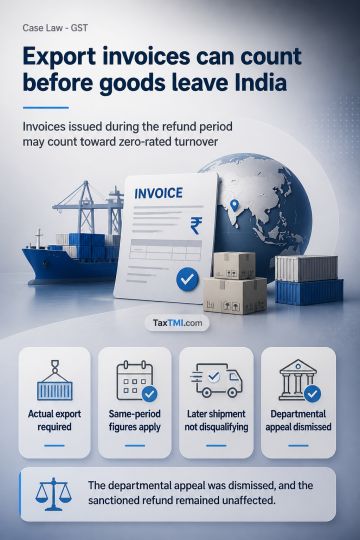
    Zero-rated turnover includes export invoices issued during the refund period when goods are subsequently exported from India.
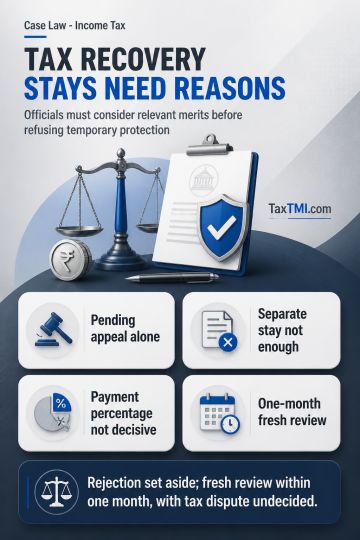
    Reasoned discretion in tax-demand stays requires merits-based consideration, preventing mechanical rejection for pending appeals or circular-payment d...
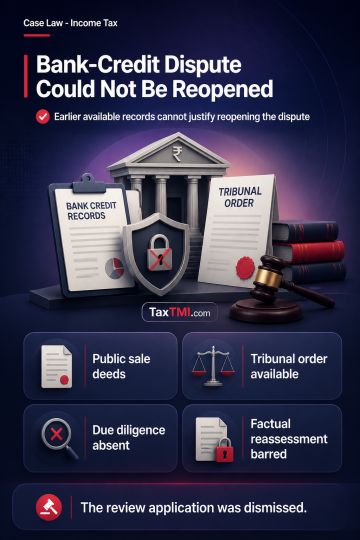
    Review jurisdiction bars rehearing of unexplained bank-credit disputes where public-record evidence was available and due diligence was absent.
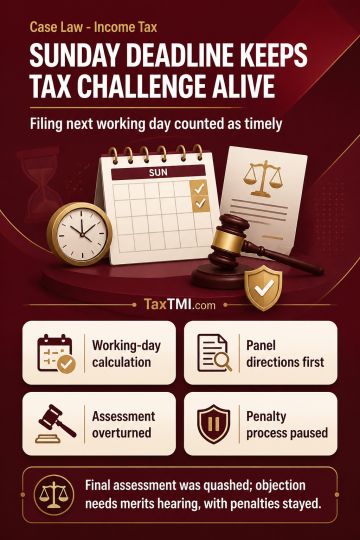
    Holiday-Day Limitation Computation Preserves Timely Objections and Prevents Final Assessment From Being Issued Without Mandatory Review Directions
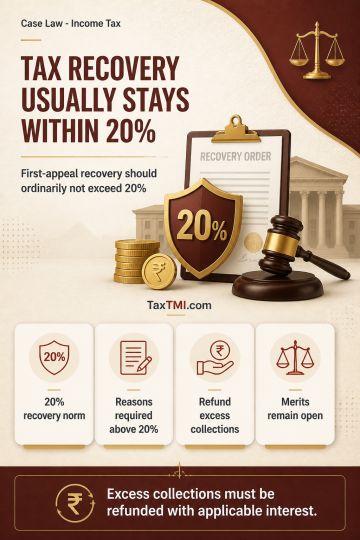
    Disputed tax demand recovery must ordinarily remain within the stay norm during pendency of the first appeal.
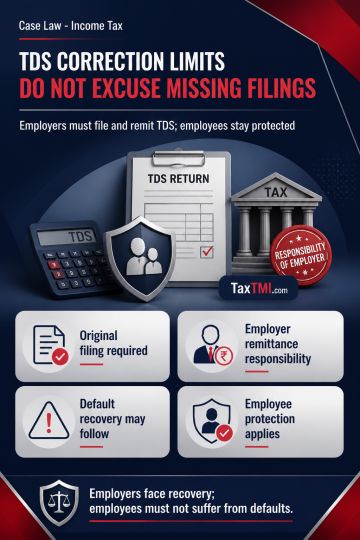
    TDS statement correction limits do not excuse non-filing, while employees remain protected from employers' remittance defaults.
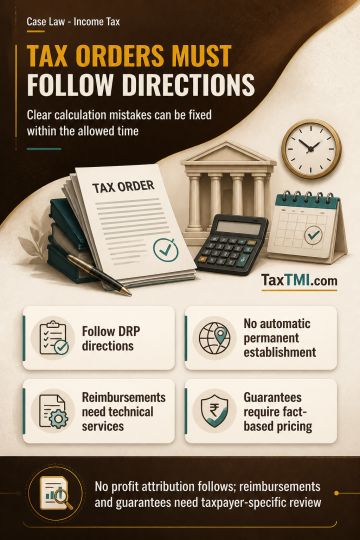
    DRP direction compliance permits rectification of obvious omissions, while PE, reimbursement, and guarantee pricing require factual examination.
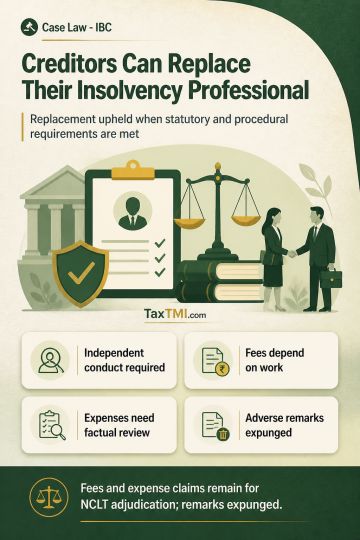
    Committee of creditors' commercial wisdom permits replacement of a resolution professional, while fees remain subject to adjudication.
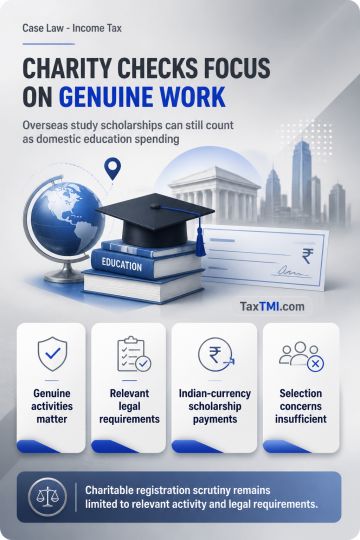
    Charitable registration scrutiny is confined to genuine activities, while domestic overseas-study scholarships remain within educational objects.
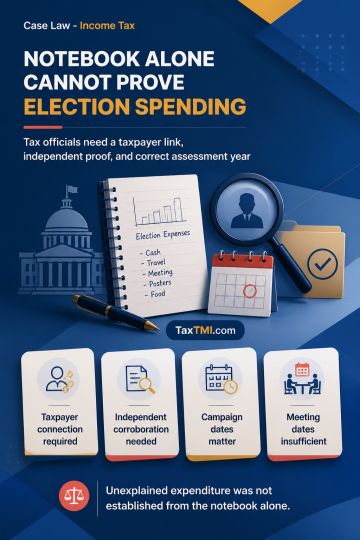
    Unexplained election expenditure requires corroborated seized-document entries and correct assessment-year attribution for tax assessment purposes.
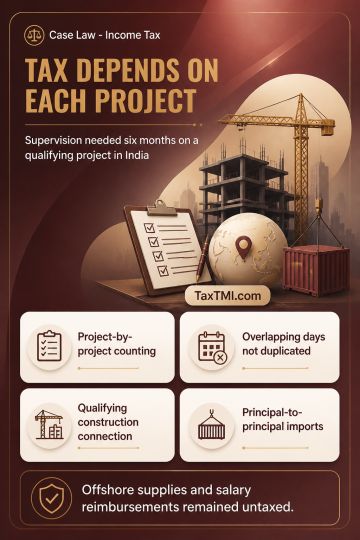
    Supervisory permanent establishment requires project-wise duration and qualifying construction nexus; offshore supplies and salary reimbursements rema...
    Agreement-date stamp duty valuation governs stock-in-trade sales when non-cash consideration is received before the sale agreement.
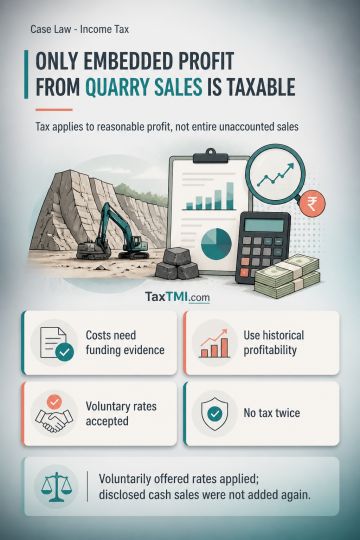
    Unaccounted quarry sales: only reasonably estimated profit is taxable, while cash sales already disclosed cannot be taxed twice.
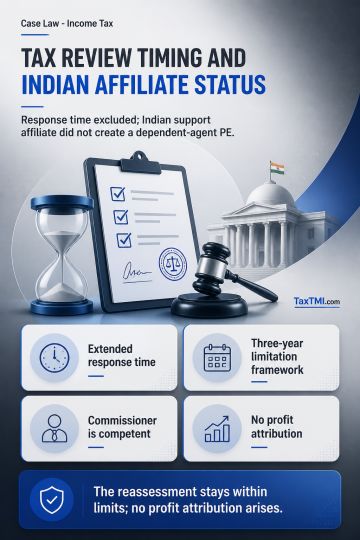
    Reassessment limitation excludes section 148A response time; Indian support-services affiliate does not create a dependent agent PE.
    Dependent-agent permanent establishment requires proof of actual contractual authority; liaison and support functions alone do not suffice.
❮
❯
❯❯
Maximize Maximize Maximize
0 / 200
Expand Note
Add to Folder

No Folders have been created

+

Are you sure you want to delete "My most important" ?

NOTE:

Highlights
Showing Results for :
Reset Filters
Results Found:
Show All Summaries Hide All Summaries

Highlights

Back

All Highlights

Showing Results for :
Reset Filters
No Records Found

Highlights

Back

All Highlights

The circular issued by the Government of Tamil Nadu, Commercial...

GST Dues in Insolvency: No Coercive Action on Pre-Resolution Debts, Claims via NCLT, Adjusted Recovery Permitted.

Contents
Summary
Note

Note

-

Bookmark

Print

Print

GST - States May 22, 2024 Circulars
The circular issued by the Government of Tamil Nadu, Commercial Taxes Department, addresses the treatment of statutory dues under GST law for taxpayers whose proceedings have concluded under the Insolvency and Bankruptcy Code, 2016 (IBC). It clarifies that no coercive action can be taken against corporate debtors for dues prior to the commencement of the Corporate Insolvency Resolution Process (CIRP). The circular emphasizes the treatment of such dues as 'operational debt' and outlines the process for filing claims before the National Company Law Tribunal (NCLT) in accordance with the IBC. The Commissioner, u/s 168 of the Tamil Nadu Goods and Services Tax Act, provides clarity on the continuation and validation of recovery proceedings u/s 84 of the Act. It explains that if government dues are reduced through appeals or other proceedings, the Commissioner must inform the taxpayer and appropriate authority, allowing recovery proceedings to continue for the reduced amount.

Topics

Acts Income Tax