Mandatory textile export qualifiers distinguish flame-retardant fabrics from other listed fabrics for automated identification under the textiles ince...
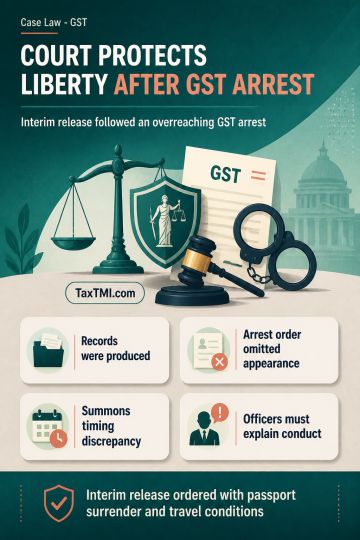
Personal liberty safeguards restrict arrest after court-directed GST appearance, requiring interim release where authorities overreach pending proceed...
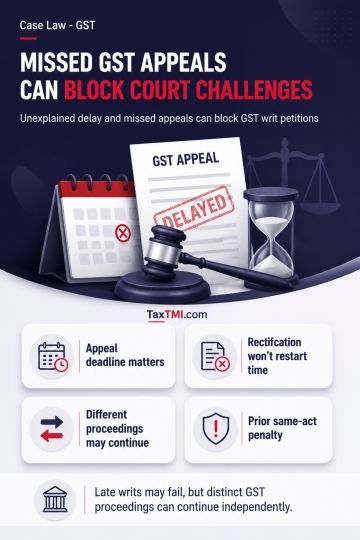
Alternative statutory remedy and delay bar GST writ challenges despite pending rectification, while distinct subject matter permits parallel proceedin...
The Calcutta High Court reviewed a case involving a revision u/s 263 regarding the addition u/s 68 for a purportedly bogus claim of exemption of Long Term Capital Gain from the sale of shares of a penny stock. The Principal Commissioner of Income Tax (PCIT) found the assessment to be prima facie erroneous and prejudicial to revenue, leading to the issuance of a show cause notice. The PCIT independently evaluated the assessment records, concluding that the assessing officer should have treated the credit as bogus and disallowed the exemption u/s 10(38). The High Court differentiated this case from a previous ruling involving Sinhotia Metals and Minerals Pvt. Ltd., emphasizing that the PCIT's decision was valid in this context. The Court overturned the Tribunal's decision, reinstating the PCIT's order u/s 263.
The Calcutta High Court reviewed a case involving a revision u/s 263 regarding the addition u/s 68 for a purportedly bogus claim of exemption of Long Term Capital Gain from the sale of shares of a penny stock. The Principal Commissioner of Income Tax (PCIT) found the assessment to be prima facie erroneous and prejudicial to revenue, leading to the issuance of a show cause notice. The PCIT independently evaluated the assessment records, concluding that the assessing officer should have treated the credit as bogus and disallowed the exemption u/s 10(38). The High Court differentiated this case from a previous ruling involving Sinhotia Metals and Minerals Pvt. Ltd., emphasizing that the PCIT's decision was valid in this context. The Court overturned the Tribunal's decision, reinstating the PCIT's order u/s 263.
Note: It is a system-generated summary and is for quick reference only.
 TaxTMI
  TaxTMI
 of 4891