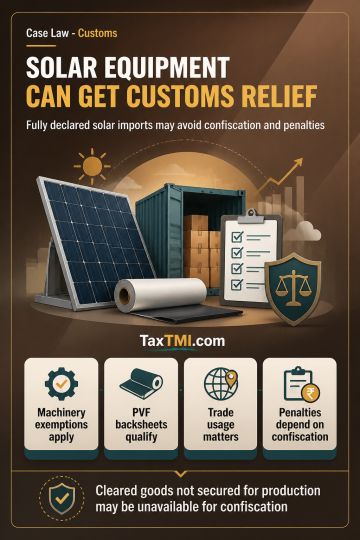
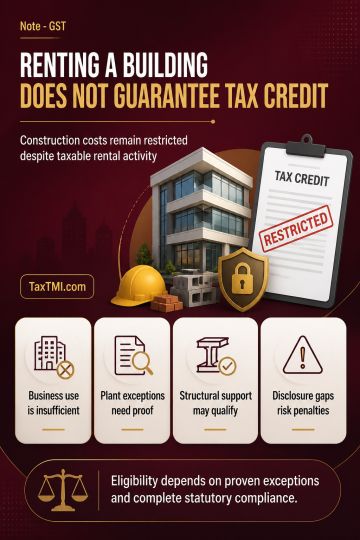
Customs exemptions cover photovoltaic assembly machinery and PVF backsheets, while fully declared cleared imports may avoid confiscation and penalties...
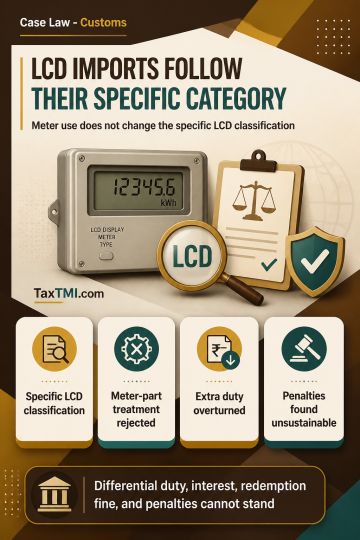
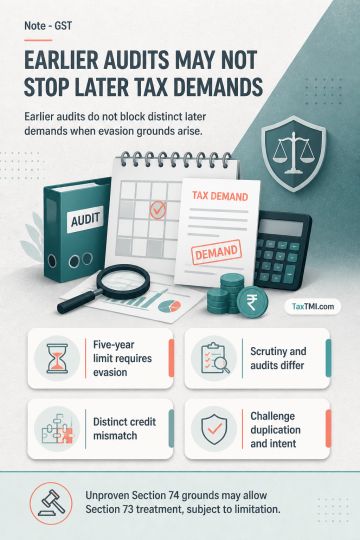
Specific tariff classification for LCD devices overrides treatment as electricity-meter parts, defeating differential duty, extended limitation, and p...
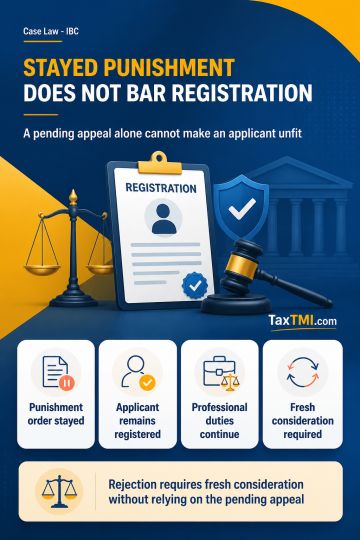
Stayed disciplinary punishment does not establish unfitness for insolvency professional registration; reconsideration must disregard mere pendency of ...
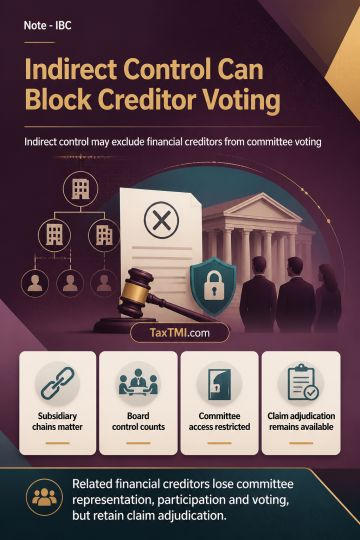
Indirect corporate control can create related-party status, excluding financial creditors from Committee of Creditors representation, participation an...
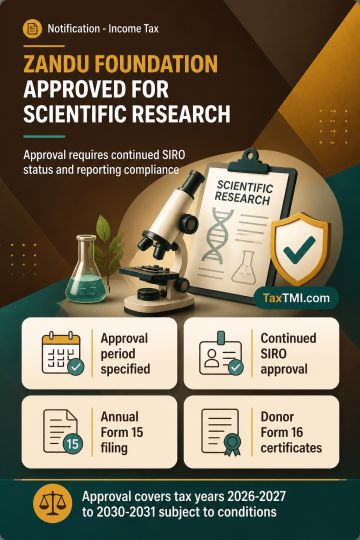
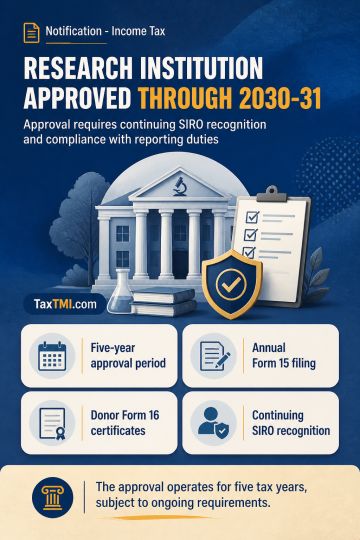
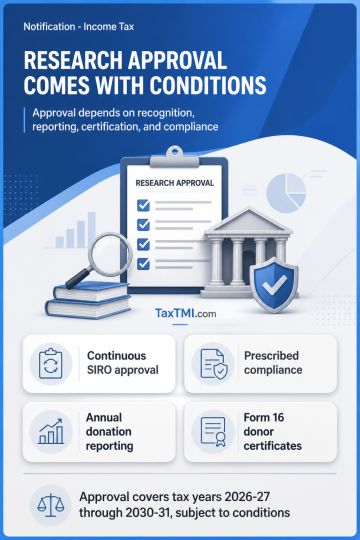
Scientific research association approval requires continuing SIRO status, annual donation reporting, and donor certificates for the approved foundatio...
Scientific research institution approval is conditional on SIRO recognition, annual donation reporting, donor certification, and prescribed compliance...
The ITAT Ahmedabad considered the eligibility of exemption u/s 11 for an assessee engaged in activities like development planning, town planning schemes, and fee collection. The AO argued the assessee's profit motive disqualifies it from claiming benefits u/s 11 & 12. However, the tribunal referenced the Supreme Court's decision in AUDA case, emphasizing that fees collected for statutory activities are not considered trade or business. Activities like housing development by statutory bodies are not commercial in nature. The nature of the service provided is crucial; essential public services like water or sewage cess are not deemed commercial. Non-statutory bodies engaging in trade promotion or business facilitation may not qualify for charitable status. The tribunal allowed the assessee's appeal based on these principles.
The ITAT Ahmedabad considered the eligibility of exemption u/s 11 for an assessee engaged in activities like development planning, town planning schemes, and fee collection. The AO argued the assessee's profit motive disqualifies it from claiming benefits u/s 11 & 12. However, the tribunal referenced the Supreme Court's decision in AUDA case, emphasizing that fees collected for statutory activities are not considered trade or business. Activities like housing development by statutory bodies are not commercial in nature. The nature of the service provided is crucial; essential public services like water or sewage cess are not deemed commercial. Non-statutory bodies engaging in trade promotion or business facilitation may not qualify for charitable status. The tribunal allowed the assessee's appeal based on these principles.
Note: It is a system-generated summary and is for quick reference only.
 TaxTMI
  TaxTMI
 of 4879