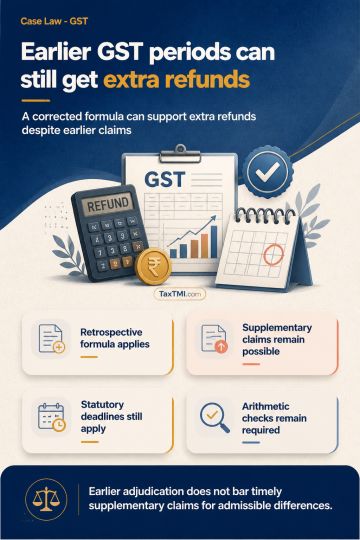
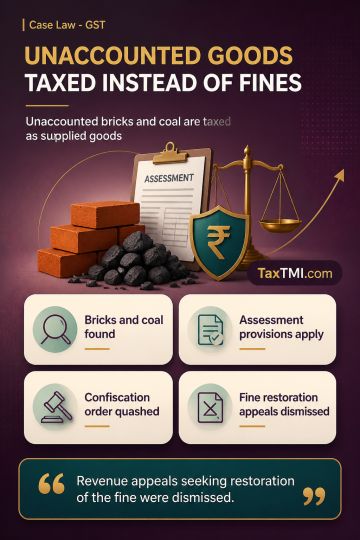
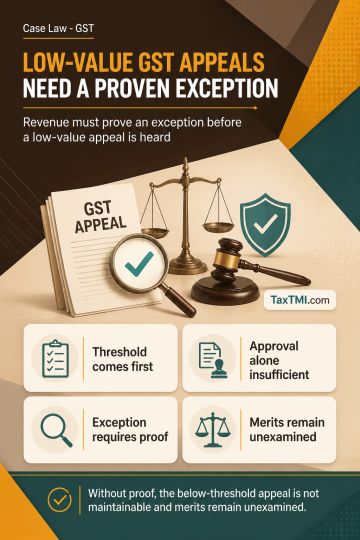
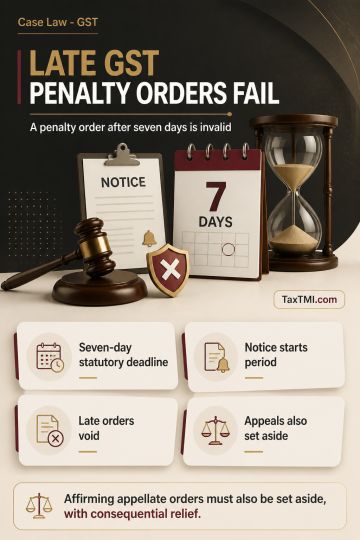
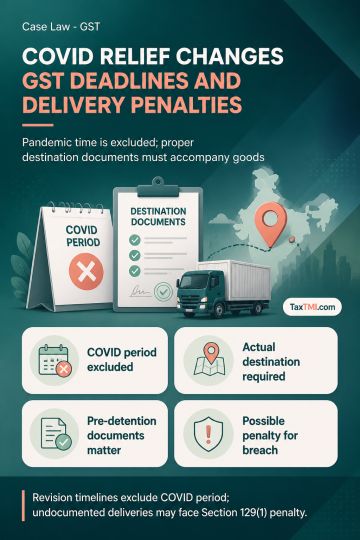
COVID-19 limitation exclusion and destination-specific e-way bills govern revisional timelines and penalties for undocumented third-party plywood deli...
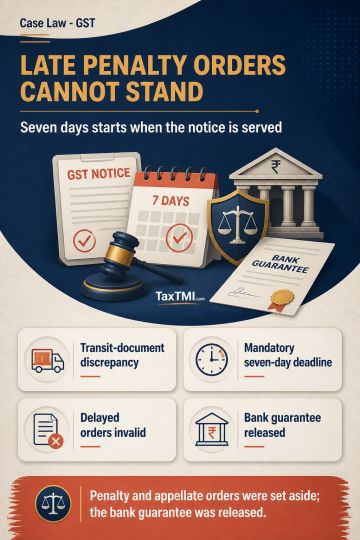
Questions arising from miscellaneous application orders cannot challenge unaltered Tribunal findings, leaving the original order separately challengea...
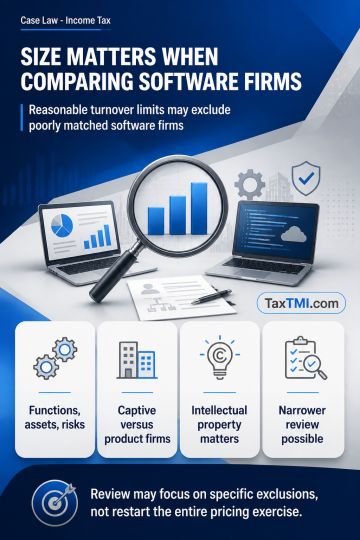
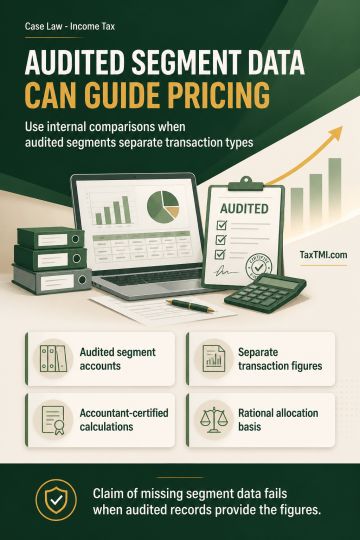
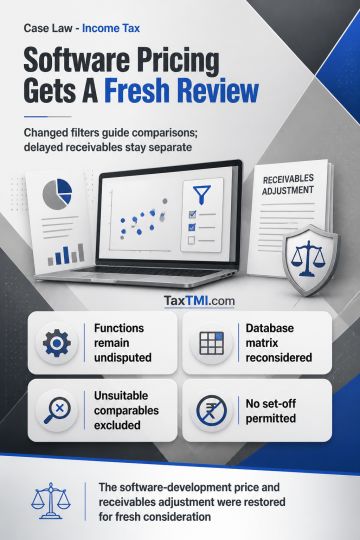
Transfer-pricing comparability filters require fresh arm's-length analysis, while delayed receivables need separate reconsideration with working-capit...
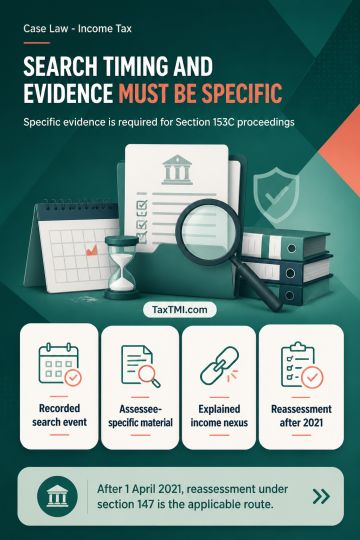
Section 153C jurisdiction requires timely deemed search and assessee-specific satisfaction material; otherwise reassessment must use the proper statut...
Page of 4891
Press 'Enter' after typing page number.
681 to 700 of 97820 Results
❮
❯
❯❯
0 / 200
Expand Note
Add to Folder
No Folders have been created
+
Are you sure you want to delete "My most important" ?
The ITAT Ahmedabad considered the eligibility of exemption u/s 11 for an assessee engaged in activities like development planning, town planning schemes, and fee collection. The AO argued the assessee's profit motive disqualifies it from claiming benefits u/s 11 & 12. However, the tribunal referenced the Supreme Court's decision in AUDA case, emphasizing that fees collected for statutory activities are not considered trade or business. Activities like housing development by statutory bodies are not commercial in nature. The nature of the service provided is crucial; essential public services like water or sewage cess are not deemed commercial. Non-statutory bodies engaging in trade promotion or business facilitation may not qualify for charitable status. The tribunal allowed the assessee's appeal based on these principles.
The ITAT Ahmedabad considered the eligibility of exemption u/s 11 for an assessee engaged in activities like development planning, town planning schemes, and fee collection. The AO argued the assessee's profit motive disqualifies it from claiming benefits u/s 11 & 12. However, the tribunal referenced the Supreme Court's decision in AUDA case, emphasizing that fees collected for statutory activities are not considered trade or business. Activities like housing development by statutory bodies are not commercial in nature. The nature of the service provided is crucial; essential public services like water or sewage cess are not deemed commercial. Non-statutory bodies engaging in trade promotion or business facilitation may not qualify for charitable status. The tribunal allowed the assessee's appeal based on these principles.
Note: It is a system-generated summary and is for quick reference only.
 TaxTMI
  TaxTMI
 of 4891