Mandatory textile export qualifiers distinguish flame-retardant fabrics from other listed fabrics for automated identification under the textiles ince...
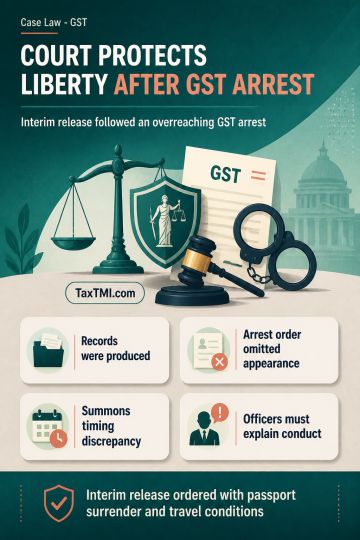
Personal liberty safeguards restrict arrest after court-directed GST appearance, requiring interim release where authorities overreach pending proceed...
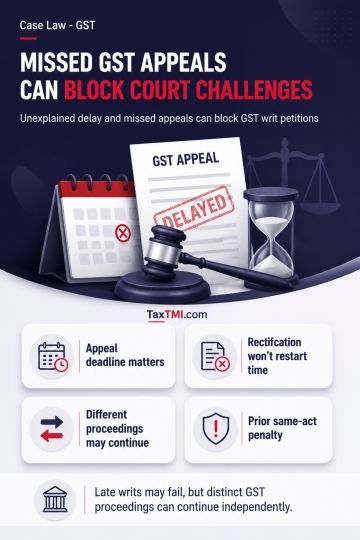
Alternative statutory remedy and delay bar GST writ challenges despite pending rectification, while distinct subject matter permits parallel proceedin...
Page of 4884
Press 'Enter' after typing page number.
261 to 280 of 97661 Results
❮
❯
❯❯
0 / 200
Expand Note
Add to Folder
No Folders have been created
+
Are you sure you want to delete "My most important" ?
The Rajasthan High Court examined the validity of revision proceedings u/s 263 concerning the period of limitation. The issue was whether the period of limitation for passing the order u/s 263 should be reckoned from the date of the original assessment order or the date of the reassessment order. The Court referred to the Supreme Court's judgment in the case of Industrial Development Bank of India Ltd. and followed the decision in the case of Chambal Fertilisers and Chemicals Limited. It was held that once the reassessment of the escaped assessment occurred, the revision would have the same limited ambit for the purpose of limitation prescribed in Section 263(2) of the Income Tax Act of 1961, which is two years. The Court noted that the petitioner could have challenged the original assessment order but lost due to the law of limitation. Citing the Supreme Court's ruling, the Court found the revision proceedings to be illegal on the face of it due to limitation issues, set them aside.
The Rajasthan High Court examined the validity of revision proceedings u/s 263 concerning the period of limitation. The issue was whether the period of limitation for passing the order u/s 263 should be reckoned from the date of the original assessment order or the date of the reassessment order. The Court referred to the Supreme Court's judgment in the case of Industrial Development Bank of India Ltd. and followed the decision in the case of Chambal Fertilisers and Chemicals Limited. It was held that once the reassessment of the escaped assessment occurred, the revision would have the same limited ambit for the purpose of limitation prescribed in Section 263(2) of the Income Tax Act of 1961, which is two years. The Court noted that the petitioner could have challenged the original assessment order but lost due to the law of limitation. Citing the Supreme Court's ruling, the Court found the revision proceedings to be illegal on the face of it due to limitation issues, set them aside.
Note: It is a system-generated summary and is for quick reference only.
 TaxTMI
  TaxTMI
 of 4884