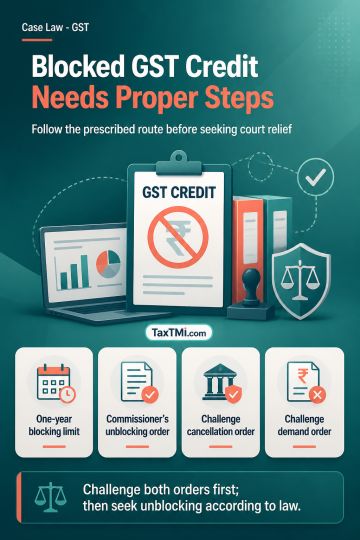
Blocked input tax credit for resort construction remains unavailable; interest follows actual utilisation, while delayed payment attracts statutory pe...
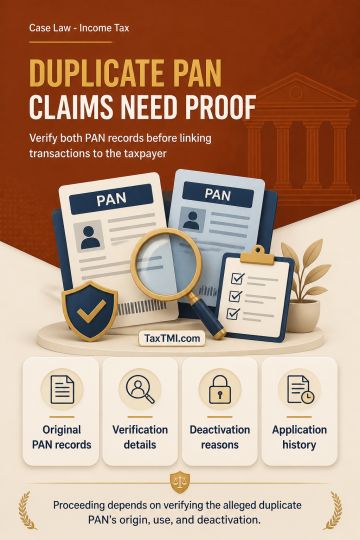
Duplicate PAN allocation requires record verification and deactivation reasons before assessment-related transactions can be attributed to an assessee...
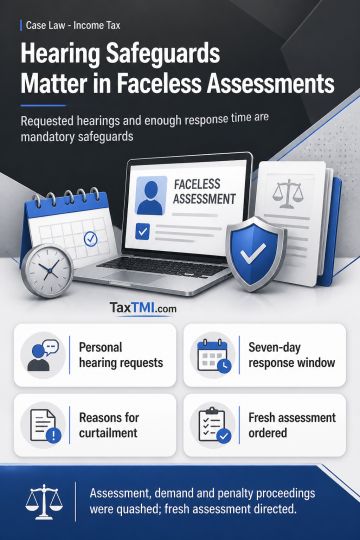
Faceless assessment safeguards require requested personal hearings and adequate final show-cause response time, failing which reassessment is required...
The Rajasthan High Court examined the validity of revision proceedings u/s 263 concerning the period of limitation. The issue was whether the period of limitation for passing the order u/s 263 should be reckoned from the date of the original assessment order or the date of the reassessment order. The Court referred to the Supreme Court's judgment in the case of Industrial Development Bank of India Ltd. and followed the decision in the case of Chambal Fertilisers and Chemicals Limited. It was held that once the reassessment of the escaped assessment occurred, the revision would have the same limited ambit for the purpose of limitation prescribed in Section 263(2) of the Income Tax Act of 1961, which is two years. The Court noted that the petitioner could have challenged the original assessment order but lost due to the law of limitation. Citing the Supreme Court's ruling, the Court found the revision proceedings to be illegal on the face of it due to limitation issues, set them aside.
The Rajasthan High Court examined the validity of revision proceedings u/s 263 concerning the period of limitation. The issue was whether the period of limitation for passing the order u/s 263 should be reckoned from the date of the original assessment order or the date of the reassessment order. The Court referred to the Supreme Court's judgment in the case of Industrial Development Bank of India Ltd. and followed the decision in the case of Chambal Fertilisers and Chemicals Limited. It was held that once the reassessment of the escaped assessment occurred, the revision would have the same limited ambit for the purpose of limitation prescribed in Section 263(2) of the Income Tax Act of 1961, which is two years. The Court noted that the petitioner could have challenged the original assessment order but lost due to the law of limitation. Citing the Supreme Court's ruling, the Court found the revision proceedings to be illegal on the face of it due to limitation issues, set them aside.
Note: It is a system-generated summary and is for quick reference only.
 TaxTMI
  TaxTMI