Explained Investment Sources: documented gifts and traceable salary savings supported deletion of additions for property and mutual-fund SIP investmen...
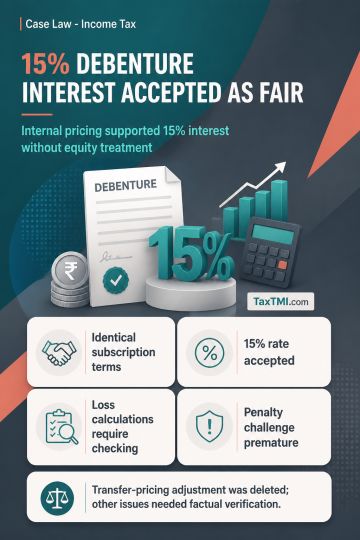
Internal comparable pricing supports arm's-length interest on compulsorily convertible debentures, preventing their recharacterisation as equity for t...
Nominee director protection shields independent financial-institution appointees from criminal liability where they lack involvement in deposit defaul...
The High Court upheld the levy of tax and penalty on the petitioner for fraudulent claim of Input Tax Credit (ITC) u/s 16 of the GST Act. The petitioner claimed ITC based on non-existent firms, later revealed by investigation. The court held that mere registration of firms does not entitle ITC if no actual supplies were made. Fraud vitiates proceedings, allowing authorities to reclaim wrongly availed benefits. The court found no illegality in the orders and dismissed the petition.
The High Court upheld the levy of tax and penalty on the petitioner for fraudulent claim of Input Tax Credit (ITC) u/s 16 of the GST Act. The petitioner claimed ITC based on non-existent firms, later revealed by investigation. The court held that mere registration of firms does not entitle ITC if no actual supplies were made. Fraud vitiates proceedings, allowing authorities to reclaim wrongly availed benefits. The court found no illegality in the orders and dismissed the petition.
Note: It is a system-generated summary and is for quick reference only.
 TaxTMI
  TaxTMI
 of 4886