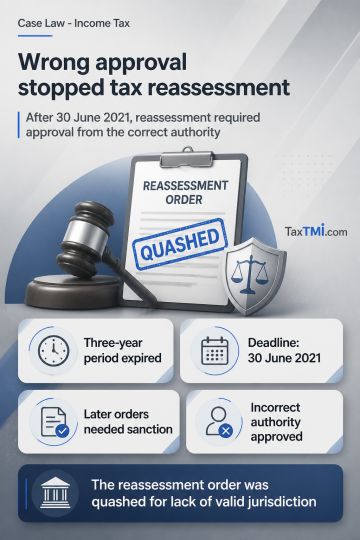
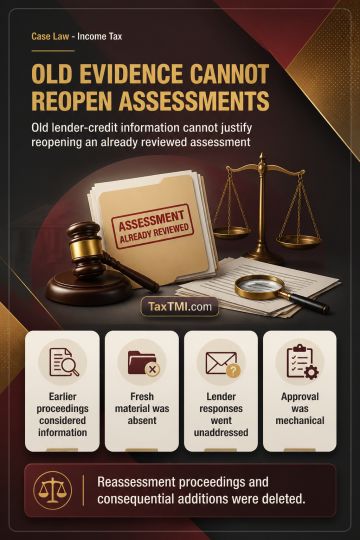
Reassessment sanction under extended limitation required approval from the competent specified authority, invalidating proceedings approved by an inco...
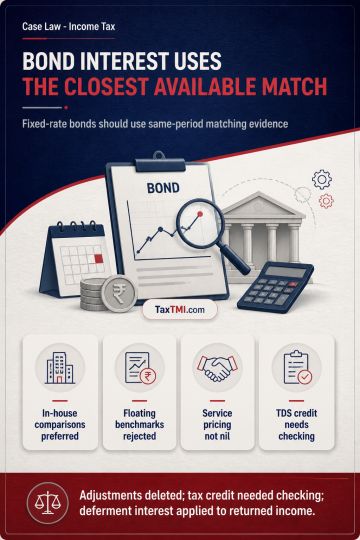
Internal CUP benchmarking for fixed-rate Masala Bonds prevails over floating external comparables, eliminating the related transfer-pricing adjustment...
Jurisdictional validity of revision notices: incorrect official capacity and mere change of opinion invalidate revision of property income assessments...
Bogus-purchase additions are limited to embedded profit where corresponding sales are accepted, while accommodation-entry information can support reas...
The Delhi High Court considered the winding up of an unregistered foreign company for non-payment of outstanding dues u/s 433(e) and (f) read with Sections 434 and 439 of the Companies Act, 1956. The court found that the company's inability to pay its debts justified winding up proceedings u/s 583 of the Act. The court referenced the Supreme Court's decision in Rajah of Vizianagram case and Action Ispat case, supporting the transfer of winding up proceedings to the NCLT if at a nascent stage. Consequently, the court transferred the present winding up proceedings to the NCLT, disposing of the petition.
The Delhi High Court considered the winding up of an unregistered foreign company for non-payment of outstanding dues u/s 433(e) and (f) read with Sections 434 and 439 of the Companies Act, 1956. The court found that the company's inability to pay its debts justified winding up proceedings u/s 583 of the Act. The court referenced the Supreme Court's decision in Rajah of Vizianagram case and Action Ispat case, supporting the transfer of winding up proceedings to the NCLT if at a nascent stage. Consequently, the court transferred the present winding up proceedings to the NCLT, disposing of the petition.
Note: It is a system-generated summary and is for quick reference only.
 TaxTMI
  TaxTMI
 of 4894