Section 153C requires person-specific search authority and year-specific incriminating material for unabated assessments while preventing unsupported ...
Equivalent-value attachment can reach pre-existing assets, but jointly owned property remains protected beyond the accused's attributable proceeds of ...
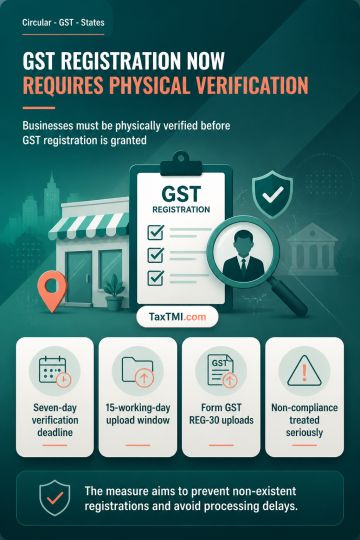
Pre-registration physical verification becomes mandatory to prevent non-existent business registrations and support timely GST registration processing...
Page of 4886
Press 'Enter' after typing page number.
841 to 860 of 97714 Results
❮
❯
❯❯
0 / 200
Expand Note
Add to Folder
No Folders have been created
+
Are you sure you want to delete "My most important" ?
The Delhi High Court considered the winding up of an unregistered foreign company for non-payment of outstanding dues u/s 433(e) and (f) read with Sections 434 and 439 of the Companies Act, 1956. The court found that the company's inability to pay its debts justified winding up proceedings u/s 583 of the Act. The court referenced the Supreme Court's decision in Rajah of Vizianagram case and Action Ispat case, supporting the transfer of winding up proceedings to the NCLT if at a nascent stage. Consequently, the court transferred the present winding up proceedings to the NCLT, disposing of the petition.
The Delhi High Court considered the winding up of an unregistered foreign company for non-payment of outstanding dues u/s 433(e) and (f) read with Sections 434 and 439 of the Companies Act, 1956. The court found that the company's inability to pay its debts justified winding up proceedings u/s 583 of the Act. The court referenced the Supreme Court's decision in Rajah of Vizianagram case and Action Ispat case, supporting the transfer of winding up proceedings to the NCLT if at a nascent stage. Consequently, the court transferred the present winding up proceedings to the NCLT, disposing of the petition.
Note: It is a system-generated summary and is for quick reference only.
 TaxTMI
  TaxTMI
 of 4886