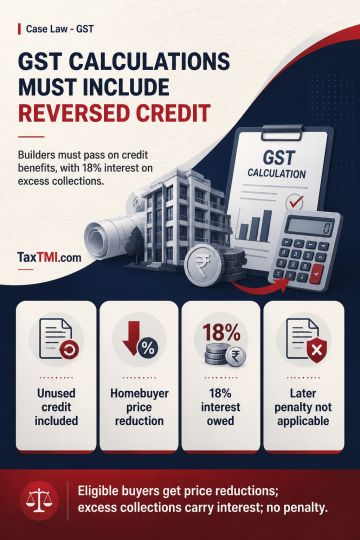
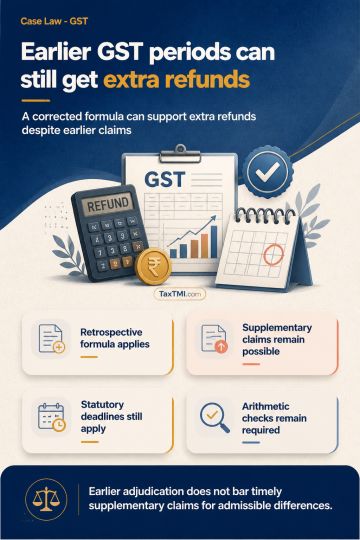
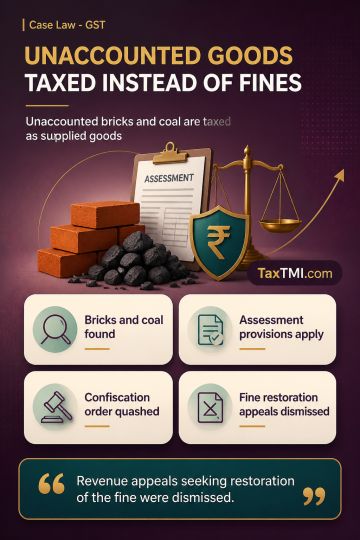
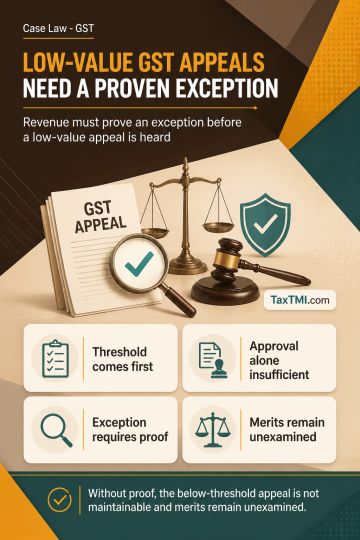
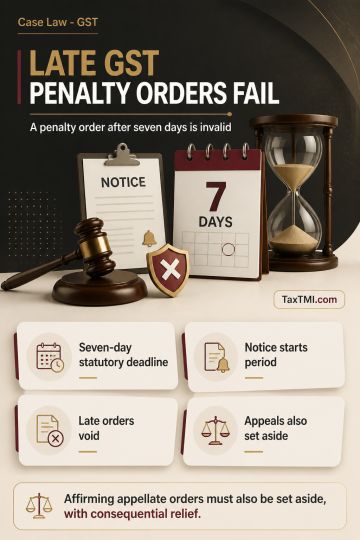
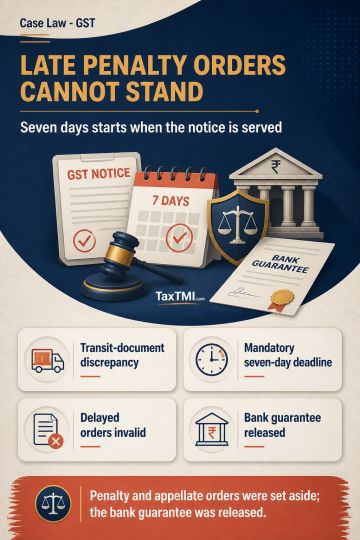
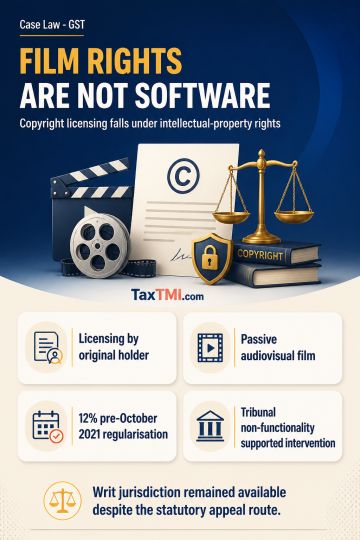
Coercive recovery during GST searches is restrained pending scrutiny, preserving normal business operations and requiring adherence to investigation g...
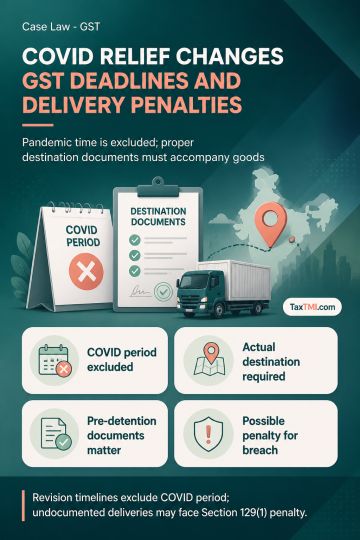
COVID-19 limitation exclusion and destination-specific e-way bills govern revisional timelines and penalties for undocumented third-party plywood deli...
Questions arising from miscellaneous application orders cannot challenge unaltered Tribunal findings, leaving the original order separately challengea...
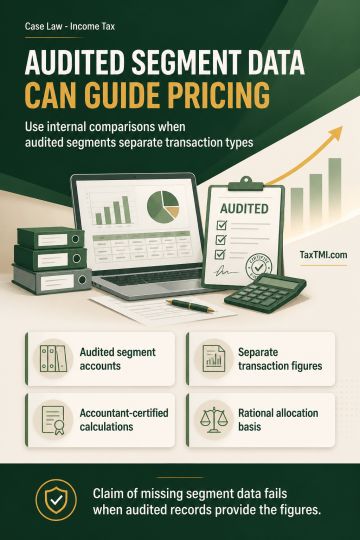
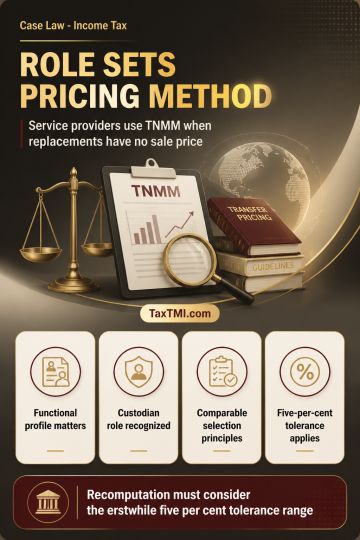
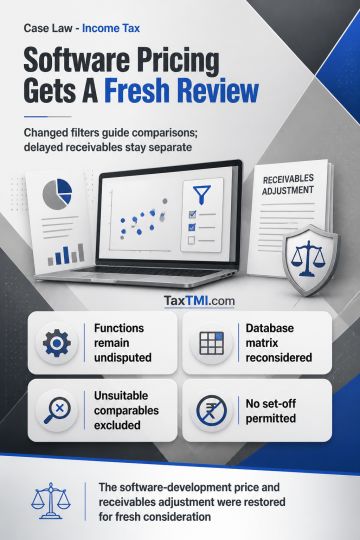
Transfer-pricing comparability filters require fresh arm's-length analysis, while delayed receivables need separate reconsideration with working-capit...
Page of 4894
Press 'Enter' after typing page number.
721 to 740 of 97867 Results
❮
❯
❯❯
0 / 200
Expand Note
Add to Folder
No Folders have been created
+
Are you sure you want to delete "My most important" ?
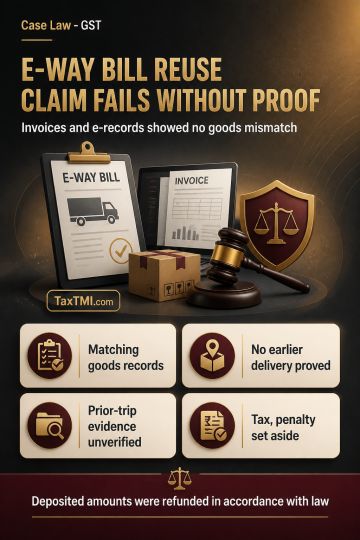
Imposition of tax and penalty u/s 129(3) - e-way bill had expired nine hours and thirty minutes prior to interception - The High court referred to previous cases where mens rea to evade tax was deemed essential for penalty imposition. In the present case, the court found no evidence of intent to evade tax, as the goods were properly documented, and the delay was due to a breakdown. The court emphasized that the failure to extend the e-way bill was a technical breach and not sufficient grounds for imposing a penalty under Section 129(3) of the Act.
Imposition of tax and penalty u/s 129(3) - e-way bill had expired nine hours and thirty minutes prior to interception - The High court referred to previous cases where mens rea to evade tax was deemed essential for penalty imposition. In the present case, the court found no evidence of intent to evade tax, as the goods were properly documented, and the delay was due to a breakdown. The court emphasized that the failure to extend the e-way bill was a technical breach and not sufficient grounds for imposing a penalty under Section 129(3) of the Act.
Note: It is a system-generated summary and is for quick reference only.
 TaxTMI
  TaxTMI
 of 4894