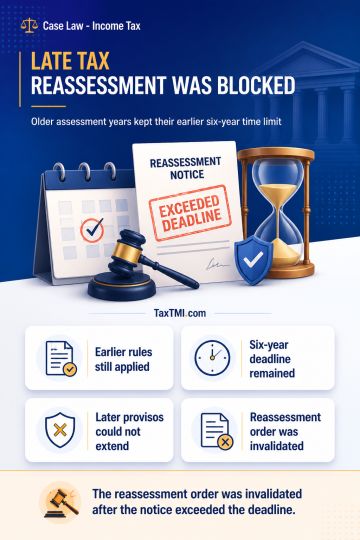
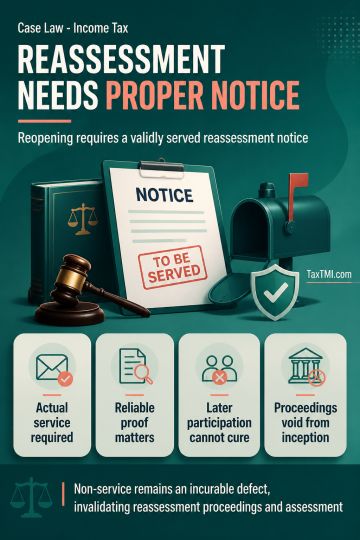
Pre-amendment reassessment limitation bars late notices under the preserved regime, invalidating consequential reassessment for affected earlier asses...
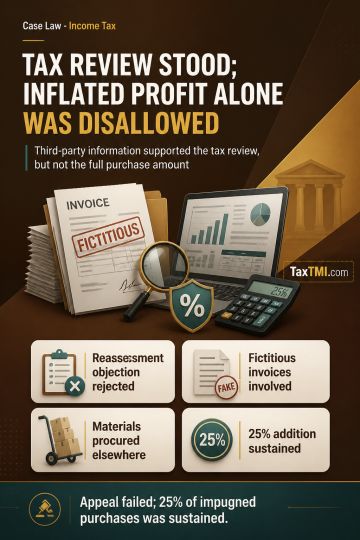
Cash-sales explanations for bank deposits require documentary reconciliation; reassessment notice survived where effective response time was available...
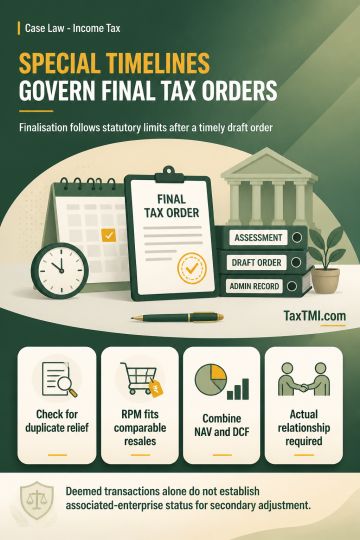
Functional comparability in transfer pricing prevents ad hoc arm's length adjustments where functions, assets, risks and reliable comparables are unes...
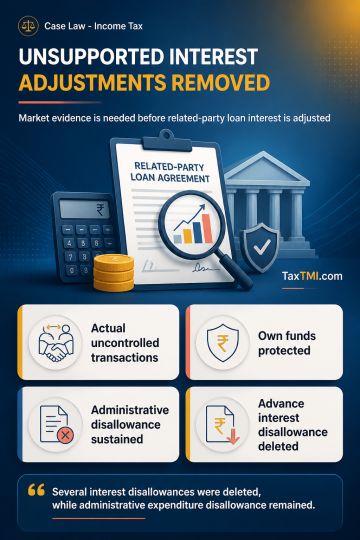
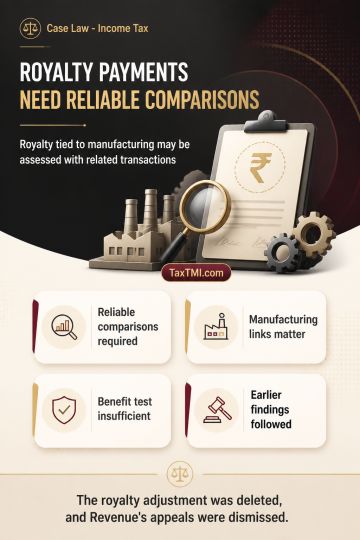
Contingency expenses, exempt-income disallowance, and royalty benchmarking: unsupported adjustments were deleted under consistent accounting and trans...
Page of 4921
Press 'Enter' after typing page number.
81 to 100 of 98414 Results
❮
❯
❯❯
0 / 200
Expand Note
Add to Folder
No Folders have been created
+
Are you sure you want to delete "My most important" ?
Constitutional validity of para 83 of the EPF Scheme and para 43A of the Pension Scheme - international workers - Discrimination - Grievance of the petitioners is that, under para 83 of the EPF Scheme, “international workers” are covered under the Act and Scheme, irrespective of their salary drawn by them. - The High Court observed that provisions treated international workers differently from domestic workers without a sufficient justification, thus violating the equality clause of the Constitution. - The classification of workers under these paras did not have a rational relation to the objectives of the EPF & MP Act, which aims to provide social security to workers in lower income brackets, not to impose burdens on high-earning international workers. - Consequently, the High Court held the provisions as unconstitutional. They were struck down as they were found to be discriminatory, arbitrary, and ultra vires (beyond the powers of the Act)
Constitutional validity of para 83 of the EPF Scheme and para 43A of the Pension Scheme - international workers - Discrimination - Grievance of the petitioners is that, under para 83 of the EPF Scheme, “international workers” are covered under the Act and Scheme, irrespective of their salary drawn by them. - The High Court observed that provisions treated international workers differently from domestic workers without a sufficient justification, thus violating the equality clause of the Constitution. - The classification of workers under these paras did not have a rational relation to the objectives of the EPF & MP Act, which aims to provide social security to workers in lower income brackets, not to impose burdens on high-earning international workers. - Consequently, the High Court held the provisions as unconstitutional. They were struck down as they were found to be discriminatory, arbitrary, and ultra vires (beyond the powers of the Act)
Note: It is a system-generated summary and is for quick reference only.
 TaxTMI
 TaxTMI

 of 4921