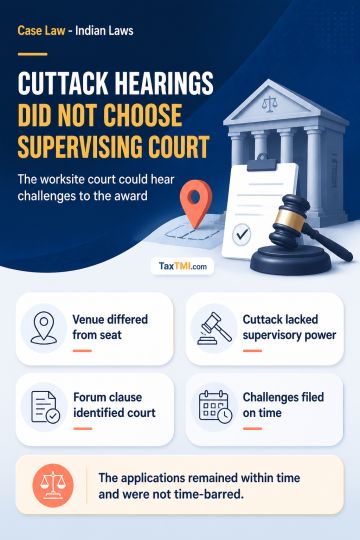
Juridical seat versus arbitral venue determines supervisory court jurisdiction, while timely award challenges remain within the prescribed limitation ...
Estimation of income - bogus purchases - The Tribunal considered the facts surrounding the alleged bogus purchases. Despite the inability of the assessee to establish the identity of the parties and the genuineness of the transactions, the Tribunal deliberated on whether the Assessing Officer was justified in adding the entire amount of bogus purchases or only the profit margin. Referring to a precedent set by the Hon’ble Gujarat High Court, the Tribunal concluded that once it is determined that the amount represents alleged bogus purchases from bogus suppliers, it is not necessary to restrict the disallowance. Thus, the Tribunal upheld the addition of 100% of the alleged bogus purchases.
Estimation of income - bogus purchases - The Tribunal considered the facts surrounding the alleged bogus purchases. Despite the inability of the assessee to establish the identity of the parties and the genuineness of the transactions, the Tribunal deliberated on whether the Assessing Officer was justified in adding the entire amount of bogus purchases or only the profit margin. Referring to a precedent set by the Hon’ble Gujarat High Court, the Tribunal concluded that once it is determined that the amount represents alleged bogus purchases from bogus suppliers, it is not necessary to restrict the disallowance. Thus, the Tribunal upheld the addition of 100% of the alleged bogus purchases.
Note: It is a system-generated summary and is for quick reference only.
 TaxTMI
  TaxTMI
 of 4888