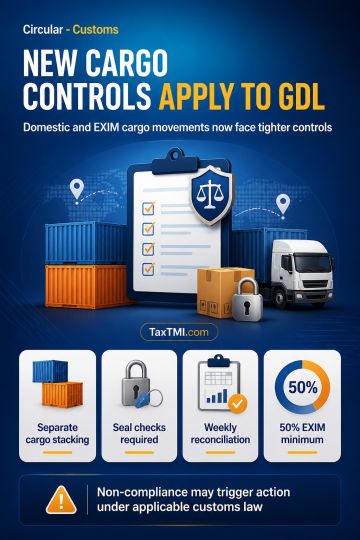
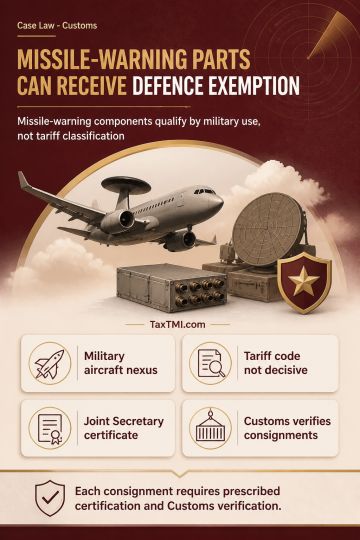
Customs-controlled cargo movement now includes GDL, subject to EXIM prioritisation, segregation, verification, reconciliation and enforcement safeguar...
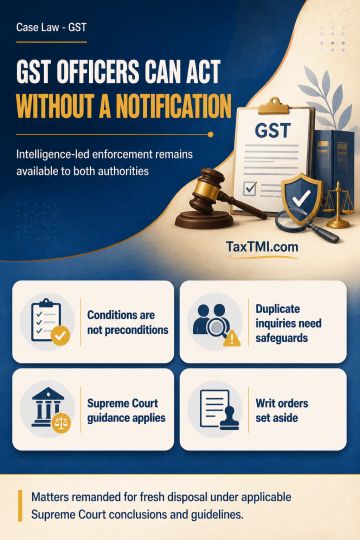
GST cross-empowerment remains effective without conditional notification, while duplicate proceedings require established safeguards against overlappi...
Capital gain arising on transfer of land - STCG arising out of the transfer of non-agricultural land - real owner - The appellant asserts that the land was purchased on behalf of the company, as evidenced by a development agreement executed between the appellant and the company. However, the Tribunal finds no explicit indication in the documents that the appellant was authorized by the company to purchase the land on its behalf. The absence of a memorandum of understanding or any explicit authorization leads the Tribunal to conclude that the land was purchased by the appellant individually, not on behalf of the company.
Capital gain arising on transfer of land - STCG arising out of the transfer of non-agricultural land - real owner - The appellant asserts that the land was purchased on behalf of the company, as evidenced by a development agreement executed between the appellant and the company. However, the Tribunal finds no explicit indication in the documents that the appellant was authorized by the company to purchase the land on its behalf. The absence of a memorandum of understanding or any explicit authorization leads the Tribunal to conclude that the land was purchased by the appellant individually, not on behalf of the company.
Note: It is a system-generated summary and is for quick reference only.
 TaxTMI
  TaxTMI
 of 4879