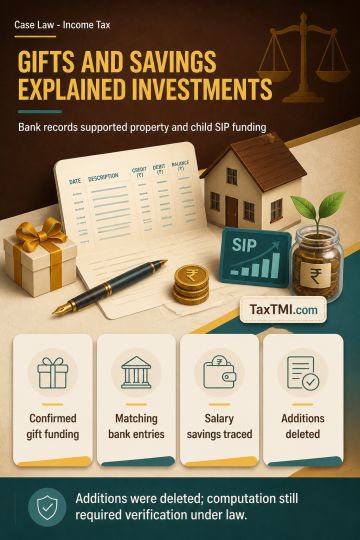
Explained Investment Sources: documented gifts and traceable salary savings supported deletion of additions for property and mutual-fund SIP investmen...
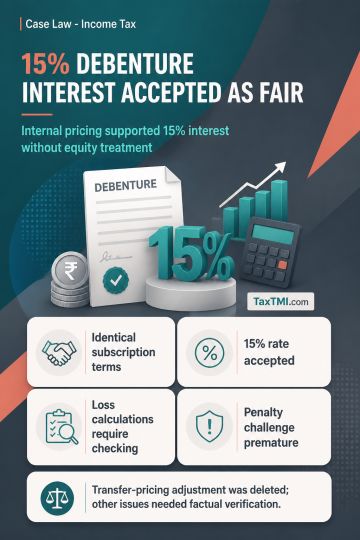
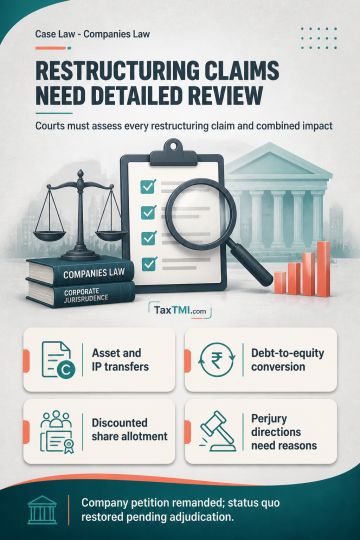
Internal comparable pricing supports arm's-length interest on compulsorily convertible debentures, preventing their recharacterisation as equity for t...
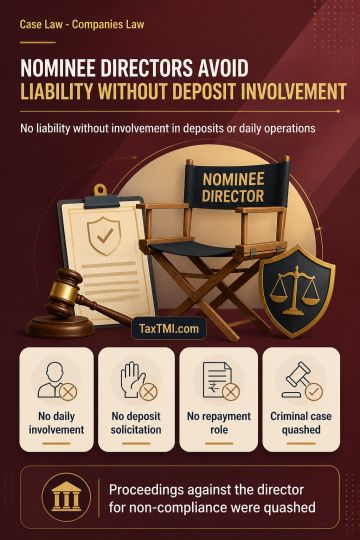
Nominee director protection shields independent financial-institution appointees from criminal liability where they lack involvement in deposit defaul...
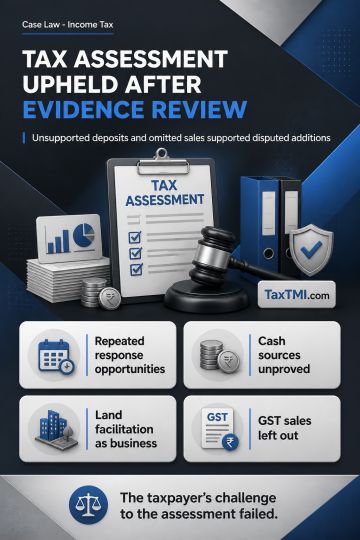
Capital gain arising on transfer of land - STCG arising out of the transfer of non-agricultural land - real owner - The appellant asserts that the land was purchased on behalf of the company, as evidenced by a development agreement executed between the appellant and the company. However, the Tribunal finds no explicit indication in the documents that the appellant was authorized by the company to purchase the land on its behalf. The absence of a memorandum of understanding or any explicit authorization leads the Tribunal to conclude that the land was purchased by the appellant individually, not on behalf of the company.
Capital gain arising on transfer of land - STCG arising out of the transfer of non-agricultural land - real owner - The appellant asserts that the land was purchased on behalf of the company, as evidenced by a development agreement executed between the appellant and the company. However, the Tribunal finds no explicit indication in the documents that the appellant was authorized by the company to purchase the land on its behalf. The absence of a memorandum of understanding or any explicit authorization leads the Tribunal to conclude that the land was purchased by the appellant individually, not on behalf of the company.
Note: It is a system-generated summary and is for quick reference only.
 TaxTMI
  TaxTMI
 of 4886