Mandatory textile export qualifiers distinguish flame-retardant fabrics from other listed fabrics for automated identification under the textiles ince...
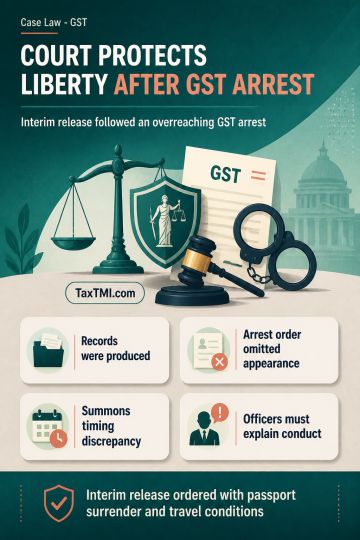
Personal liberty safeguards restrict arrest after court-directed GST appearance, requiring interim release where authorities overreach pending proceed...
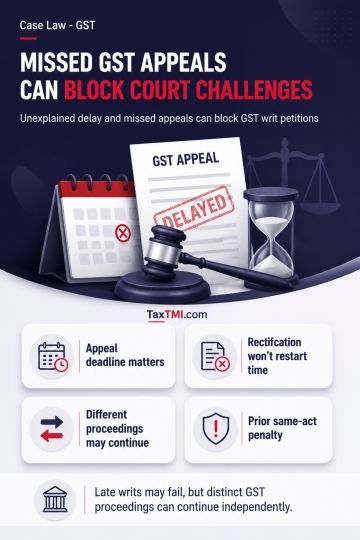
Alternative statutory remedy and delay bar GST writ challenges despite pending rectification, while distinct subject matter permits parallel proceedin...
Valuation - Assessable value of import vessel - Revised Price - Initially, a Memorandum of Agreement (MOA) was entered into with a declared Light Displacement Tonnage (LDT) of 10,386 MT for a certain price. However, upon inspection at the time of import, it was found to be 10,200 MT. The appellant argued that they paid the revised price based on the actual LDT found on the ship, which was lower than initially declared. Citing legal precedents, including a Supreme Court case and a Tribunal decision, the appellant contended that the revised price should be accepted for customs duty payment. After considering the submissions and legal precedents, the Appellate Tribunal found merit in the appellant's argument and allowed the appeal, setting aside the impugned order rejecting the revised value.
Valuation - Assessable value of import vessel - Revised Price - Initially, a Memorandum of Agreement (MOA) was entered into with a declared Light Displacement Tonnage (LDT) of 10,386 MT for a certain price. However, upon inspection at the time of import, it was found to be 10,200 MT. The appellant argued that they paid the revised price based on the actual LDT found on the ship, which was lower than initially declared. Citing legal precedents, including a Supreme Court case and a Tribunal decision, the appellant contended that the revised price should be accepted for customs duty payment. After considering the submissions and legal precedents, the Appellate Tribunal found merit in the appellant's argument and allowed the appeal, setting aside the impugned order rejecting the revised value.
Note: It is a system-generated summary and is for quick reference only.
 TaxTMI
  TaxTMI
 of 4881