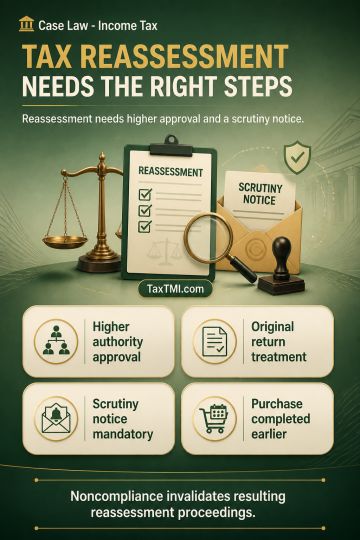
Opportunity to furnish unsecured-loan confirmations is required before reassessment initiation; proceedings require fresh consideration after taxpayer...
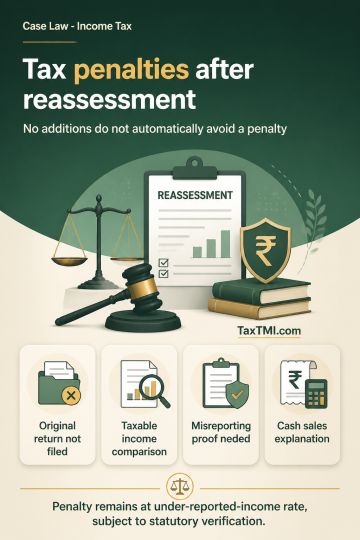
Under-reporting on a first reassessment return attracts penalty, while enhanced misreporting penalty requires proof of a statutory misreporting catego...
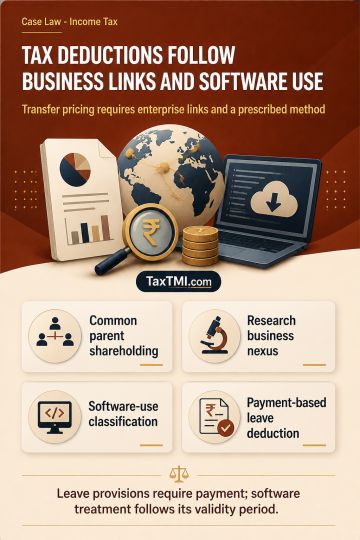
Form 26AS evidence requires successor-entity accounting verification after business transfer, while invoice-supported related-party advertising expend...
Process amounting to manufacture - activity of labelling - availing the cenvat credit of the duty paid by its Jammu unit - The Supreme Court examined whether the activity of labelling carried out by the respondent at its Taloja unit constituted manufacture. The dispute revolved around the interpretation of Note 3 to Chapter 18 of the Central Excise Tariff Act, which underwent an amendment substituting 'or' for 'and'. The appellant argued that labelling alone did not constitute manufacture, while the respondent contended otherwise. The Court interpreted Note 3 to allow for independent processes, including labelling alone, to constitute manufacture. They affirmed that the Taloja unit's activity fell within this definition and dismissed the appeal.
Process amounting to manufacture - activity of labelling - availing the cenvat credit of the duty paid by its Jammu unit - The Supreme Court examined whether the activity of labelling carried out by the respondent at its Taloja unit constituted manufacture. The dispute revolved around the interpretation of Note 3 to Chapter 18 of the Central Excise Tariff Act, which underwent an amendment substituting 'or' for 'and'. The appellant argued that labelling alone did not constitute manufacture, while the respondent contended otherwise. The Court interpreted Note 3 to allow for independent processes, including labelling alone, to constitute manufacture. They affirmed that the Taloja unit's activity fell within this definition and dismissed the appeal.
Note: It is a system-generated summary and is for quick reference only.
 TaxTMI
  TaxTMI
 of 4920