Food import sampling requirements support provisional release where unseized consignments conform to standards and raw areca classification is unestab...
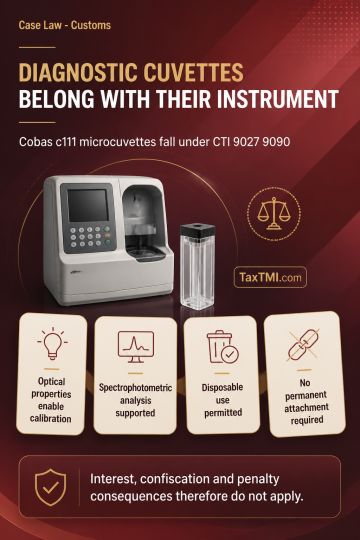
Diagnostic microcuvette classification follows sole-use analytical function, placing specialised disposable cuvettes with their analyser rather than g...
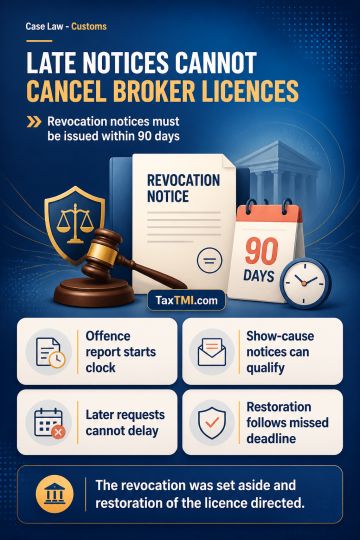
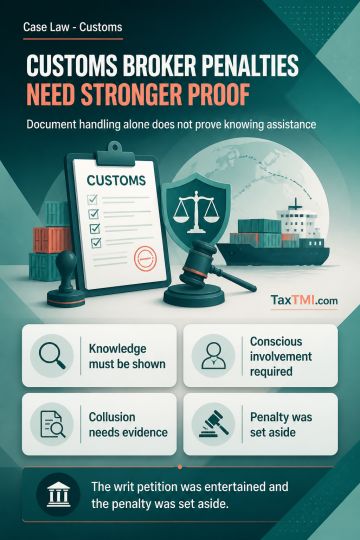
Customs Broker licensing proceedings fail when their offence-report foundation collapses and authorisation, advisory, and KYC duties remain unbreached...
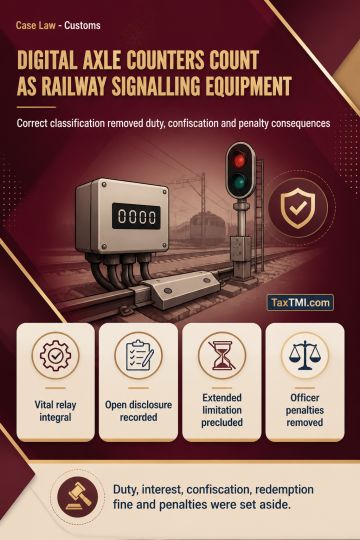
Tariff classification of Digital Axle Counters affirmed as electro-mechanical railway signalling equipment, eliminating duty, confiscation and penalty...
Constitutional Validity of Sections 2, 9, 12 and 18 of the Constitution (101st Amendment) Act, 2016 violating the basic structure of the Constitution of India - grounds raised are based on the constitution of a Goods and Services Tax Council (GST Council) - In its judgment, the High Court scrutinizes the petitioner's locus standi, emphasizing the necessity of demonstrating aggrievement in PILs. Despite the petitioner's assertion of public interest, the court finds that they lack standing, as they have not suffered any legal injury or prejudice resulting from the impugned provisions. Additionally, the court highlights the petitioner's absence of registration under GST enactments or involvement in commercial activities, further undermining their standing. - Ultimately, the High Court dismisses the writ petition, concluding that there is no basis to entertain it.
Constitutional Validity of Sections 2, 9, 12 and 18 of the Constitution (101st Amendment) Act, 2016 violating the basic structure of the Constitution of India - grounds raised are based on the constitution of a Goods and Services Tax Council (GST Council) - In its judgment, the High Court scrutinizes the petitioner's locus standi, emphasizing the necessity of demonstrating aggrievement in PILs. Despite the petitioner's assertion of public interest, the court finds that they lack standing, as they have not suffered any legal injury or prejudice resulting from the impugned provisions. Additionally, the court highlights the petitioner's absence of registration under GST enactments or involvement in commercial activities, further undermining their standing. - Ultimately, the High Court dismisses the writ petition, concluding that there is no basis to entertain it.
Note: It is a system-generated summary and is for quick reference only.
 TaxTMI
  TaxTMI
 of 4888