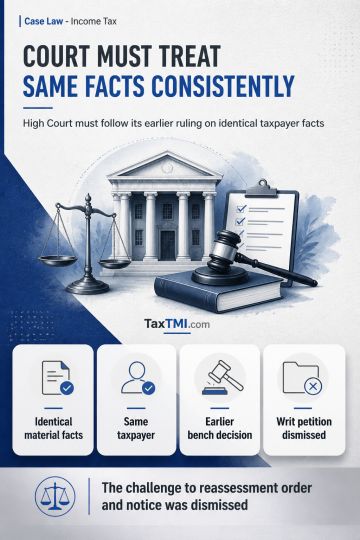
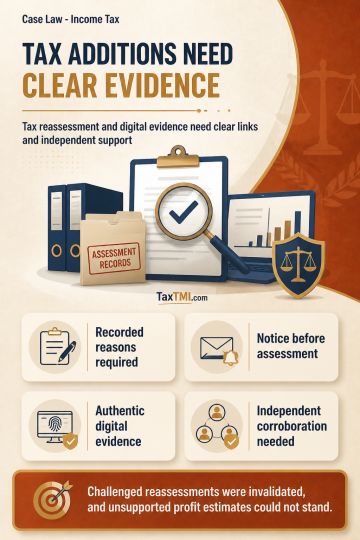
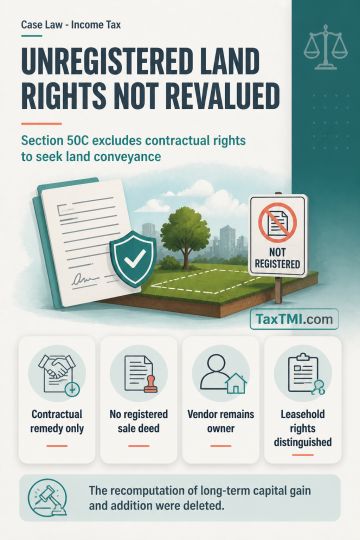
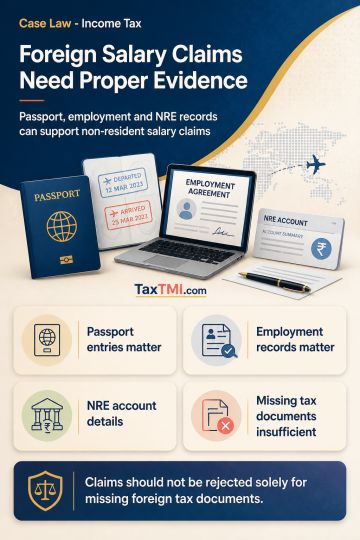
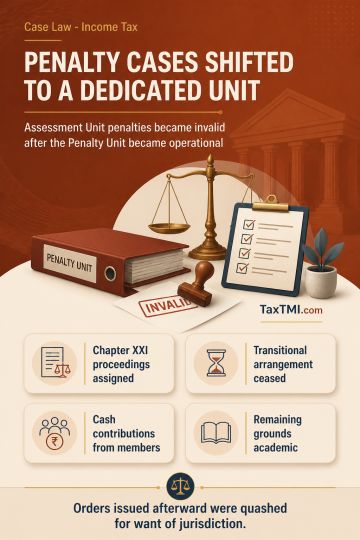
Judicial discipline requires consistent reassessment treatment where identical facts were decided for the same taxpayer in the preceding assessment ye...
Agreement-date stamp valuation requires the same registered property, fixed consideration, and qualifying payment; an unrelated prior booking cannot a...
Page of 4894
Press 'Enter' after typing page number.
221 to 240 of 97867 Results
❮
❯
❯❯
0 / 200
Expand Note
Add to Folder
No Folders have been created
+
Are you sure you want to delete "My most important" ?
Maintainability of curative petition - restoration of arbitral award which had been set aside by the Division Bench of the High court on the ground that it suffered from patently illegality. - The Supreme Court found that invoking curative jurisdiction was justified to prevent a miscarriage of justice. It highlighted the circumstances under which curative petitions could be entertained, emphasizing cases where there is a gross miscarriage of justice or abuse of process. The Court reiterated that interference with arbitral awards should be minimal and only on grounds of patent illegality or perversity. It emphasized that an arbitral tribunal's decision should not be disturbed unless it is evident that a reasonable person could not have arrived at such a decision based on the evidence presented.
Maintainability of curative petition - restoration of arbitral award which had been set aside by the Division Bench of the High court on the ground that it suffered from patently illegality. - The Supreme Court found that invoking curative jurisdiction was justified to prevent a miscarriage of justice. It highlighted the circumstances under which curative petitions could be entertained, emphasizing cases where there is a gross miscarriage of justice or abuse of process. The Court reiterated that interference with arbitral awards should be minimal and only on grounds of patent illegality or perversity. It emphasized that an arbitral tribunal's decision should not be disturbed unless it is evident that a reasonable person could not have arrived at such a decision based on the evidence presented.
Note: It is a system-generated summary and is for quick reference only.
 TaxTMI
  TaxTMI
 of 4894