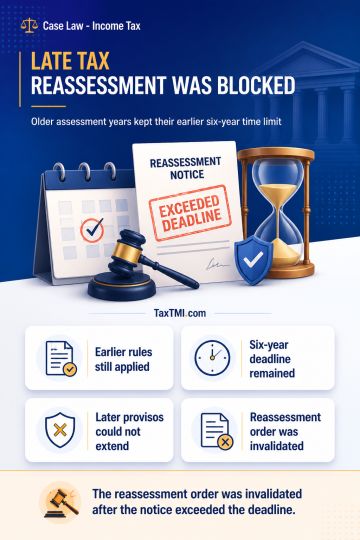
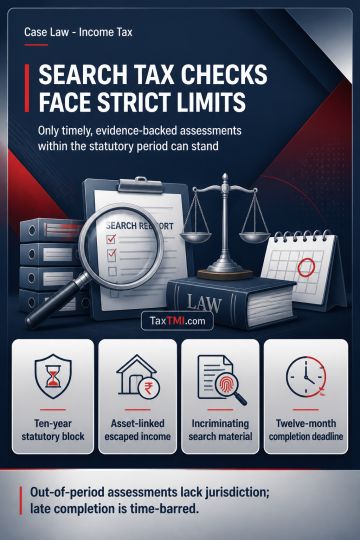
Pre-amendment reassessment limitation bars late notices under the preserved regime, invalidating consequential reassessment for affected earlier asses...
Cash-sales explanations for bank deposits require documentary reconciliation; reassessment notice survived where effective response time was available...
Functional comparability in transfer pricing prevents ad hoc arm's length adjustments where functions, assets, risks and reliable comparables are unes...
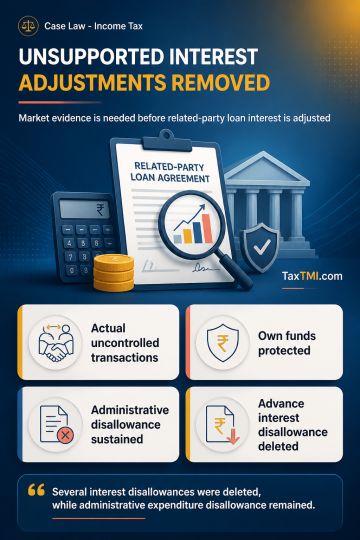
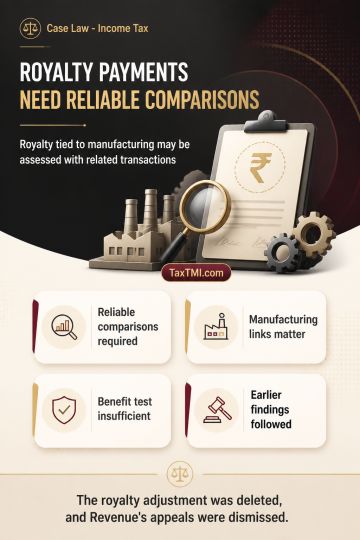
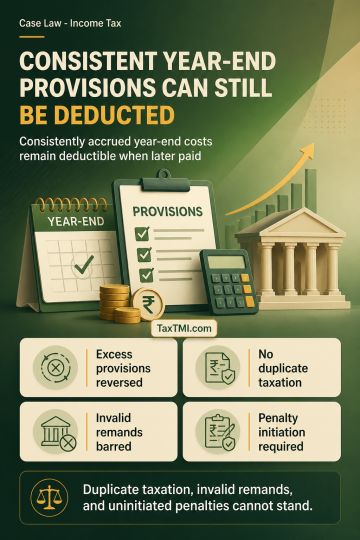
Contingency expenses, exempt-income disallowance, and royalty benchmarking: unsupported adjustments were deleted under consistent accounting and trans...
Classification of imported goods - Narrow Woven Fabric Webbing - The tribunal noted that the appellant's actions in misclassifying goods from a specific country indicated an attempt to evade duty payment, justifying the demand of customs duty. - The tribunal affirmed the decision to confirm the demand of customs duty, emphasizing that the appellant's concession regarding duty payment indicated acknowledgment of the duty liability, regardless of the absence of collusion or willful misstatement. - Regarding the non-confiscation of goods and absence of penalties under certain sections, the tribunal ruled in favor of the Commissioner's decision. It reasoned that while there was no explicit finding of collusion or willful misstatement to warrant penalties, the appellant's concession of duty payment justified the demand.
Classification of imported goods - Narrow Woven Fabric Webbing - The tribunal noted that the appellant's actions in misclassifying goods from a specific country indicated an attempt to evade duty payment, justifying the demand of customs duty. - The tribunal affirmed the decision to confirm the demand of customs duty, emphasizing that the appellant's concession regarding duty payment indicated acknowledgment of the duty liability, regardless of the absence of collusion or willful misstatement. - Regarding the non-confiscation of goods and absence of penalties under certain sections, the tribunal ruled in favor of the Commissioner's decision. It reasoned that while there was no explicit finding of collusion or willful misstatement to warrant penalties, the appellant's concession of duty payment justified the demand.
Note: It is a system-generated summary and is for quick reference only.
 TaxTMI
 TaxTMI

 of 4921