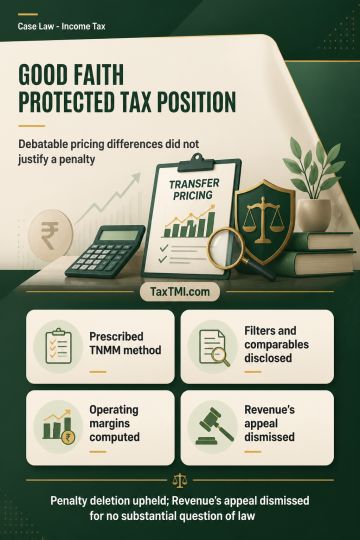
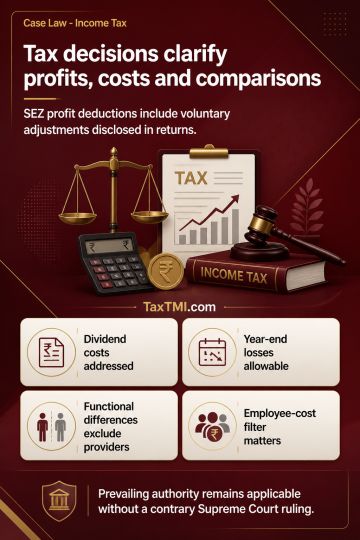
SEZ-unit profit deduction covers voluntary transfer-pricing adjustments, while exempt-income costs, foreign-exchange loss and ITeS comparables are exa...
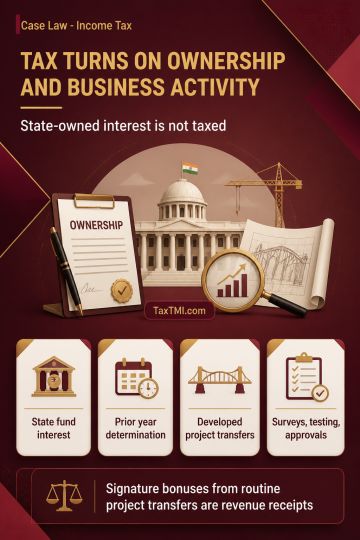
Infrastructure-development deduction remains available to EPC contractors when substantive statutory conditions outweigh contractor labels in agreemen...
Explained Investment Sources: documented gifts and traceable salary savings supported deletion of additions for property and mutual-fund SIP investmen...
Page of 4878
Press 'Enter' after typing page number.
121 to 140 of 97553 Results
❮
❯
❯❯
0 / 200
Expand Note
Add to Folder
No Folders have been created
+
Are you sure you want to delete "My most important" ?
Classification of services - Reverse charge mechanism (RCM) - Place of provision of services - Services procured from two overseas companies by the appellant, a Special Economic Zone (SEZ) unit engaged in software development - The Tribunal found the services provided by the overseas companies were in the nature of "intermediary services" rather than "Business Auxiliary Services." It emphasized that intermediary services involve facilitating or arranging the provision of services between two or more persons without altering the nature or value of the services. - Given the intermediary nature of the services, the place of provision was determined to be the location of the service providers (outside India), thus falling outside the scope of taxable services under the Indian Service Tax regime. - The Tribunal observed that the reverse charge mechanism did not apply in this case, as the services did not qualify as taxable services within the taxable territory of India.
Classification of services - Reverse charge mechanism (RCM) - Place of provision of services - Services procured from two overseas companies by the appellant, a Special Economic Zone (SEZ) unit engaged in software development - The Tribunal found the services provided by the overseas companies were in the nature of "intermediary services" rather than "Business Auxiliary Services." It emphasized that intermediary services involve facilitating or arranging the provision of services between two or more persons without altering the nature or value of the services. - Given the intermediary nature of the services, the place of provision was determined to be the location of the service providers (outside India), thus falling outside the scope of taxable services under the Indian Service Tax regime. - The Tribunal observed that the reverse charge mechanism did not apply in this case, as the services did not qualify as taxable services within the taxable territory of India.
Note: It is a system-generated summary and is for quick reference only.
 TaxTMI
  TaxTMI
 of 4878