Compromise-and-arrangement extensions may accommodate debt assignment where creditor commercial judgment supports value maximisation and avoids proced...
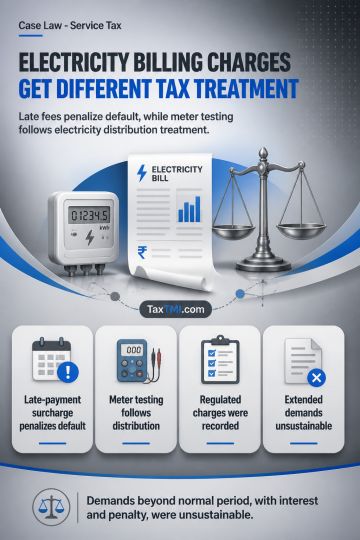
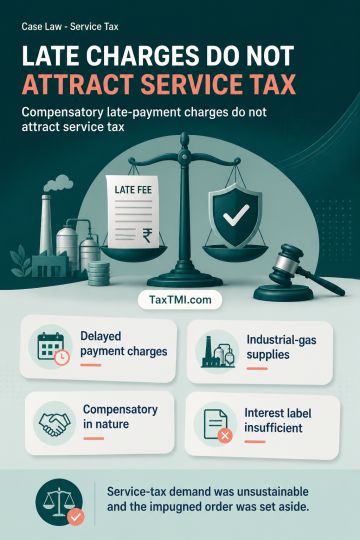
Delayed-payment surcharge is not taxable tolerance consideration where it penalises default, while meter testing follows electricity distribution trea...
Sufficient cause for delayed revenue income-tax appeals requires bona fides, due diligence and a credible explanation; otherwise limitation bars appea...
Inverted-duty-structure refunds remain available for unchanged-rate apparel supplies despite trader status and require tax-period-specific computation...
Foundational assessment satisfaction is essential before initiating penalty for cash receipt of immovable-property sale consideration under section 27...
Classification of services - Reverse charge mechanism (RCM) - Place of provision of services - Services procured from two overseas companies by the appellant, a Special Economic Zone (SEZ) unit engaged in software development - The Tribunal found the services provided by the overseas companies were in the nature of "intermediary services" rather than "Business Auxiliary Services." It emphasized that intermediary services involve facilitating or arranging the provision of services between two or more persons without altering the nature or value of the services. - Given the intermediary nature of the services, the place of provision was determined to be the location of the service providers (outside India), thus falling outside the scope of taxable services under the Indian Service Tax regime. - The Tribunal observed that the reverse charge mechanism did not apply in this case, as the services did not qualify as taxable services within the taxable territory of India.
Classification of services - Reverse charge mechanism (RCM) - Place of provision of services - Services procured from two overseas companies by the appellant, a Special Economic Zone (SEZ) unit engaged in software development - The Tribunal found the services provided by the overseas companies were in the nature of "intermediary services" rather than "Business Auxiliary Services." It emphasized that intermediary services involve facilitating or arranging the provision of services between two or more persons without altering the nature or value of the services. - Given the intermediary nature of the services, the place of provision was determined to be the location of the service providers (outside India), thus falling outside the scope of taxable services under the Indian Service Tax regime. - The Tribunal observed that the reverse charge mechanism did not apply in this case, as the services did not qualify as taxable services within the taxable territory of India.
Note: It is a system-generated summary and is for quick reference only.
 TaxTMI
  TaxTMI
 of 4894