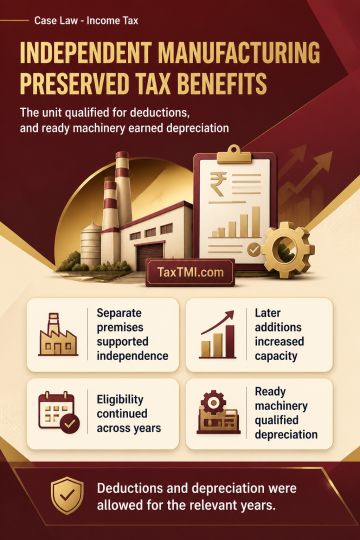
Independent manufacturing undertaking eligibility preserves Section 80IA/80IB deductions, while machinery kept ready for use qualifies for depreciatio...
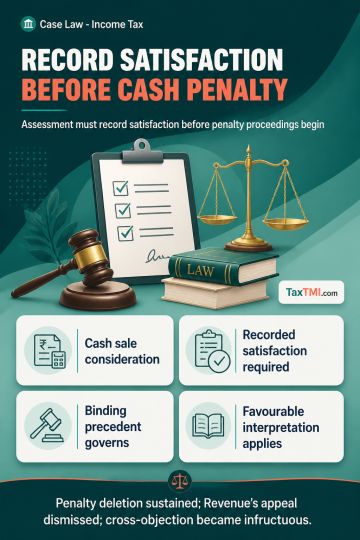
Assessing Officer Satisfaction Requirement Bars Penalty for Cash Receipt in Immovable-Property Sale Cases Where Initiation Lacks Recorded Satisfaction...
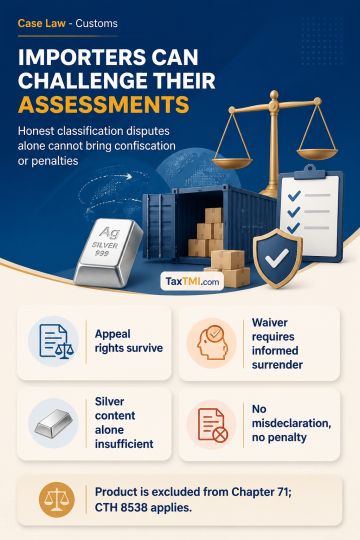
Self-assessed import entries remain appealable, while bona fide classification disputes without misdeclaration cannot justify confiscation or penaltie...
Actual-user customs exemption conditions permit turnkey project transfers when imported windmill components are exclusively used for installation and ...
Customs offence disqualification excludes civil contraventions, preventing refusal of a private bonded warehouse licence based solely on monetary pena...
Classification of services - Reverse charge mechanism (RCM) - Place of provision of services - Services procured from two overseas companies by the appellant, a Special Economic Zone (SEZ) unit engaged in software development - The Tribunal found the services provided by the overseas companies were in the nature of "intermediary services" rather than "Business Auxiliary Services." It emphasized that intermediary services involve facilitating or arranging the provision of services between two or more persons without altering the nature or value of the services. - Given the intermediary nature of the services, the place of provision was determined to be the location of the service providers (outside India), thus falling outside the scope of taxable services under the Indian Service Tax regime. - The Tribunal observed that the reverse charge mechanism did not apply in this case, as the services did not qualify as taxable services within the taxable territory of India.
Classification of services - Reverse charge mechanism (RCM) - Place of provision of services - Services procured from two overseas companies by the appellant, a Special Economic Zone (SEZ) unit engaged in software development - The Tribunal found the services provided by the overseas companies were in the nature of "intermediary services" rather than "Business Auxiliary Services." It emphasized that intermediary services involve facilitating or arranging the provision of services between two or more persons without altering the nature or value of the services. - Given the intermediary nature of the services, the place of provision was determined to be the location of the service providers (outside India), thus falling outside the scope of taxable services under the Indian Service Tax regime. - The Tribunal observed that the reverse charge mechanism did not apply in this case, as the services did not qualify as taxable services within the taxable territory of India.
Note: It is a system-generated summary and is for quick reference only.
 TaxTMI
  TaxTMI
 of 4881