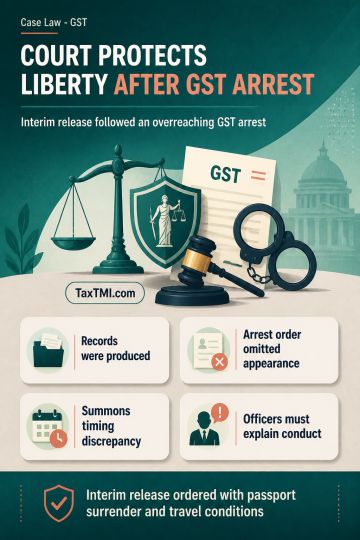
Personal liberty safeguards restrict arrest after court-directed GST appearance, requiring interim release where authorities overreach pending proceed...
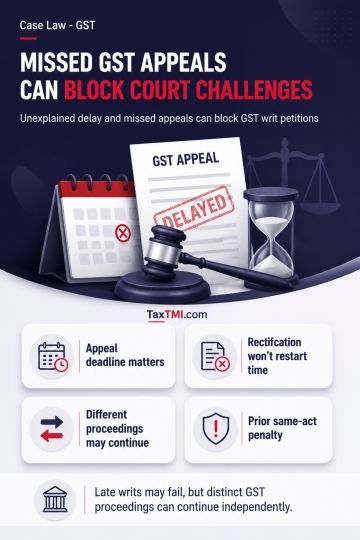
Alternative statutory remedy and delay bar GST writ challenges despite pending rectification, while distinct subject matter permits parallel proceedin...
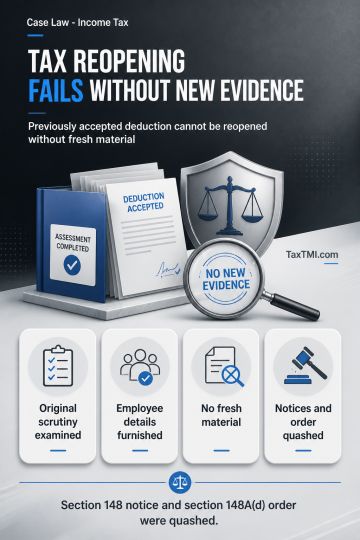
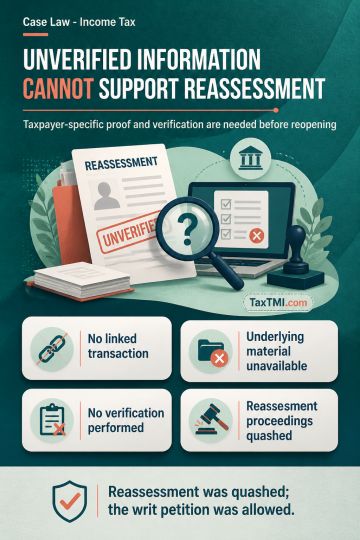
Unverified Insight Portal Information Cannot Justify Reassessment Without a Verified Taxpayer-Specific Income-Escape Nexus or Demonstrated Application...
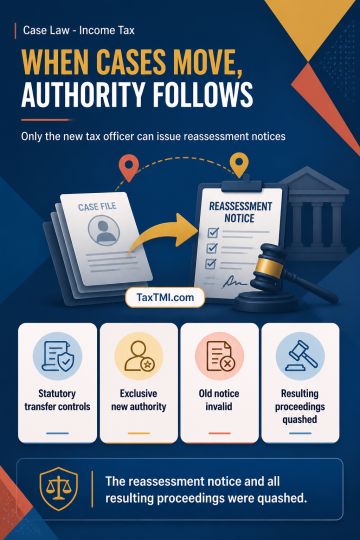
Assessing Officer jurisdiction after statutory transfer invalidates reassessment notices issued by transferor officers and nullifies resulting proceed...
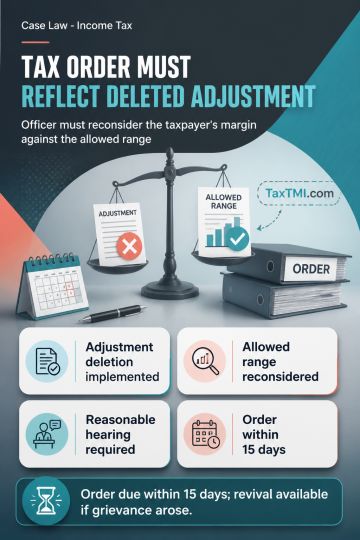
Consequential appeal-effect orders must implement rectification deleting working-capital adjustments and reconsider the resulting arm's-length range c...
Classification of services - Reverse charge mechanism (RCM) - Place of provision of services - Services procured from two overseas companies by the appellant, a Special Economic Zone (SEZ) unit engaged in software development - The Tribunal found the services provided by the overseas companies were in the nature of "intermediary services" rather than "Business Auxiliary Services." It emphasized that intermediary services involve facilitating or arranging the provision of services between two or more persons without altering the nature or value of the services. - Given the intermediary nature of the services, the place of provision was determined to be the location of the service providers (outside India), thus falling outside the scope of taxable services under the Indian Service Tax regime. - The Tribunal observed that the reverse charge mechanism did not apply in this case, as the services did not qualify as taxable services within the taxable territory of India.
Classification of services - Reverse charge mechanism (RCM) - Place of provision of services - Services procured from two overseas companies by the appellant, a Special Economic Zone (SEZ) unit engaged in software development - The Tribunal found the services provided by the overseas companies were in the nature of "intermediary services" rather than "Business Auxiliary Services." It emphasized that intermediary services involve facilitating or arranging the provision of services between two or more persons without altering the nature or value of the services. - Given the intermediary nature of the services, the place of provision was determined to be the location of the service providers (outside India), thus falling outside the scope of taxable services under the Indian Service Tax regime. - The Tribunal observed that the reverse charge mechanism did not apply in this case, as the services did not qualify as taxable services within the taxable territory of India.
Note: It is a system-generated summary and is for quick reference only.
 TaxTMI
  TaxTMI
 of 4879