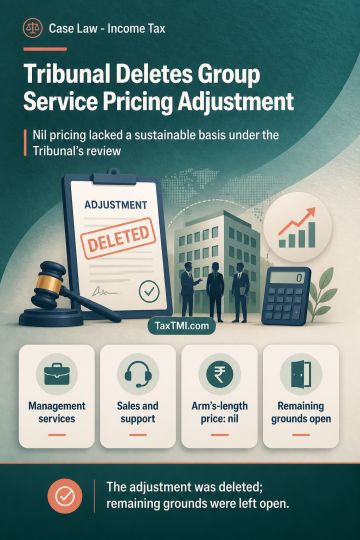
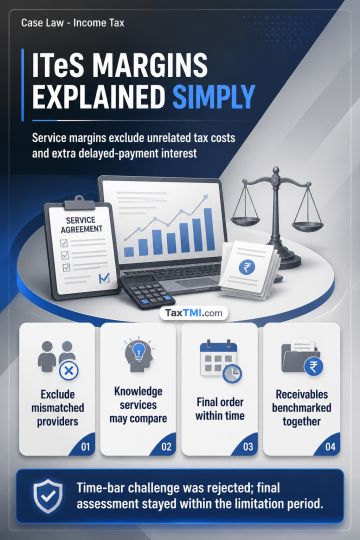
Transfer-pricing treatment of ITeS margins excludes pass-through tax recoveries and separate delayed-receivables interest after working-capital adjust...
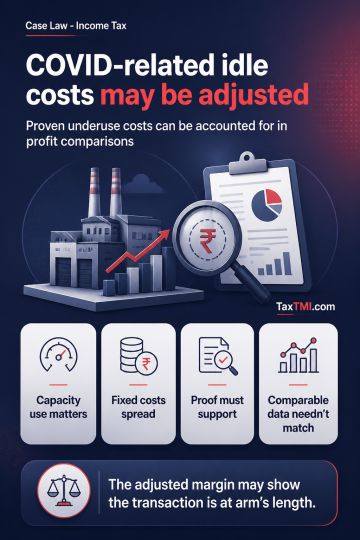
Capacity-utilisation adjustments under TNMM can neutralise substantiated COVID-related idle costs where underutilisation materially affects profitabil...
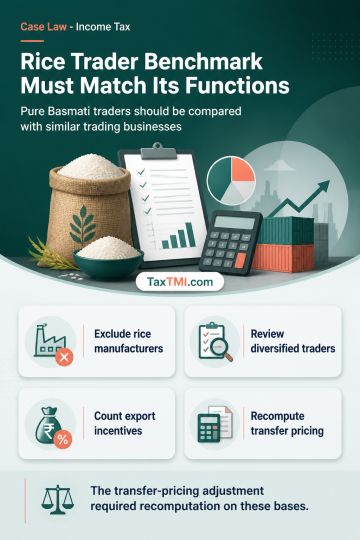
TNMM functional comparability requires excluding rice manufacturers from a pure Basmati rice trader's benchmark and recognising operating export recei...
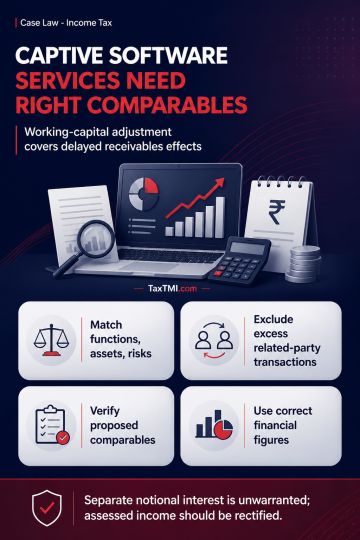
Working-capital adjustment subsumes delayed-receivable effects in TNMM benchmarking of captive software-development services, avoiding separate notion...
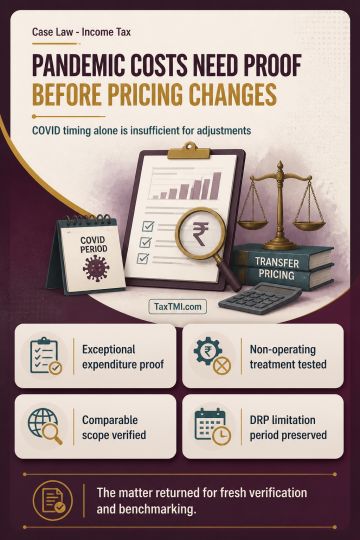
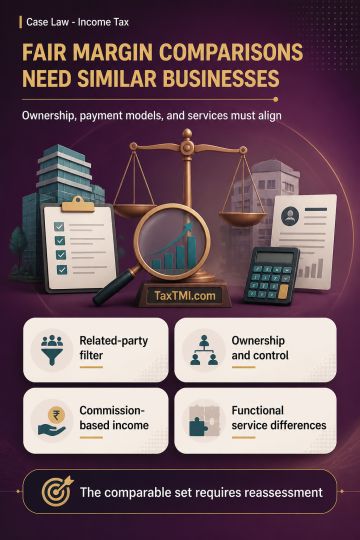
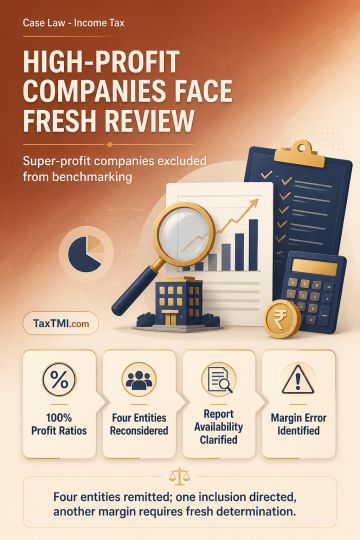
Transfer-pricing comparability requires exclusion of financially illogical super-profit comparables and correction of unsupported annual-report and ma...
Page of 4918
Press 'Enter' after typing page number.
1961 to 1980 of 98359 Results
❮
❯
❯❯
0 / 200
Expand Note
Add to Folder
No Folders have been created
+
Are you sure you want to delete "My most important" ?
Refund of SAD - The case involved refund claims filed by the appellant under Customs Notification No.102/2007-Cus. for Special Additional Duty of Customs paid during the import of goods. While a part of the refund claim was sanctioned, the original authority rejected the claim for two Bills of Entry, citing discrepancies between invoice dates and dates of Bill of Entry. The appellant contended that the rejection was based on unfounded assumptions by the department, clarifying that goods were intended for delivery at Sivakasi and were transported directly from Chennai to Sivakasi. The Tribunal found the rejection erroneous, emphasizing that an importer can arrange for direct delivery to the customer from the port.
Refund of SAD - The case involved refund claims filed by the appellant under Customs Notification No.102/2007-Cus. for Special Additional Duty of Customs paid during the import of goods. While a part of the refund claim was sanctioned, the original authority rejected the claim for two Bills of Entry, citing discrepancies between invoice dates and dates of Bill of Entry. The appellant contended that the rejection was based on unfounded assumptions by the department, clarifying that goods were intended for delivery at Sivakasi and were transported directly from Chennai to Sivakasi. The Tribunal found the rejection erroneous, emphasizing that an importer can arrange for direct delivery to the customer from the port.
Note: It is a system-generated summary and is for quick reference only.
 TaxTMI
 TaxTMI

 of 4918