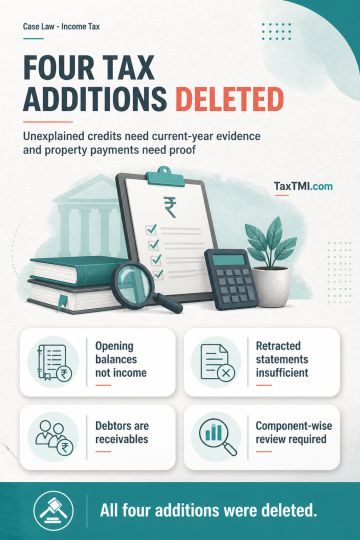
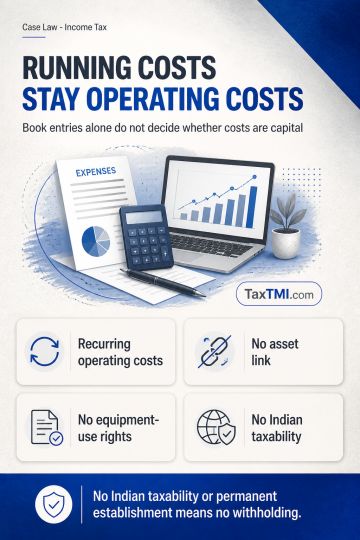
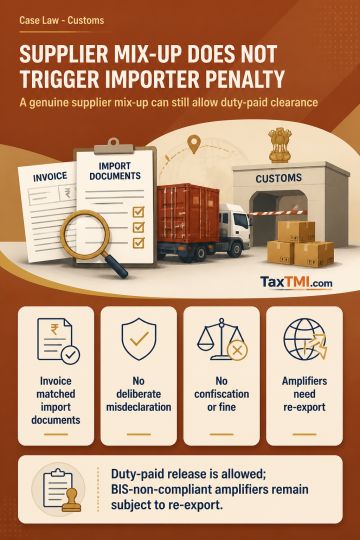
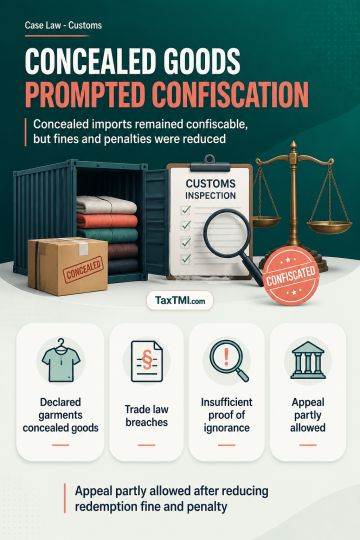
Business expenditure and depreciation rules allow operational outgoings while limiting disallowances for personal elements and unsupported third-party...
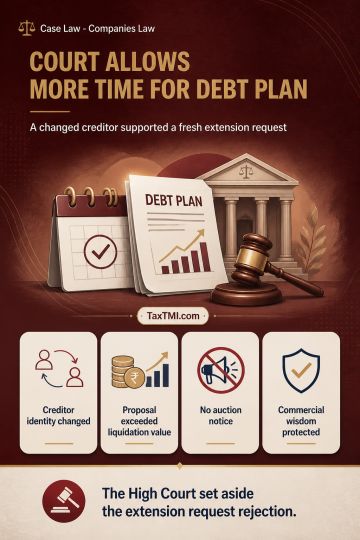
Compromise-and-arrangement extensions may accommodate debt assignment where creditor commercial judgment supports value maximisation and avoids proced...
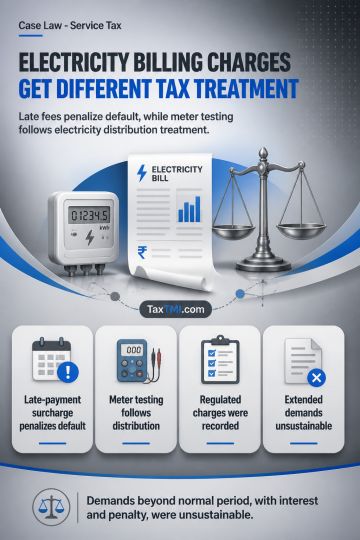
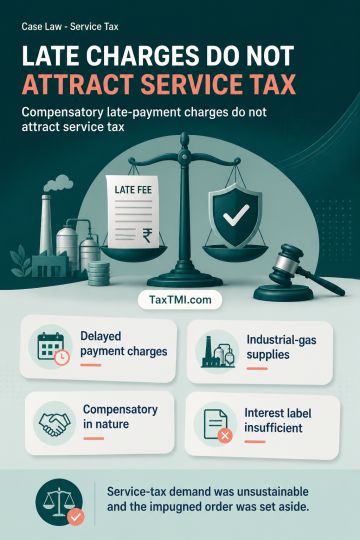
Delayed-payment surcharge is not taxable tolerance consideration where it penalises default, while meter testing follows electricity distribution trea...
Sufficient cause for delayed revenue income-tax appeals requires bona fides, due diligence and a credible explanation; otherwise limitation bars appea...
Inverted-duty-structure refunds remain available for unchanged-rate apparel supplies despite trader status and require tax-period-specific computation...
Refund of SAD - The case involved refund claims filed by the appellant under Customs Notification No.102/2007-Cus. for Special Additional Duty of Customs paid during the import of goods. While a part of the refund claim was sanctioned, the original authority rejected the claim for two Bills of Entry, citing discrepancies between invoice dates and dates of Bill of Entry. The appellant contended that the rejection was based on unfounded assumptions by the department, clarifying that goods were intended for delivery at Sivakasi and were transported directly from Chennai to Sivakasi. The Tribunal found the rejection erroneous, emphasizing that an importer can arrange for direct delivery to the customer from the port.
Refund of SAD - The case involved refund claims filed by the appellant under Customs Notification No.102/2007-Cus. for Special Additional Duty of Customs paid during the import of goods. While a part of the refund claim was sanctioned, the original authority rejected the claim for two Bills of Entry, citing discrepancies between invoice dates and dates of Bill of Entry. The appellant contended that the rejection was based on unfounded assumptions by the department, clarifying that goods were intended for delivery at Sivakasi and were transported directly from Chennai to Sivakasi. The Tribunal found the rejection erroneous, emphasizing that an importer can arrange for direct delivery to the customer from the port.
Note: It is a system-generated summary and is for quick reference only.
 TaxTMI
  TaxTMI
 of 4910