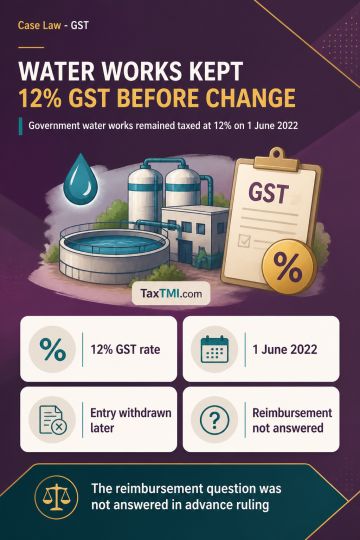
Government water works contract GST concession applied before its withdrawal, while contractual tax reimbursement claims lay outside advance-ruling sc...
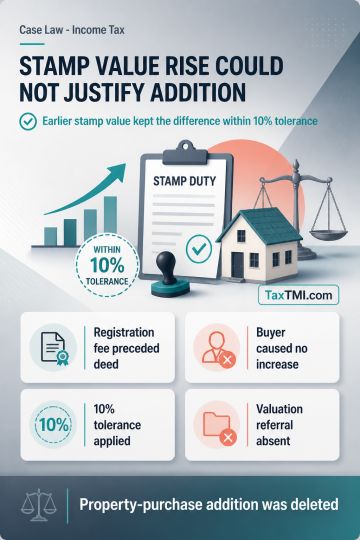
Stamp valuation increases after registration-fee payment led to deletion of property-purchase addition within tolerance and without valuation referral...
Refund of SAD - The case involved refund claims filed by the appellant under Customs Notification No.102/2007-Cus. for Special Additional Duty of Customs paid during the import of goods. While a part of the refund claim was sanctioned, the original authority rejected the claim for two Bills of Entry, citing discrepancies between invoice dates and dates of Bill of Entry. The appellant contended that the rejection was based on unfounded assumptions by the department, clarifying that goods were intended for delivery at Sivakasi and were transported directly from Chennai to Sivakasi. The Tribunal found the rejection erroneous, emphasizing that an importer can arrange for direct delivery to the customer from the port.
Refund of SAD - The case involved refund claims filed by the appellant under Customs Notification No.102/2007-Cus. for Special Additional Duty of Customs paid during the import of goods. While a part of the refund claim was sanctioned, the original authority rejected the claim for two Bills of Entry, citing discrepancies between invoice dates and dates of Bill of Entry. The appellant contended that the rejection was based on unfounded assumptions by the department, clarifying that goods were intended for delivery at Sivakasi and were transported directly from Chennai to Sivakasi. The Tribunal found the rejection erroneous, emphasizing that an importer can arrange for direct delivery to the customer from the port.
Note: It is a system-generated summary and is for quick reference only.
 TaxTMI
  TaxTMI
 of 4897