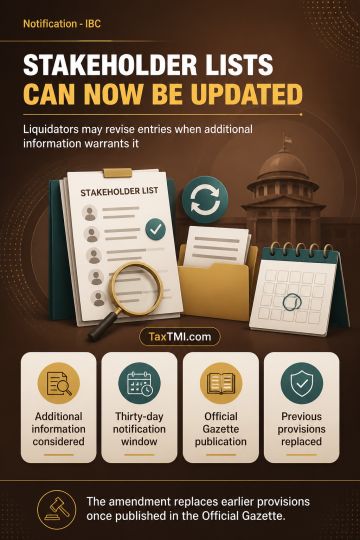
Stakeholder-list modification permits liquidators to update entries on new information, subject to notifying the Adjudicating Authority within prescri...
Refund of the excess duty paid - whether subsequent negotiation of the prices can be the basis for reopening the assessment? - The Tribunal observed that the appellant cleared goods on stock transfer basis to their depots, adopting the price prevailing at or nearest to the time of sale from the depots. This was done in accordance with Rule 7 of the Central Excise Valuation Rules. Subsequent negotiation of prices did not affect the assessable value already determined and on which duty liability was discharged. The Tribunal cited precedent to support this conclusion.
Refund of the excess duty paid - whether subsequent negotiation of the prices can be the basis for reopening the assessment? - The Tribunal observed that the appellant cleared goods on stock transfer basis to their depots, adopting the price prevailing at or nearest to the time of sale from the depots. This was done in accordance with Rule 7 of the Central Excise Valuation Rules. Subsequent negotiation of prices did not affect the assessable value already determined and on which duty liability was discharged. The Tribunal cited precedent to support this conclusion.
Note: It is a system-generated summary and is for quick reference only.
 TaxTMI
  TaxTMI
 of 4897