Capital-gains exemption for charitable trusts extends to qualifying fixed deposits, while unrecoverable TDS write-offs may constitute income applicati...
India-UK treaty characterisation of telecom-service receipts as business profits withstands unilateral domestic-law amendments for Indian tax purposes...
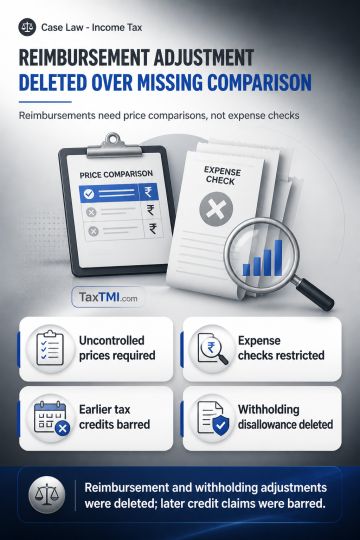
Transfer-pricing reimbursement adjustments require uncontrolled comparables and cannot become expense-genuineness reviews, resulting in deletion of th...
Page of 4881
Press 'Enter' after typing page number.
281 to 300 of 97618 Results
❮
❯
❯❯
0 / 200
Expand Note
Add to Folder
No Folders have been created
+
Are you sure you want to delete "My most important" ?
Refund of the excess duty paid - whether subsequent negotiation of the prices can be the basis for reopening the assessment? - The Tribunal observed that the appellant cleared goods on stock transfer basis to their depots, adopting the price prevailing at or nearest to the time of sale from the depots. This was done in accordance with Rule 7 of the Central Excise Valuation Rules. Subsequent negotiation of prices did not affect the assessable value already determined and on which duty liability was discharged. The Tribunal cited precedent to support this conclusion.
Refund of the excess duty paid - whether subsequent negotiation of the prices can be the basis for reopening the assessment? - The Tribunal observed that the appellant cleared goods on stock transfer basis to their depots, adopting the price prevailing at or nearest to the time of sale from the depots. This was done in accordance with Rule 7 of the Central Excise Valuation Rules. Subsequent negotiation of prices did not affect the assessable value already determined and on which duty liability was discharged. The Tribunal cited precedent to support this conclusion.
Note: It is a system-generated summary and is for quick reference only.
 TaxTMI
  TaxTMI
 of 4881